Finishes for Polk County homes
Decorative Concrete Options for Lakeland Homes
A Lakeland driveway, patio, or pool deck starts as a picture: stone, a warmer color, a surface that does not burn bare feet. The finish is the part you see. It is not the slab. Stamped concrete, acid stain, exposed aggregate, a broom or salt texture, and a spray overlay can all look right on a sample board and still be the wrong surface once July sun, a wet afternoon, and pool water show up.
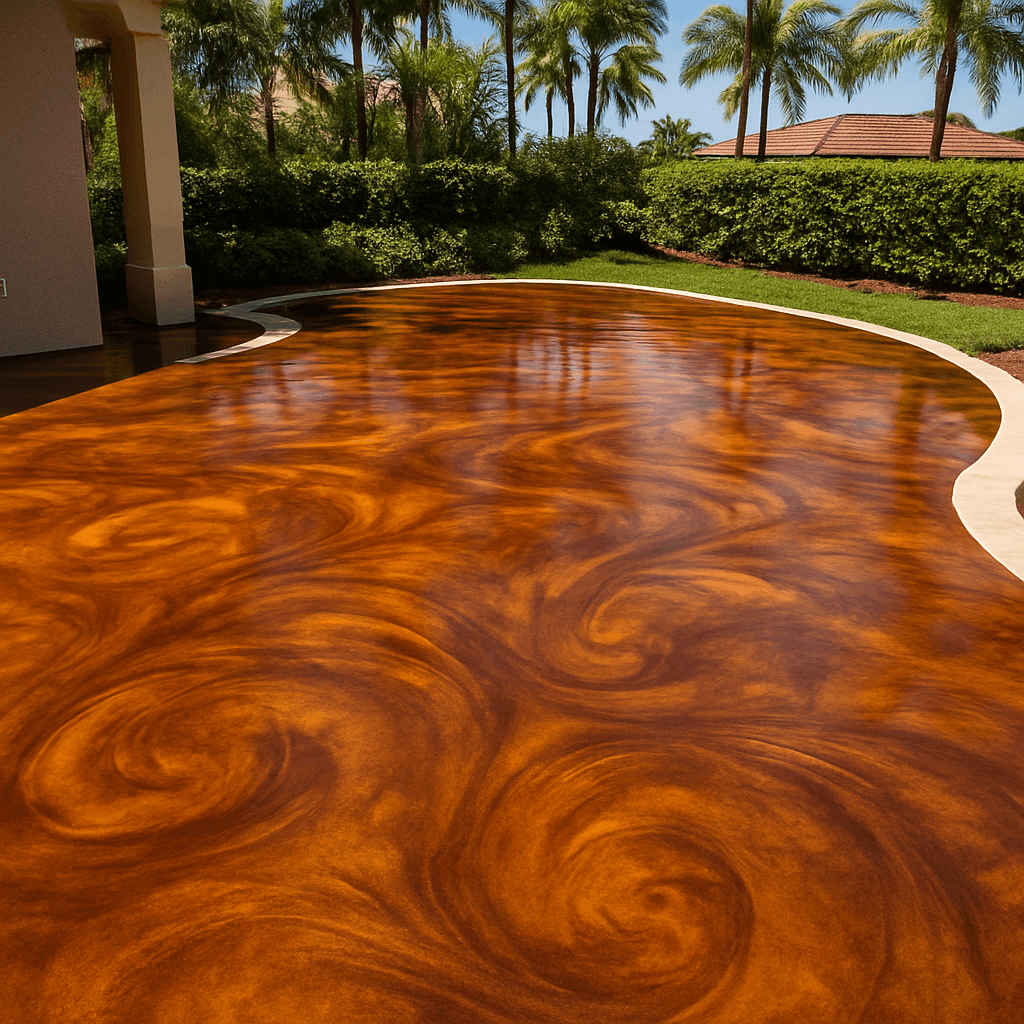
Acid stain colors the paste you already have. It does not fill cracks or add the grip a broom or knockdown texture gives you.
What this guide covers
Five finishes, and what each one actually is
Dollar figures below are typical planning ranges from the guides on this site. A written quote is the number for your yard. The decorative concrete cost guide mixes several of these finishes into one band, so use the finish-specific ranges instead.
| Finish | Where it fits | Wet grip | What it will not do |
|---|---|---|---|
| Stamped | New patio, entry, or driveway when you want a stone or brick look | Depends on the sealer. Glossy coats get slick | Does not fix a soft base. Color needs resealing |
| Acid stain | A sound slab where mottled color is the goal | None added. A wet-look sealer is slick | Will not hide cracks, patches, or tire wear |
| Exposed aggregate | Driveways and walks that should hide dirt and keep grip | In the stone. Rough under bare feet | Hard to match later. Dark stone gets hot |
| Broom or salt | Everyday driveways and patios | In the concrete. Salt pits also trap sand | Plain look. Salt holds algae in shade |
| Spray overlay | Sound patios and pool decks, including cool deck | Knockdown texture is built for wet feet | Follows a moving or hollow slab |
Stamped concrete
Stamped concrete is colored and pressed with mats while the pour is still workable. Ashlar slate, brick, and wood plank are the usual Lakeland requests. The stamp is a skin on a normal slab, so a driveway still needs driveway thickness and a compacted base, plus a sealer. A glossy sealer can be slick in the rain. The stamped services cost guide puts installed work at about $15 to $28 per square foot, many jobs around $20, and a 400 square foot patio often between about $6,000 and $11,200. If the other choice is a broom slab or pavers, read stamped vs plain concrete vs pavers, then price it from stamped concrete services.
Stained and acid-stained concrete
Acid stain reacts with the lime in the slab. It is not paint. The color is mottled and translucent: tans, browns, terracotta, sometimes a soft green or blue. Two pours will not take it the same way. It will not hide a patch or a crack, and it adds no grip. Water-based stains sit closer to the surface, so tire paths show sooner. The patio cost guide lists a stained patio at about $10 to $18 per square foot. That is not a price for etching an old driveway. A wet-look sealer on a smooth slab is slick in the rain.
Exposed aggregate
Stone goes in the mix or is broadcast on top, and the surface paste is washed off. Grip is in the stone, and dirt hides better than on gray concrete. Dark rock gets hot. Light stone is easier on bare feet and still rougher than a broom or a cool-deck coating, so it suits a driveway or front walk better than a pool deck. The driveway guide prices decorative finishes, including exposed aggregate, at about $5 to $12 per square foot on top of a plain broom finish. Ask the quote to name the stone.
Broom and salt finishes
A broom finish is a stiff broom pulled across fresh concrete, lighter on a patio and heavier on a driveway. It is the baseline: about $8 to $20 per square foot on the patio guide and about $8 to $18 on a new driveway. The texture is in the concrete. A salt finish presses rock salt in and washes it out, leaving pits that grip and also hold sand and algae in a shady yard. There is no separate salt price here. It belongs with the broom number. The bid should say which texture you are getting.
Spray knockdown and cool-deck overlays
An overlay is a thin bonded layer on a slab you already have. Spray knockdown is sprayed, then lightly flattened. Cool-deck coatings are the light-colored version for a pool deck that is less miserable in the afternoon. They hide light pitting. They do not stop a slab that rocks because sand washed out. The resurfacing cost guide puts a basic overlay at about $3 to $10 per square foot, plus about $2 to $5 for color or a stamp. Pool deck resurfacing runs about $4 to $12, if the slab is sound. Read resurfacing vs replacement before you cover a lip or a hollow spot, and start the quote from concrete resurfacing.
Heat, UV, rain, pool water, and sandy soil
A dark stamp or stain takes more sun than a light broom or a light cool-deck coating. That matters on a pool deck and a south-facing patio, and barely matters on a driveway you cross in shoes. Nothing here stays cool at midday in August. Lakeland sun also chalks a topical sealer. Color mixed through the concrete fades slower than surface color that has lost its coat. Acid stain will not peel like paint, but the sealer on top still goes dull. Skip the recoat on a stamp and the pattern washes out.
Concrete stiffens fast on a summer morning, and a storm can show up after lunch. Stamping has a short window. A broom finish has more room, and rain can still scar it. Acid stain needs a dry enough slab, then a controlled rinse. Overlays need a clean, dry surface to bond. Pouring in Florida heat and rain covers pour day. Sandy soil and base prep covers the work before the truck is scheduled.
Chlorine splash and a saltwater pool are hard on a driveway acrylic. A deck coating should be rated for sun, constant wetting, and pool chemicals, with a slip additive if the film would otherwise be glossy. Stamped pool decks are done here. Light color and that sealer matter more than the pattern. Pool deck resurfacing types goes further on cool deck, knockdown, and stamped overlays.
Polk County sand can look firm until a storm softens a spot that was never compacted. The finish is the top skin, or a layer measured in fractions of an inch. It does not compact the ground. If a corner drops, or you can see sand at a joint after a hard rain, fix the base or replace the slab. Covering it hides the problem for a season.
Driveway, patio, or pool deck
On a driveway, broom is the straightforward choice, exposed aggregate is the textured step up, and a stamp works when the sealer is rated for tires. Acid stain wears in the wheel paths. Under a lanai, stain and stamp hold color longer. In full sun, a light broom, light stamp, or overlay is kinder. Adding square footage is a different job. The patio extension cost guide covers tying into the old edge, and new concrete lightens as it cures, so match a stain before you pour. Start a new slab from concrete patios.
A pool deck is decided by heat and wet feet. Light knockdown or cool deck is the usual Lakeland answer. Exposed aggregate is often too rough, and a glossy stamp or stain without a slip additive is the finish people regret on the first rainy Saturday. Spalling on a solid slab can be resurfaced. Heaving cannot. Decorative concrete and pool deck resurfacing are the service pages for that choice.
Sealing, and the upkeep people skip
The sealing guide splits the products. A broom driveway usually wants a penetrating sealer, often good for about 5 to 10 years. Stamped and stained work wants a UV-stable topical sealer, commonly redone every 1 to 3 years, about $1 to $3 per square foot on the stamped guide. Do not pressure-wash a peeling sealer off a stamp and expect the color to survive. The finish does not decide the permit. Start with the permit guide, then confirm the address.
How to choose, then what to put on the quote
If the concrete rocks, holds water against the house, or a corner has dropped, say that on the request before you pick a color. Then send the same packet each time: measurements, photos of the yard and the gate, whether cars will park on it, whether it touches pool water, and the finish you are considering. Ask each bid to separate base prep, thickness or the overlay product, color, texture, sealer type, and who pulls the permit. One per-foot number that skips the sealer is a guess.
If the house is in Bartow or Winter Haven rather than Lakeland, start from that city page so the crew is used to the lot. Then open the service that matches the work.
- Name the surface on the job request: driveway, patio, or pool deck, and whether a slab is already there.
- Add a photo after a rain if water sits, and a photo of any crack that has a lip or sand at the joint.
Frequently Asked Questions
Which decorative concrete finish holds up best in Lakeland?
The slab and the use matter more than the brochure. A broom finish is the most forgiving driveway. Exposed aggregate adds texture and hides dirt. Stamped concrete is the stone look on a new pour, if you will reseal it. A light spray or cool-deck overlay is the usual pool-deck answer. Acid stain is a color treatment, not a new surface, and it will not hide cracks.
Is stamped concrete a good pool deck in Florida?
It can be, if the color is light and the sealer has a slip-resistant additive. A dark, glossy stamp gets hot and slick when wet. Around a Lakeland pool, a light knockdown or cool-deck coating is the more common choice because the texture and the color are built for bare feet.
Can I acid-stain an existing Lakeland driveway?
Only if the slab is sound, clean, and porous enough to take the stain. Stain will not fill cracks, cover patches, or add grip, and tire paths wear surface color. If the driveway is spalled, an overlay or a new pour is the honest option.
What is the difference between a broom finish and a salt finish?
A broom finish is a stiff broom dragged across fresh concrete, light on a patio and heavier on a driveway. A salt finish presses rock salt into the surface and washes it out, leaving small pits. Both put the grip in the concrete. The pits look more decorative and they hold sand and algae in a shady yard. This site does not publish a separate salt-finish price. It belongs with a plain pour, not with stamping.
How often should decorative concrete be sealed in Polk County?
A broom driveway with a penetrating sealer is often good for about 5 to 10 years. Stamped, stained, and colored work uses a topical sealer, usually recoated every 1 to 3 years in Florida sun. The stamped guide plans about $1 to $3 per square foot every 2 to 3 years. That later coat is maintenance unless the bid includes it.
Keep Reading
Ready to price a finish?
Submit a job request with the size, photos, whether it is a driveway, patio, or pool deck, and the finish you are considering. We pass it to a local crew. Ask them to price the base, the color or texture, and the sealer as their own lines.