Patio Costs
Concrete Patio Extension Cost in Lakeland, FL: What Affects the Price
The sketch says 10 by 16, and the old lanai slab is already there. That is the job most Lakeland and Polk County homeowners are pricing: new concrete that meets a slab that cured years ago, sheds rain away from the house, and sits close enough to the old broom or stamp that the joint looks planned. Square footage starts the price. The tie-in, the yard, and the finish decide it.
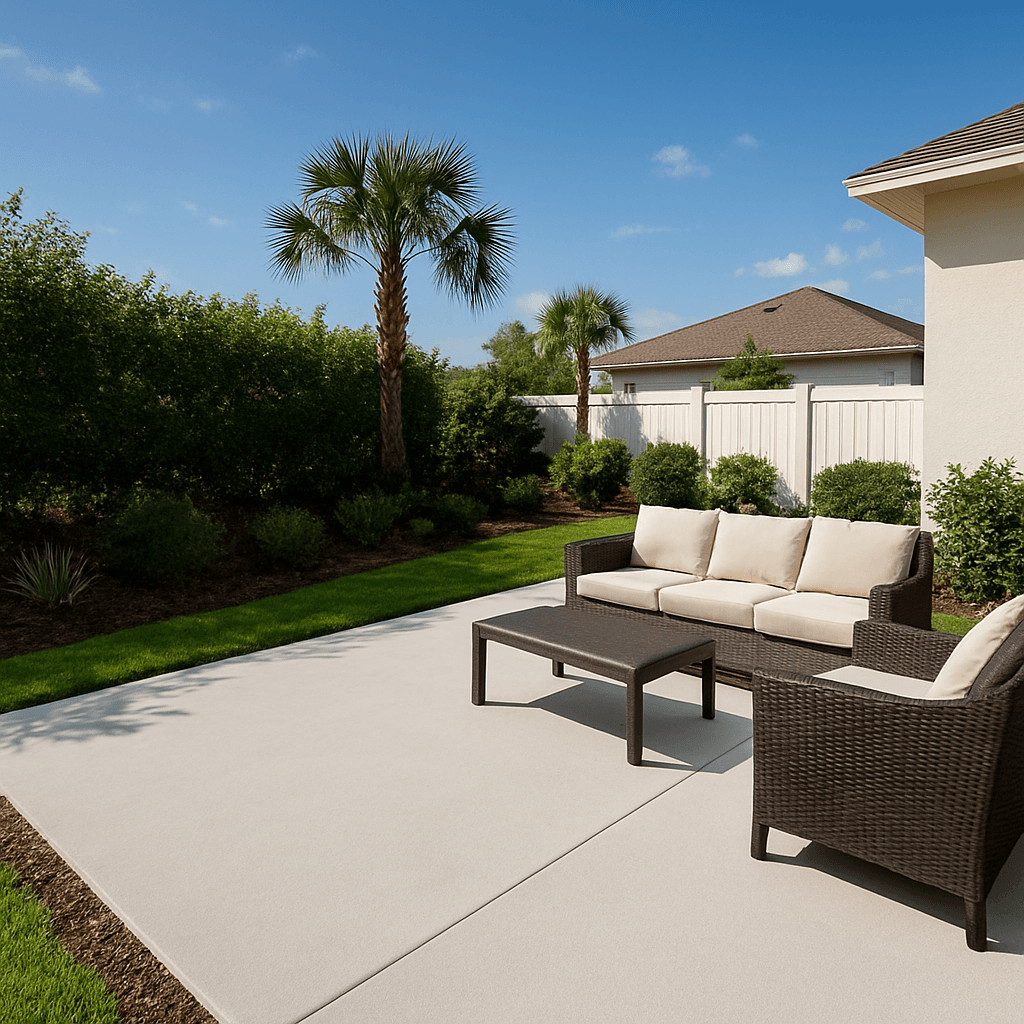
An extension meets a slab that has already cured, so the joint, the height, and any demo are part of the price.
What this guide covers
What a patio extension actually includes
A concrete patio extension starts at the edge you already have. Crews usually saw that edge back to sound concrete before they set forms. A ragged break chips, and it makes a sloppy joint. If a corner is cracked, settled, or holding water against the stem wall, that piece comes out. Demo and haul-off belong on the bid even when the drawing only shows the new rectangle.
Dowels, joints, color, and height
Two tie-ins show up on these bids. Dowels drilled into the old edge let the new slab and the old one share load at the joint. An isolation joint lets them move on their own. Ask which one the price includes. The new field still needs control joints, lined up with the old joints when the layout allows it. The slab thickness guide treats those grooves as the place the slab is allowed to crack.
New concrete starts darker and lightens as it cures. A broom finish beside a weathered broom finish is the easier match. A stamp has to be picked against a surface the sun has already faded. Look at stamped concrete samples next to the old slab, and read how stamped concrete, plain concrete, and pavers compare here, before you lock a broom price.
The new surface has to meet the old one and still fall away from the house. The thickness guide uses about 1/8 to 1/4 inch of fall per foot away from structures so summer rain does not sit on the wall. A lanai slab that is already flat, or that slopes back toward the house, needs grading, a small step, or a drain. Pick that before anyone orders concrete.
Sandy soil and screen-room footings
Polk County sand can feel firm until a storm softens a spot that was never compacted. Backyard extensions often sit where a gutter, a hose, or the air conditioner has been dumping water, or where a garden bed left roots and loose fill. The sandy-soil base guide covers compaction and when a limerock or crushed-concrete layer belongs under the slab.
A flat slab price does not include footings. If the new edge will carry a screen enclosure, or you are moving the lanai wall out, the crew digs a footing line under that wall. The patio cost notes already treat enclosure and pergola anchors as add-ons. A concrete slab priced as a light pad is a different scope. Say what will stand on the extension, including a future screen room.
What actually changes the price
The ranges below are typical planning estimates from this site's Lakeland cost guides for a new pour. They are not a survey of extension bids. A written quote is the number for your yard. The same square footage can land somewhere else once you add the tie-in, the access, and the matching.
Size, thickness, demo, and steel
The Lakeland patio cost guide puts a poured patio at about $8 to $20 per square foot, with most jobs around $13. A 400 square foot patio on that guide typically runs about $3,200 to $8,000. A smaller add-on still pays for a crew, a saw, forms, and a truck or a pump, so the line items matter more than the per-foot figure. Thickness is commonly about 4 inches, the figure the slab thickness guide uses for an ordinary residential patio. Go thicker, or thicken the edge, where a hot tub, a heavy kitchen, or screen-room posts will sit.
Demo and access change the bid before new concrete shows up. A cracked corner, a narrow gate, work inside a cage, or a truck that stops at the street means haul-off, a pump, or a long carry. Ask for those as their own lines. This site does not publish a patio-demo price. Rebar, wire mesh, and fiber are different products. Mesh or rebar goes in the form. Fiber goes in the mix. The slab guide says reinforcement adds cost and helps control cracking, and it does not price each one. Fiber on one bid and rebar on another means two patios.
Broom, stamp, stain, or pavers
A broom finish is the baseline, in that $8 to $20 band. Stained concrete on the patio guide is about $10 to $18 per square foot. That guide also describes decorative finishes as adding about $5 to $12 per square foot on a plain pour. Use one frame, so the color is not counted twice. On the stamped guide, stamped concrete runs about $15 to $28 per square foot installed. Pavers on the paver guide run about $14 to $30, because the base and the piece-by-piece work are different. A stamp usually includes the first sealer. Later resealing, on the stamped guide, is about $1 to $3 per square foot every 2 to 3 years, and that coat is maintenance unless the bid includes it.
Permits: confirm the address, then pour
Read the Lakeland and Polk County permit guide before you schedule a truck, then confirm the address. Inside the City of Lakeland, the published list names porches and driveways. An open patio is not on that list. In unincorporated Polk County, the list includes concrete slabs poured against a house or other structure. A freestanding pad in the yard is not clearly named on the required list or the exempt list. A patio against the stem wall, or a lanai slab that grows toward the house, is the case to ask about. A screen enclosure is its own question.
Check with the City of Lakeland if the lot is inside the city, or the Polk County Building Division if it is unincorporated. Bartow, Winter Haven, and the other cities keep their own lists. This site does not publish a fee. The quote should say who pulls the permit.
Florida heat, afternoon rain, and the cure
Lakeland afternoons build a storm, and Bartow and Winter Haven get the same pattern. Pouring concrete in Florida heat and rain covers when to place concrete and what a shower does to paste that has not stiffened. An extension is often in a side yard, under a cage, or against a wall that holds heat. A stamp needs the surface workable, and heat shortens that window. Start early.
Careful foot traffic is often reasonable after a day or two. A grill, furniture, and the screen-room crew are point loads. Ask for a date in writing, and leave the cover on for the days they name.
How to get a quote you can compare
Send the same packet each time: size, photos of the edge and the gate, the finish, and whether a screen room is coming. Ask each bid to separate thickness, the tie-in, base prep, demo, access, finish, footings, and who pulls the permit.
One per-foot number that skips the old slab is a guess. Start from the Lakeland patio contractors page and the patio cost guide behind the figures above. If the house is in Bartow, Winter Haven, or another Polk County city, start from that city's page. The questions are the same. Compare crews in the Lakeland directory.
- Choose Concrete Patio on the job request, and describe the extension in the project details.
- Add photos of the old edge, the gate, and anywhere water sits after a storm.
Frequently Asked Questions
How much does a concrete patio extension cost in Lakeland?
The Lakeland patio cost guide puts a new poured patio at about $8 to $20 per square foot, most jobs around $13, and a 400 square foot patio at about $3,200 to $8,000. Those are typical planning ranges for a new pour. An extension still has to price the tie-in, access, demo, finish, and any screen-room footings as their own lines.
Can you add new concrete onto an existing patio or lanai slab?
Yes. Crews usually saw a clean edge, then dowel into the old slab or set an isolation joint. The new surface still has to slope away from the house. The bid should name which joint it includes.
Will the new concrete match the old patio?
New concrete starts darker and lightens as it cures. A broom finish beside an older broom finish is the closer match. A stamp has to be chosen against color the sun has already faded.
Do I need a permit to extend a patio in Lakeland or Polk County?
Confirm it for the address. Lakeland's published list names porches and driveways, and an open patio is not on that list. Polk County includes slabs poured against a house. A screen enclosure is a separate question. Check with the City of Lakeland or the Polk County Building Division.
When should I pour a patio extension in Florida?
Early, on a day the afternoon storm is not sitting on the finish. Heat shortens the time a stamp stays workable. Walking is often reasonable after a day or two. Keep furniture and the next trade off it until the crew gives you a date.
Keep Reading
Ready for a number on your slab?
Submit a job request with the size, photos of the existing patio or lanai edge, the finish you want, and whether a screen room is part of the plan. We pass it to a local crew. Ask them to price the tie-in, the base, and the permit as their own lines.