Maintenance Guide
Concrete Sealing Guide for Lakeland Homeowners
Concrete sealing in Lakeland requires specific attention to Florida's intense humidity, heavy summer rains, and strong UV exposure. Proper preparation and choosing the right sealer are what prevent the premature peeling, yellowing, and cloudy hazing you see on botched jobs across Polk County. Follow this hyper-local guide to protect your driveway, patio, or pool deck for years.
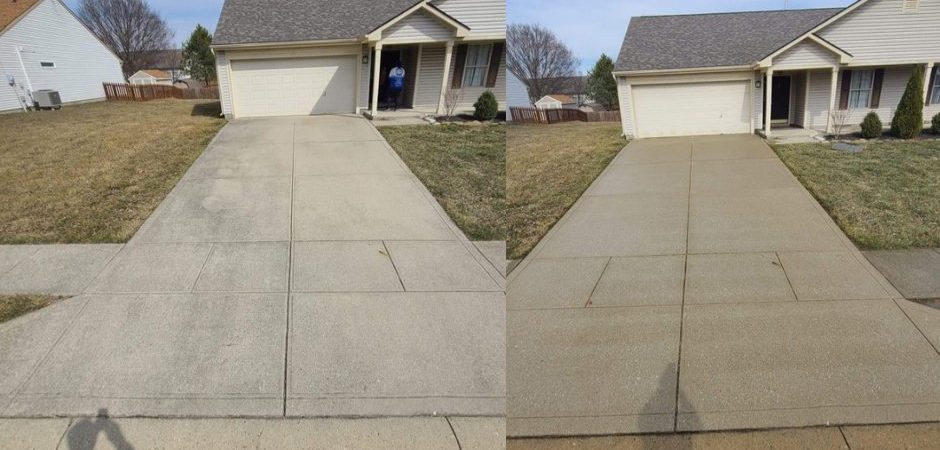
A freshly cleaned and sealed Lakeland driveway — sealing is the single highest-value maintenance step for Florida concrete.
What this guide covers
Whether you're protecting a concrete driveway, a backyard patio, a stamped concrete surface, or a pool deck, the principles are the same: pick the sealer that matches the surface, prepare it meticulously, apply thin coats, and respect the cure times. Skipping any one of those steps in Florida's climate is how sealing jobs fail.
Why Sealing Matters More in Lakeland
Concrete is porous — it drinks in water, oil, fertilizer, and everything else that lands on it. In a dry climate, that's a slow-motion problem. In Lakeland, where summer delivers an afternoon thunderstorm nearly every day and humidity rarely drops, unsealed concrete stays damp, grows mold and algae in shaded areas, and fades fast under the subtropical sun. Sealing closes those pores (or shields the surface), which is why it's the highest-return maintenance step for any slab on your property.
Sealing also protects the investment you made in the pour itself. If your concrete is already cracked, settled, or flaking, sealing won't fix it — address that first with concrete repair, resurfacing, or slab leveling — then seal the corrected surface to lock in the result.
1. Choose the Right Sealer for Lakeland's Climate
Using the wrong product in Florida's climate is the fastest route to a cloudy or yellowed finish. There are two main families of concrete sealers, and they behave very differently under Lakeland sun and rain.
Penetrating sealers (silane-siloxane or silicate)
Penetrating sealers soak directly into the concrete pores and chemically react below the surface, providing water and salt resistance without altering the natural look of the slab. Because they don't form a surface film, they won't peel, flake, or turn cloudy in Florida's humidity — which makes them the best choice for plain driveways, sidewalks, and pool decks where slip resistance matters. Once absorbed, they typically protect for 5 to 10 years before reapplication.
Topical / acrylic sealers
Topical sealers form a protective film on the surface and come in matte, satin, or gloss finishes — the gloss option is what produces the popular "wet look." They enhance and deepen concrete color, which is why they're the standard choice for decorative, stamped, or colored concrete. The trade-off: Florida's intense UV breaks acrylics down faster than in northern climates, so expect to reapply every 1 to 3 years, and choose a UV-stable, breathable formula to avoid yellowing and trapped-moisture hazing.
Which sealer for which surface?
As a rule of thumb for Lakeland homes: a plain broom-finish driveway or walkway does best with a penetrating silane-siloxane sealer; a stamped or colored patio needs a topical acrylic to bring out the color and protect the surface texture; and a pool deck needs either a penetrating sealer or a topical product with a slip-resistant additive — never a high-gloss film alone, which becomes dangerously slick when wet.
For product research, two useful starting points are the Paver Sealer Store, which carries professional-grade products with application guides, and Foundation Armor, which lets you compare sealer types and formulations side by side.
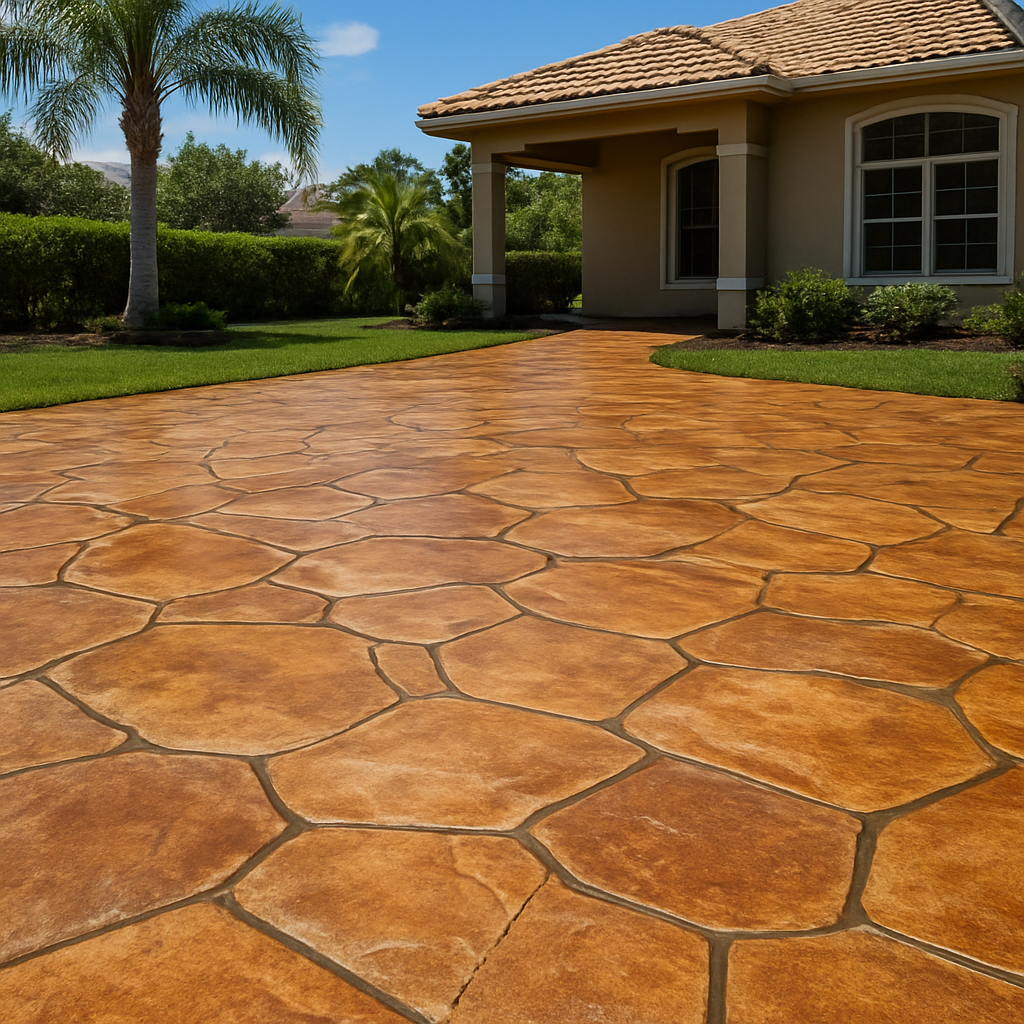
Topical acrylic sealers deepen color and add the popular "wet look" on stamped and decorative concrete.
2. Surface Prep & Cleaning
Trapped moisture is the number one cause of sealer failure in humid climates. Never seal a damp surface. Everything in this section exists to get the slab clean, dry, and porous before a drop of sealer touches it.
Clean the surface thoroughly
Pressure wash the concrete to strip away dirt, tire marks, mold, mildew, and algae — all of which thrive in Lakeland's humid climate and will be permanently locked under any sealer applied over them. For oil stains, scrub with a degreaser first. For stubborn organic growth, a mild bleach solution kills spores the pressure washer leaves behind. The sealer can only bond to clean, bare concrete.
Let the concrete dry completely
Trapped moisture is the number one cause of sealer failure in humid climates — it's what causes the milky white hazing or blushing you see on botched sealing jobs all over Central Florida. Never seal a damp surface. After washing, give the slab at least 24 hours of dry weather, and in Lakeland's summer pattern of daily afternoon thunderstorms, that means timing your project carefully — late fall through spring is the most forgiving window.
Run the water test
Before you buy anything, pour a cup of water onto the concrete. If the water beads up and sits on the surface, the pores are already sealed — either from a previous application or a dense steel-troweled finish — and a new coat of penetrating sealer won't absorb. If the water soaks in and darkens the concrete within a few minutes, the surface is porous and ready to accept sealer.
3. Application Process
The key to DIY concrete sealing is applying the product evenly and avoiding puddling. The technique matters as much as the product.
Pick the right application tool
For most residential driveways and patios, a pump-up tank sprayer gives the most even coverage with penetrating sealers, while a high-quality 3/8-inch nap paint roller on an extension handle works best for thicker topical acrylics. Avoid cheap foam rollers that shed and bargain sprayers that spit — uneven application is the most visible DIY mistake.
Apply thin, even passes
The golden rule of sealing is thin coats — always. Puddles and heavy passes are what cause bubbling, hazing, and peeling later. Work in manageable sections, keep a wet edge, and back-roll any pooling immediately. One thin coat that fully absorbs beats one thick coat that sits on the surface every time.
Cross-hatch the second coat
If the product calls for two coats, apply the second in a perpendicular (cross-hatch) direction to the first — north-south, then east-west — while the first coat is still slightly tacky, if the manufacturer's instructions recommend it. Cross-hatching evens out coverage and eliminates the striping that shows up in low-angle sunlight on single-direction applications.
Watch the weather window
Seal when the slab is shaded or the day is overcast, with surface temperatures between roughly 50°F and 90°F and no rain forecast for at least 24 hours. In Lakeland summers that often means starting early in the morning before the slab heats up and finishing well ahead of the typical afternoon storm.
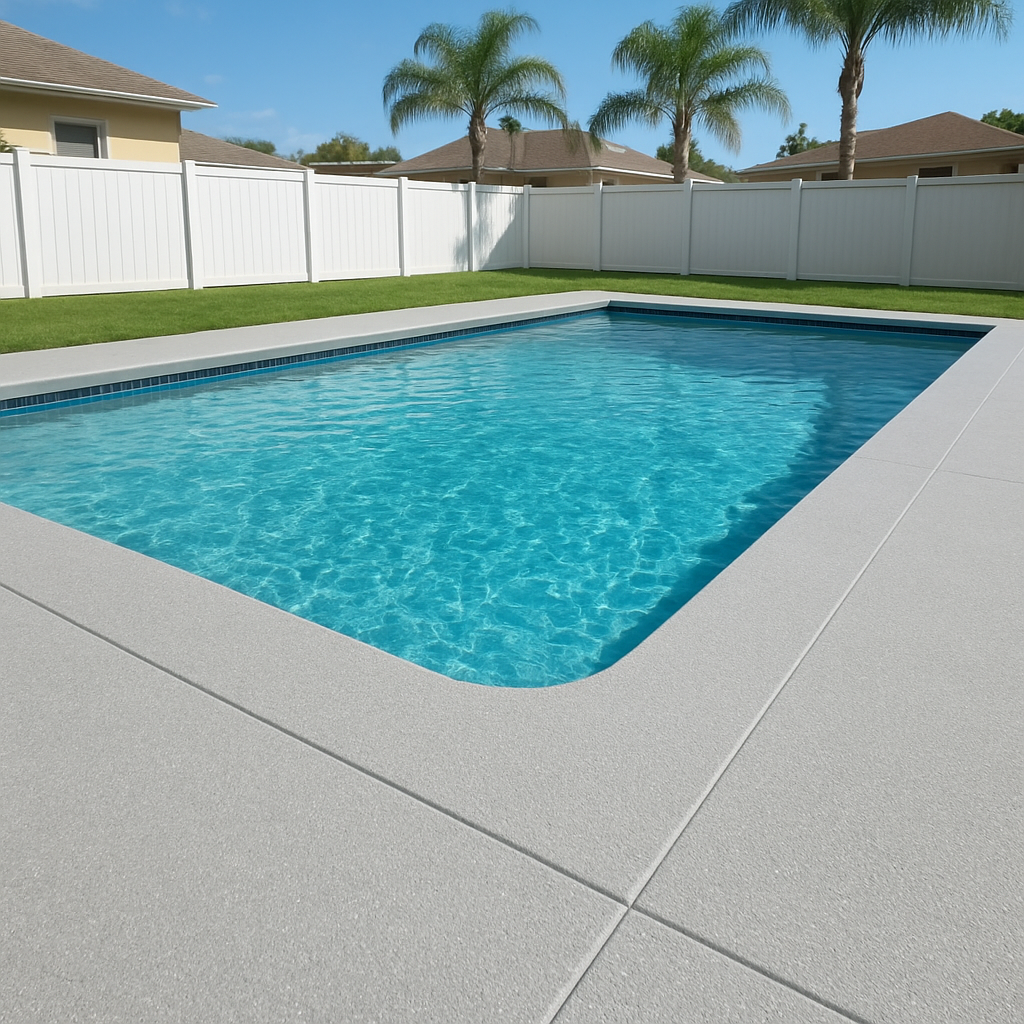
Pool decks need a penetrating sealer or a slip-resistant additive — never a slick high-gloss film alone.
4. Curing & Maintenance
The job isn't done when the last coat goes down. How you treat the surface in the first 72 hours — and the years after — determines how long the protection lasts.
Respect the cure times
Keep all foot traffic off freshly sealed concrete for at least 24 hours, and wait 48 to 72 hours before driving or parking vehicles on it. Hot tires on uncured acrylic sealer is one of the most common causes of peeling on Florida driveways. When in doubt, give it the extra day — the sealer is still hardening even after it feels dry to the touch.
Know your resealing schedule
Penetrating sealers typically last 5 to 10 years before reapplication. Topical acrylics need refreshing every 1 to 3 years in Florida's harsh UV — sooner on full-sun driveways, longer on shaded patios. The water test is your recurring check: when water stops beading and starts soaking in, it's time to reseal.
Maintain between applications
Sweep regularly, rinse off fertilizer and irrigation overspray (the minerals stain), and clean oil drips promptly. A sealed surface makes all of this dramatically easier — that's the payoff. If mold or algae return in shaded areas, a gentle wash keeps them from etching the sealer film.
Lakeland Sealing Quick Checklist
- Penetrating sealer for plain driveways, sidewalks, and pool decks; UV-stable acrylic for stamped, colored, or decorative surfaces
- Pressure wash off dirt, mold, algae, and tire marks; degrease oil stains
- Wait for a fully dry slab — never seal damp concrete
- Run the water test: beading means already sealed; absorption means ready
- Apply thin, even coats with a tank sprayer or quality roller
- Cross-hatch the second coat perpendicular to the first (if the product allows)
- No rain in the forecast for 24 hours; avoid sealing a hot, sun-baked slab
- 24 hours before foot traffic; 48–72 hours before vehicles
- Reseal penetrating products every 5–10 years; acrylics every 1–3 years in Florida sun
DIY or Hire a Lakeland Pro?
Sealing a plain driveway with a penetrating product is one of the most approachable DIY concrete projects there is. But some situations are worth handing to a professional: stripping a failed or peeling sealer, resealing decorative concrete where an application error is expensive to undo, pool decks that need slip-resistant systems, and any slab that needs patio resurfacing or an overlay before it's worth sealing at all.
To compare vetted local pros, browse the Lakeland contractor directory or see all concrete services. For budgeting, our concrete resurfacing cost guide and driveway cost guide show current Lakeland pricing, and the ready-mix concrete cost calculator helps if your project involves new concrete.
Frequently Asked Questions
Do I really need to seal concrete in Lakeland?
Yes — arguably more than in most of the country. Florida's combination of intense UV, daily summer rain, high humidity, and aggressive mold and algae growth attacks unsealed concrete from every direction. Sealing blocks moisture absorption, slows surface wear, prevents staining, and keeps decorative finishes from fading.
How much does concrete sealing cost?
DIY materials typically run $0.20–$0.75 per square foot depending on the product; professional application generally lands between $1 and $2 per square foot including prep. For full project pricing context, see our Lakeland concrete driveway cost guide and resurfacing cost guide.
Can I seal brand-new concrete right away?
No. New concrete needs to cure for at least 28 days before sealing so excess moisture can escape. Sealing too early traps that moisture and causes hazing. If a contractor poured your slab, ask whether a cure-and-seal product was already applied — it changes what you can put on top later.
My old sealer is peeling or cloudy — can I just seal over it?
Usually not. Failed topical sealer must be stripped or mechanically removed before resealing, or the new coat will fail along with the old one. Cloudiness (blushing) sometimes responds to a solvent wash, but widespread peeling means stripping. This is a case where hiring a resurfacing professional often costs less than repeated DIY attempts.
Should I hire a pro or do it myself?
A plain driveway with a penetrating sealer is a very manageable DIY weekend project. Stamped or decorative concrete, pool decks needing slip-resistant additives, and any surface with failing old sealer are better left to a professional — application errors on decorative work are expensive to undo. You can compare vetted local pros in our Lakeland contractor directory.
What time of year is best for sealing in Lakeland?
Late fall through spring. You get lower humidity, cooler slab temperatures, and a break from the daily afternoon thunderstorms that make summer sealing a timing gamble.
Keep Reading
Questions to Ask Before Hiring a Concrete Company
The complete pre-hire checklist — credentials, materials, sealers, and warranties.
How Much Does a Concrete Driveway Cost in Florida?
Per-square-foot pricing and what drives Florida driveway costs up or down.
Who Does Stamped Concrete Pool Decks in Lakeland FL?
Patterns, finishes, costs, and the local pros who specialize in pool decks.
How to Pick a Concrete Contractor
A practical vetting checklist — licensing, references, prep work, and red flags.
Want It Sealed Right the First Time?
Tell us what surface you're sealing — plain driveway, stamped patio, or pool deck — and whether it's been sealed before. We'll connect you with vetted Lakeland pros who handle prep, product selection, and application, and follow up with a quote.