Pouring & Curing
Pouring Concrete in Florida Heat and Rain: Best Time to Pour and How to Cure It Right
A July pour in Lakeland is a different job from the same slab in March. Sand under a driveway can be dusty at breakfast and sitting in a puddle after the afternoon storm. Heat sets the mix faster. Rain on concrete that has not set can wash the paste off the top. You can still pour in the summer. Know what to ask before the truck is on the way.
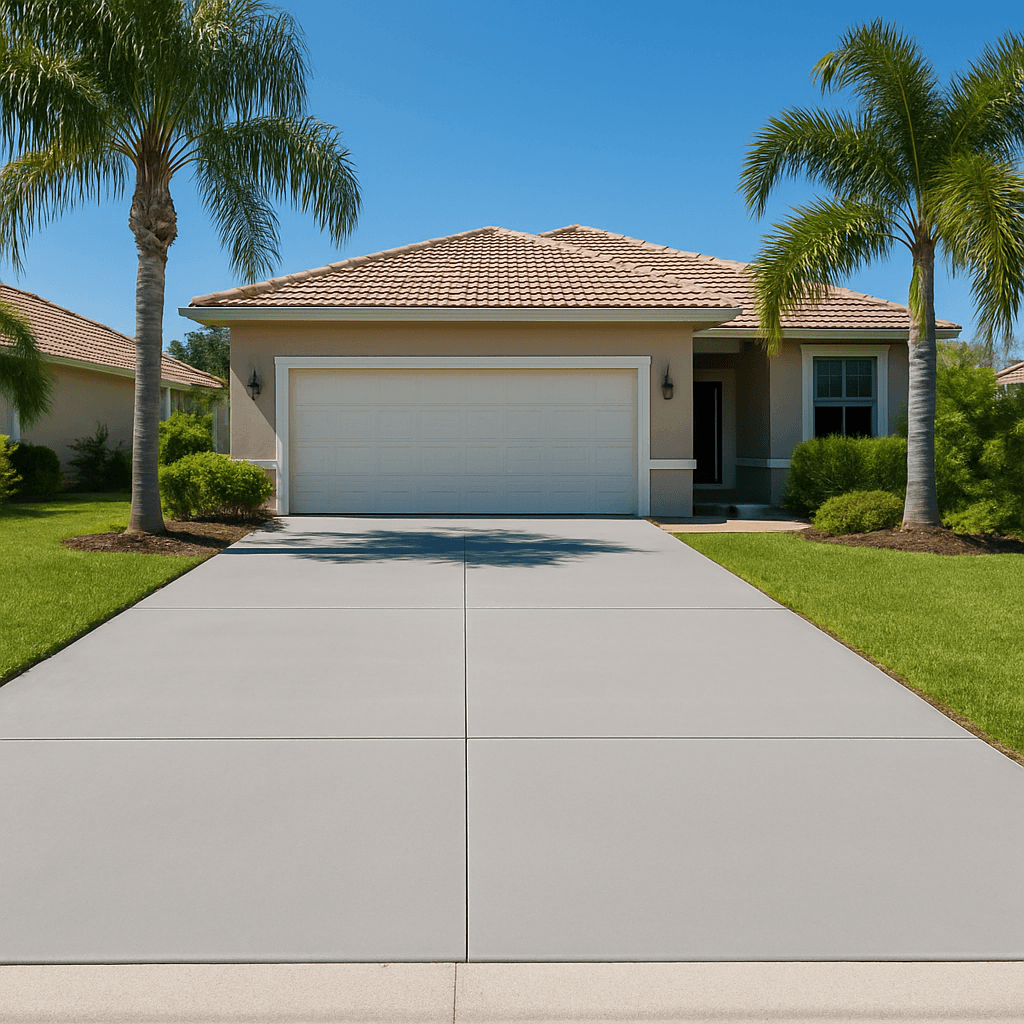
A finished driveway. The hard part in Polk County is pour day: heat, sand, and a storm that may show up after lunch.
What this guide covers
Why heat, humidity, storms, and sand matter here
When the air, the sun, and the concrete are hot, cement starts hardening sooner. The load can stiffen in the truck, the crew has less time to finish, and the surface can crust while the concrete below is still soft. Hot-weather guidance from the American Concrete Institute treats this as a set of conditions, not one thermometer reading: hot air, hot concrete, sun, wind, and dry air all speed moisture loss. A July driveway is not a January driveway.
Cracks the same afternoon are often plastic shrinkage cracks. The surface dried faster than bleed water could replace it. They are not the same as a panel that drops next summer after sand washes out. Why Lakeland driveways crack covers how to tell them apart.
Humidity slows evaporation, so a still, muggy morning is kinder than a dry breeze. It does not replace curing, and it does not save a stamped concrete patio if the mats miss the short window when the surface will take a pattern.
From late spring through early fall, Polk County often gets a clear morning and a storm after lunch. Winter Haven, Bartow, and south Lakeland get the same pattern. Many of those lots sit on sand. Compacted sand can carry a slab. Dry sand pulls water out of the mix, and a puddle in the forms softens the base. Dampen it until it is moist, not flooded. What to strip and compact before you dampen it is in the guide to sandy soil and base prep. Same for a patio or a shed pad.
Best time of day, and the easier season
In summer, place concrete in the morning and finish before the usual storm. A 2 p.m. start is a race with the radar. Cooler months give you more of the day. Ask what time the truck arrives, not only which day.
Late fall through spring is easier. Afternoon storms ease off, so a lot of Lakeland work lands from about November into April. Summer pours still happen. They need a morning start, plastic on the truck, and curing the same day. If storms already cover the morning, move the day. The radar does not change the permit. The Lakeland and Polk County permit guide covers which office has the lot, including unincorporated Polk County.
What to ask about hot-weather practices
Put these in the quote conversation before you pick a crew. You are not running the pour. You are checking that someone has a plan for a hot day.
- Dampening the subgrade. Will they wet the sand so it is damp, with no puddles left in the forms?
- Early placement. What time does the truck arrive in July, and what happens if it is late?
- Evaporation control. On a sunny, breezy finish, do they slow the surface from drying, or hose water onto a crust?
- Water at the truck. Extra water weakens the paste. A stiff load is a call to the plant, not a hose in the chute.
- Curing compound or wet curing. A spray-on membrane, or a cover kept damp. "It is humid" is not a cure. Sealing is a later coat. The Lakeland sealing guide is that step, after the slab has cured.
- Control joints. On a typical 4-inch pour, crews often space them about 8 to 12 feet apart, in panels closer to square than to a long strip. That is a field habit, not an ordinance. Cut deep enough to make a weak plane, often about a quarter of the thickness. A scratch does not count. See how thick a Florida slab needs to be.
- Sawcut timing.Cut once the surface can take the saw, and before the slab cracks on its own. Heat shortens that window. Coming back "in a few days" on a July pour is often late. Ask for a same-day plan.
What happens if it rains on fresh concrete
Before it has set
Rain can wash paste off and leave a top that dusts. If the slab is down and the storm is still coming, cover it. Plastic may mark the finish. That beats a washed-out surface. If rain hits while they are finishing, stop, and do not trowel the water in. If the paste is gone, that section may have to come out. That is concrete repair. Resurfacing fits later only when the damage is shallow and the slab under it is still sound.
After the surface is firm
Once a thumb will not dent it, a shower usually does less harm and can help the cure. Sand piled at a joint the next morning means water moved the base. Photograph paste loss, a deep footprint, or a dropped edge before anyone brooms it. Leave a right-of-way apron alone until you know who holds the permit.
How long before you walk or drive on it
These ranges are what many crews tell homeowners for ordinary residential flatwork. They are not a promise. Mix design, thickness, shade, and a hot wind all move the clock. Follow your contractor if they want you off it longer. In the heat the surface can feel hard the same evening and still be weak.
Foot traffic is often all right after about a day, sometimes two. Cars commonly wait about seven days. A trailer, moving truck, or RV waits longer. Strength keeps climbing for weeks. Twenty-eight days is a common design-strength reference, not a rule that the car waits a month. Furniture is usually closer to a week. Keep a stamped surface clear until the sealer can go on.
Common mistakes on a hot, stormy pour
- Adding water at the chute so the concrete "flows."
- Scheduling the pour for mid-afternoon in summer because that was the open slot.
- Pouring on sand that is dusty and dry, or on sand sitting in puddles.
- Skipping the cure because the air feels humid.
- Spraying a sealer the same day and calling it curing.
- Cutting joints days later, after a random crack already picked its own line.
- Finishing rainwater back into the surface.
- Letting cars on because the slab looks done.
- Leaving wrinkled plastic on the finish, or pulling the cover off the same afternoon.
- Ignoring the downspout that dumps on the new edge every time it rains.
If the slab is down and one of those happened, say so in the job request. A crew can sometimes cut missed joints, start curing the next morning, or tell you a section has to come out.
Frequently Asked Questions
What is the best time of day to pour concrete in Lakeland in the summer?
Early morning. Have the truck there before the strong sun, and plan to finish before the usual afternoon storm. A mid-afternoon start in July fights both heat and rain.
Can you pour concrete when the forecast says rain?
You can pour if the morning is dry and the crew can cover the slab. If storms are already lined up through the placement window, move the day. Once the concrete is down, cover it. Do not trowel rainwater into the surface.
How long should I stay off a new driveway?
For ordinary flatwork, about a day before walking and about a week before a passenger car. A trailer or moving truck waits longer. That is general guidance. Follow your contractor if they want you off it longer. A hard surface in the heat is not the same as a slab ready for a tire.
Does Florida humidity mean the slab will cure itself?
No. Humidity slows evaporation. It does not replace a curing compound or a wet cover. Dry sand under the forms can still pull water out of the bottom if nobody dampened it.
What is the difference between curing and sealing?
Curing keeps water in the concrete for the first days so it can harden. Sealing is a later coating for stains and wear. A sealer the afternoon of the pour is not a cure.
Keep Reading
Planning a pour in Lakeland or Polk County?
Tell us the size, whether it is a driveway, patio, or slab, and when you hope to pour. We pass it to a local crew. Ask, in the quote, what time they place concrete in the heat and how they cure it if a storm is coming.