Driveway Repair
Why Concrete Driveways Crack in Lakeland, FL (and What to Do About It)
A crack across a Lakeland driveway is usually one of a short list of problems: sand that was never packed, a summer storm that washed the edge out, a pour that dried too fast, joints that were never cut, a tree root, or a truck the slab was not built to carry. A sinkhole is on that list too, and it is the uncommon one. The crack is the symptom. The repair depends on which cause you actually have.
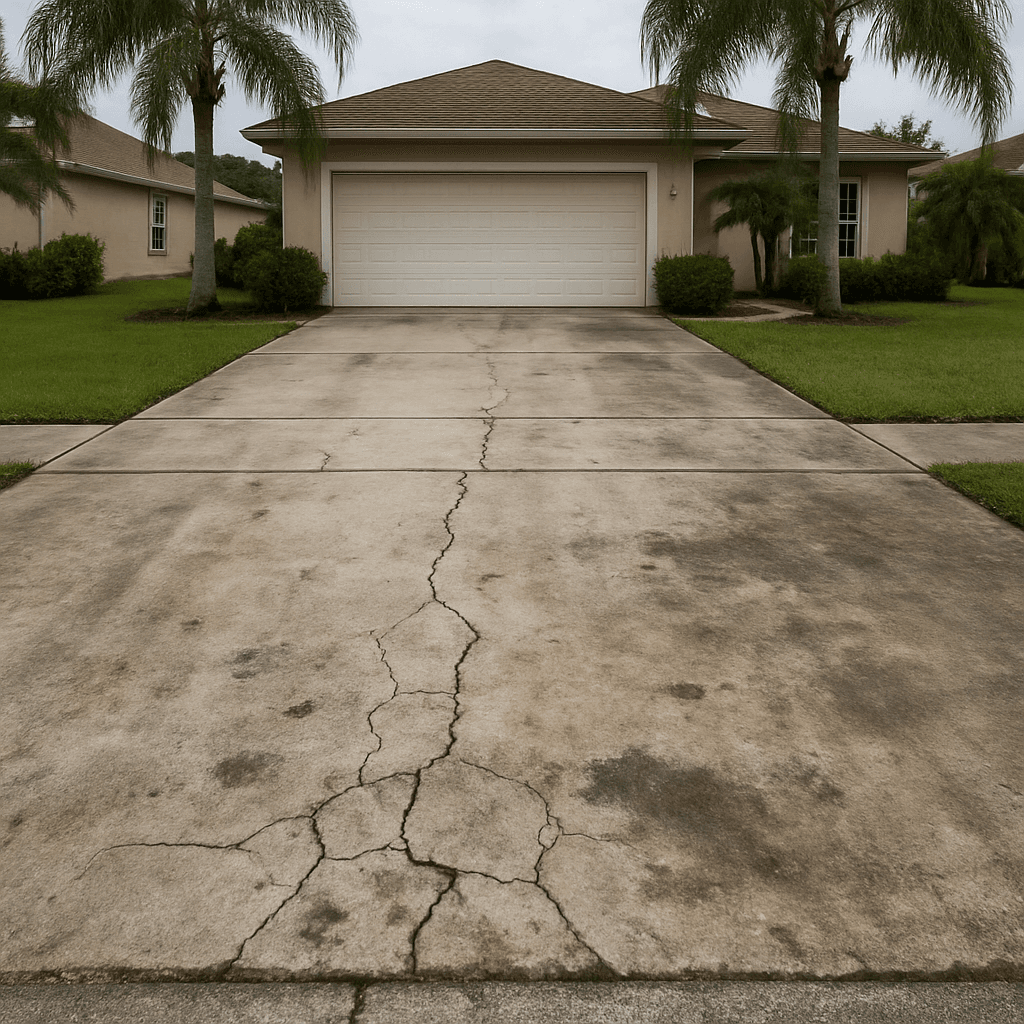
A crack that ignores the control joints and wanders down the middle of the slab. That pattern usually means the joint layout, the base, or both never did their job.
What this guide covers
How to tell a cosmetic crack from a structural one
Concrete shrinks as it hardens, so a sound driveway can still show a few thin lines. What matters is whether the slab is still one piece, still supported, and still level.
Cosmetic hairline cracks
A hairline crack is thin, both sides sit at the same height, and it is not getting wider. These often show up a few weeks after a hot pour. Fine map cracking that stays on the surface is usually a finishing mark. If you cannot fit the edge of a dime in the crack, the sides are flush, and the panel does not rock, fill it so water stays out and leave the slab alone.
Cracks that mean the slab moved
Treat it as structural when one side sits higher, a panel rocks or sounds hollow, sand pumps out of a joint after a hard rain, or the crack is wide enough to see into and still growing. A dropped corner, or a long crack from the garage to the street that ignores the joints, means the base moved. Caulk will not put that back.
A common version, on the south side of Lakeland and in plenty of other Polk County yards: the outside corner by the lawn is flush in May and low after the July storms. Water followed the joint, the sand left, and the corner followed the sand. Filling the line without fixing the grade sets up the same drop next summer.
If that crack lines up with new cracks in the block walls, doors that suddenly stick, or a round low spot in the yard, read the sinkhole signs worth a second look before you patch anything. Polk County has that geology. It is the uncommon explanation, and it is the one you should not guess about. The same check applies in Bartow and Winter Haven.
Why driveways crack in Lakeland and Polk County
Sandy soil and a base that was never compacted
Many Lakeland lots sit on sand. Packed clean sand can carry a slab. Loose sand, or topsoil left underneath, cannot. Organics rot into a void, loose sand settles the first time it is soaked, and the slab cracks where it bridges the soft spot. On a new concrete driveway or a shed or RV slab, ask whether they strip the organics and compact in layers. Extra thickness will not save a pour sitting on fluff. The order of that work, from stripping organics to forms and steel, is in sandy soil and base prep for a Polk County driveway.
Summer rain and washout under the edges
Summer storms push water along the edge or through an open joint, and the water takes sand with it. You get a crack parallel to the lawn, a dropped outside corner, or a joint that grew a lip. Clean sand on the joint after a hard rain means the base is leaving. Drainage repair and a regrade matter more than filler color. A downspout at the garage corner, or a sprinkler aimed at the same joint every morning, will do this to a slab that was fine on pour day.
Heat and shrinkage while it cures
Concrete shrinks as it loses water. On a July afternoon the surface can set while the concrete below is still soft, and short random cracks show up the same day. Adding water at the truck, so a stiff load rakes easier, makes that worse and weakens the paste. Crews who know the weather start early, leave the mix alone, and keep the slab from baking. What to ask about that pour, and what to do if rain hits the same day, is in the guide to pouring concrete in Florida heat and rain.
Control joints that are missing or too far apart
A control joint is a straight cut that tells the slab where it is allowed to crack. Skip the joints, or cut them days later, and the crack runs down the middle of the driveway. On a typical 4-inch pour, crews often space joints about 8 to 12 feet apart and keep panels closer to square than to a long rectangle. That spacing is a field habit, not a Lakeland ordinance. A scratch that barely breaks the surface does not control anything.
Tree roots
Older streets in Lakeland, Winter Haven, and Bartow often have oaks next to the concrete. A thickening root lifts one side of a panel and leaves a tented crack or a trip lip at the sidewalk. Cutting the root and repouring can work, and it can also injure the tree. If the tree is large and close, say that before anyone prices a patch.
Heavy vehicles
A broom-finish driveway around 4 inches is for cars and light trucks. A loaded work truck, a boat trailer parked in the same spot, or an RV that sits all summer is a different load, especially on the apron. The usual pattern is cracks in the wheel path or a broken corner at the curb. How thick a Florida slab needs to be covers why 4 inches is the usual residential number and when people go thicker.
Sinkholes, the rarer cause
Most cracked driveways in Polk County are soil, water, joints, or load. A few are not. If the drop is sudden, the low area is round, or the house is cracking in the same direction as the driveway, stop filling lines and use the sinkhole guide above. A surface patch will not close a void under the house.
What you can do yourself, and what needs a crew
Crack filling
A dormant hairline crack can be brushed clean, on a dry day, and filled with a flexible concrete crack filler so rain stays out. The filler is a seal, not a stitch. If the crack is still moving, the filler splits. Do not feather patch mortar over a height difference. That ramp sits on a void and breaks off. Wider cracks and anything with a lip belong with concrete repair or driveway repair, after someone has looked at the base.
Sealing the surface
A sealer slows staining. It does not glue a crack shut or replace missing sand. Seal after the crack is filled. The Lakeland sealing guide covers product and timing in this humidity. If the surface is already spalled, sealer only shines up the damage. That is when resurfacing comes up: a thin overlay on a slab that is still sound and no longer moving. An overlay on a rocking panel prints the crack back through.
Lifting a settled panel
A panel that has dropped but is still in one piece can often be raised. Crews drill small holes and pump foam or a cement slurry until it meets the next joint. This is not a weekend project, and it settles again if nobody stops the washout. Driveway leveling and concrete leveling cover that work. Lifting a shattered panel only lifts the pieces.
Replacing a section
When a corner is gone or the panel is in several pieces, saw that section out, rebuild the base, and pour it again. Line the new joints up with the panels you keep. An apron in the public right-of-way is a different permit question from a crack in your own driveway. The Lakeland and Polk County permit guide covers that, including Winter Haven. Replace the whole driveway only when most panels have failed. The driveway cost guide is the scope check for that.
How to keep the next pour from doing this
- Strip grass and topsoil, then compact the sand in layers. Do not pour over a soft spot because the truck is waiting.
- Cut control joints while the concrete is young, at a spacing the crew can explain. A joint missing from the sketch becomes a crack you live with.
- Send water away from the edges. Move the downspout and aim sprinklers off the joint.
- Give it time in the heat. Foot traffic first, cars later. Most crews want about a week before a car, and longer before a trailer or a moving truck.
- Keep trees off the edge. A sapling between the driveway and the sidewalk is a future lip. If the apron crosses the sidewalk, settle the permit before the pour.
Frequently Asked Questions
Is a hairline crack in a new driveway normal in Florida?
A thin crack with both sides still level often shows up as the slab shrinks, especially after a hot pour. Keep water out of it and watch whether it widens or one side drops. If it stays put, it is cosmetic.
Can I just fill the crack and forget it?
Filling a dormant hairline crack keeps rain out of the joint. Filler does not glue a moving slab together. If one side is higher, the panel rocks, or sand washes out after a storm, the cause is still there.
When is a cracked driveway a sinkhole?
Most of the time it is not. Look harder when the settlement is sudden, the low spot in the yard is round, or new cracks in the house line up with the driveway. Filler will not close a void under the slab.
Will resurfacing hide the cracks?
A thin overlay can refresh a worn surface when the slab is still sound and the cracks are stable. It prints a moving crack back through the new layer. Fix the movement first.
What should I ask before a new driveway is poured?
Ask what they strip out, how they compact the sand, where the joints go, how thick the slab is, and who keeps it from drying out the afternoon of the pour. If the apron crosses the sidewalk, ask who pulls the permit.
Keep Reading
Want a crew to look at the crack?
Tell us whether it is a hairline, a dropped panel, or a driveway you are ready to replace. We pass the job to a local crew. Ask them, in the quote, what caused it and whether they are filling, lifting, or cutting it out.