Foundation & Structural Guide
How Thick Does A Concrete Slab Need To Be In Florida?
The short answer: 4 inches. That's the standard thickness for nearly every residential concrete slab in Florida — driveways, patios, garage floors, and sidewalks alike. Here's why 4 inches is the number nearly every Lakeland contractor defaults to, when you actually need more, what Florida's building code says, and how thickness changes your final cost.
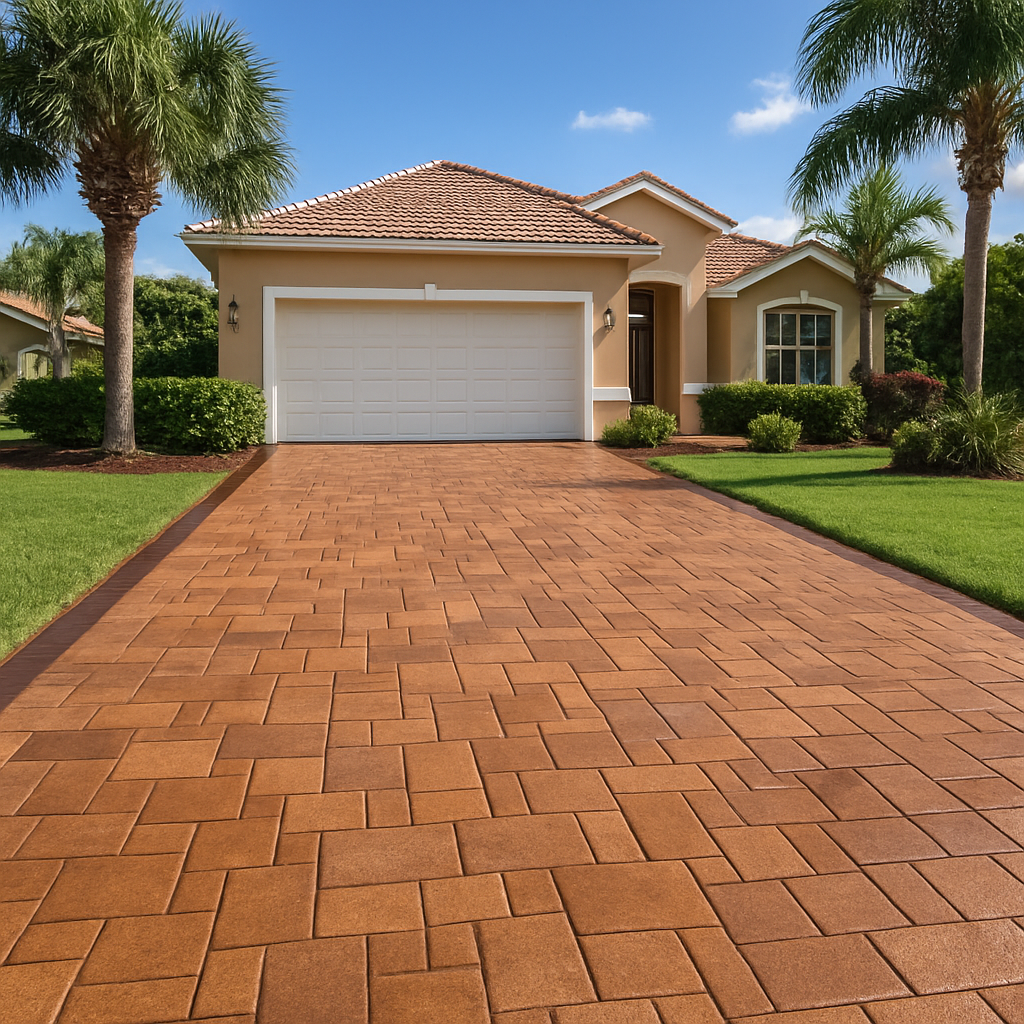
Four inches is the standard slab thickness behind nearly every driveway and patio pour in Florida.
1. Standard Slab Thickness by Project Type
Four inches covers the overwhelming majority of residential concrete work. The exceptions are areas that carry heavier, more concentrated loads than a passenger vehicle or foot traffic — those need extra depth.
| Project | Standard thickness | Notes |
|---|---|---|
| Sidewalks & walkways | 3.5–4 in. | Foot traffic only; 4 in. is standard practice |
| Patios | 4 in. | Occasional furniture load; 4 in. resists cracking better than 3.5 in. |
| Garage floors (residential) | 4 in. | Standard for passenger vehicles; add mesh or rebar for storage loads |
| Driveways (cars, light trucks) | 4 in. | The default for nearly every Florida residential driveway |
| Driveways (RVs, boats, heavy trucks) | 5–6 in. | Point loads from single axles need more depth than passenger cars |
| Pool decks | 4 in. | Often paired with control joints every 8–10 ft to manage cracking |
| Shed / storage building pads | 4 in. | 4 in. for a light shed; 5–6 in. for anything with vehicle access |
| Commercial parking & loading areas | 6 in.+ | Heavier, more frequent loading calls for engineered thickness and reinforcement |
These are general planning figures, not a substitute for your permit drawings. Your local building department has the final say on what's required for your specific project.
2. Why 4 Inches Is the Standard
Four inches isn't an arbitrary round number — it's the point where load capacity, crack resistance, cost, and long-term durability all line up for standard residential use.
Load-bearing capacity
A slab has to carry whatever sits or drives on it without cracking or punching through. At 4 inches, a properly poured, properly cured slab comfortably handles the weight of passenger vehicles, foot traffic, and typical patio furniture. Go thinner and you're relying on the concrete's tensile strength alone to resist point loads it wasn't sized for — which is exactly where cracking starts.
Crack resistance
Concrete is strong in compression but weak in tension, and a thin slab flexes more under load than a thick one. That flex is what opens hairline cracks into real cracks over time. Four inches gives enough mass to resist that flex under normal residential loads without needing extra reinforcement.
Cost-to-durability balance
You could pour every slab at 6 inches and never worry about it — but that's roughly 50% more concrete material for a driveway that will never see anything heavier than a car. Four inches is the point where cost and durability line up for standard residential use; going thicker only pays off where the load actually justifies it.
Long-term serviceability
A slab isn't just poured once — it has to survive decades of Florida heat cycling, afternoon thunderstorms, and UV exposure. Four inches gives enough depth that minor surface wear, sealcoat reapplication, or light resurfacing down the road doesn't compromise the structural slab underneath it.
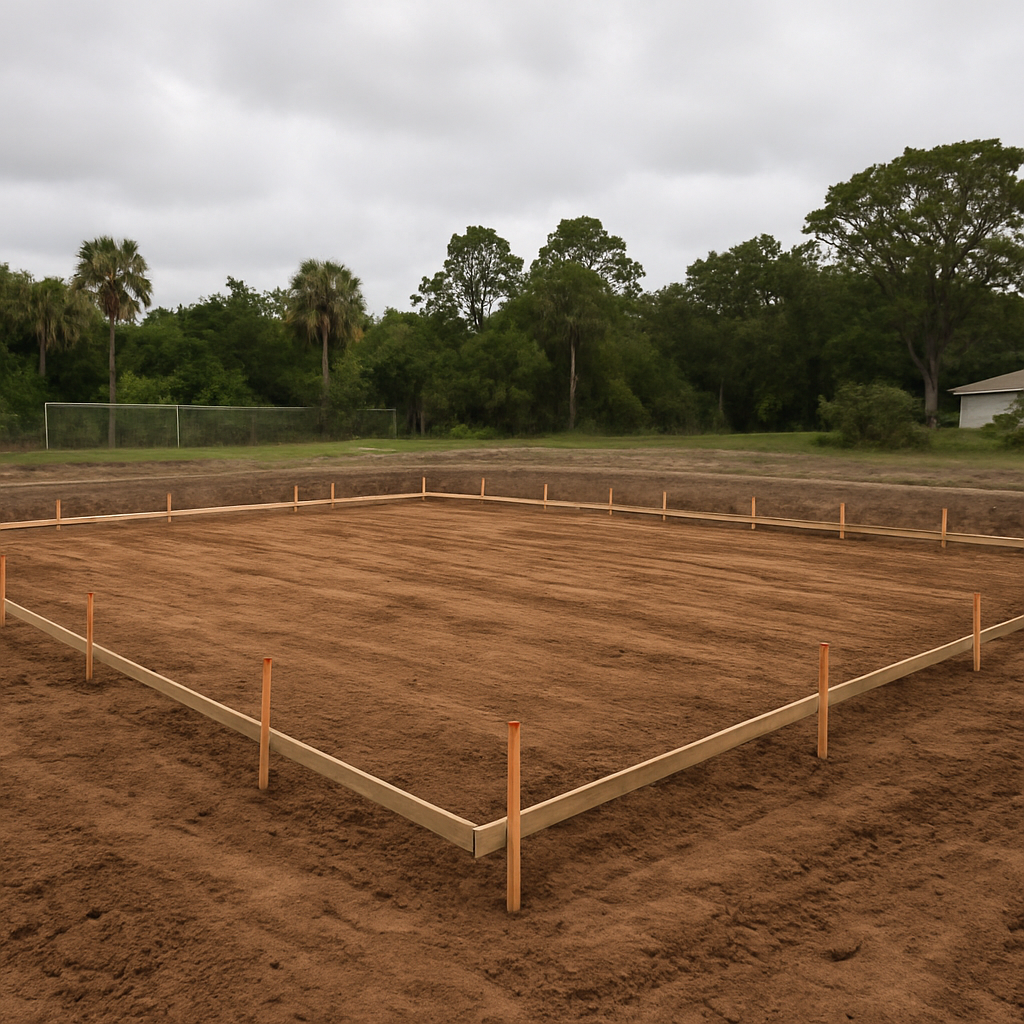
Slab thickness only performs as designed when the base underneath it is properly compacted first.
3. Florida-Specific Factors
Slab thickness is a national standard, but a few things about building in Florida — and Polk County specifically — change how that standard plays out on the ground.
Florida Building Code & ACI 332
The Florida Building Code incorporates ACI 332 (the American Concrete Institute's standard for residential concrete construction), which is where the 4-inch figure for standard residential slabs-on-grade comes from nationally, not just in Florida. Local building departments in Polk County and the City of Lakeland use these same reference standards when reviewing permit applications for driveways, patios, and slab-on-grade construction.
Sandy, well-draining soil
Most of Polk County sits on sandy soil, which drains well but doesn't compact and hold a slab the way denser clay soils do elsewhere. A properly compacted gravel base under the slab matters as much as the slab thickness itself — a 4-inch slab poured over a poorly compacted or unprepared subgrade will crack and settle regardless of thickness.
No frost depth, but real drainage demands
Florida slabs don't need the frost-protection depth that footings up north require, since the ground here doesn't freeze deep enough to heave a slab. What replaces that concern is drainage — Central Florida's heavy summer rain means a slab needs proper slope (typically 1/8 to 1/4 inch of fall per foot) away from structures, or water pooling against the edge will undermine the base over time.
Heat, humidity & control joints
Florida's wide daily temperature swings and intense summer sun make concrete expand and contract more than it would in a milder climate. Control joints — intentional cut or tooled grooves, typically every 8 to 10 feet — let the slab crack in a straight, hidden line at the joint instead of randomly across the surface. This matters at any thickness, but especially on larger driveways and patios.
4. How Thickness Affects Cost
Concrete is sold and priced by volume, so a thicker slab uses proportionally more material. Using our published Lakeland driveway cost guide range of $8–$18 per square foot for a standard 4-inch slab as the baseline, here's roughly how added thickness moves the price per square foot.
Cheaper up front, but higher long-term cracking and replacement risk
The baseline used for nearly all residential driveway and patio quotes
Roughly 15–20% more concrete volume than a 4 in. slab
Roughly 35–50% more concrete volume; typical for heavy vehicle areas
These are general planning ranges based on typical Lakeland-area pricing, not a quote — the exact cost depends on site prep, access, reinforcement, and finish. See our full cost guide hub for project-specific pricing by service and city.
5. What Happens If a Slab Is Poured Too Thin
- Cracking under normal loads that a properly sized slab would handle without issue
- Corner and joint spalling — flaking or pitting where stress concentrates
- Faster surface wear from Florida's heat cycling and UV exposure
- Settling or flexing under vehicle weight, especially on driveways
- A shorter overall lifespan, often requiring full replacement rather than a simple repair
A slab-on-grade can't easily be thickened after the fact — the fix is almost always a full tear-out and repour, which costs far more than getting the thickness right the first time. If you're already seeing cracking on an existing slab, our concrete repair guide covers what can be patched versus what needs replacement.
A Note on Reinforcement
Wire mesh, fiber additives, and rebar all help control where and how a slab cracks — but none of them substitute for correct thickness. Reinforcement manages the cracking that concrete does naturally as it cures and ages; thickness is what gives the slab the load capacity to avoid cracking from weight in the first place. A thin, heavily reinforced slab still isn't a substitute for pouring at the correct depth to begin with.
Slab Costs, Contractors & Related Guides
See local driveway and patio pricing, compare Lakeland concrete pros, or browse related guides.
Frequently Asked Questions
Is 4 inches really thick enough for a driveway in Florida?
Yes, for a standard residential driveway carrying passenger cars and light trucks, 4 inches is the accepted standard across Florida and matches ACI 332 residential guidelines. If you regularly park an RV, boat trailer, or heavy commercial vehicle on the driveway, ask your contractor about going to 5 or 6 inches in that specific area.
What's the minimum legal slab thickness in Florida?
Minimum thickness requirements come from the Florida Building Code's adoption of ACI 332 and are reviewed at the permit stage by your local building department. For most standard residential slabs-on-grade, 4 inches is both the code-referenced standard and the practical minimum contractors use — going below that isn't typically recommended even where a thinner pour might technically pass. Always confirm the exact requirement for your specific project with the Polk County or City of Lakeland building department.
Do I need rebar or wire mesh in a 4-inch slab?
For a standard residential driveway or patio, many Florida contractors use wire mesh or fiber reinforcement in a 4-inch slab to help control cracking, though it doesn't replace the slab's thickness — it's a supplement to it. Slabs carrying heavier or more concentrated loads typically use rebar instead of mesh. Ask your contractor what reinforcement plan they're using and why, since it's specific to soil conditions and expected use.
Does a thicker slab cost proportionally more?
Roughly, yes — concrete is sold by volume, so a 6-inch slab uses about 50% more material than a 4-inch slab of the same footprint. Labor, forming, and site prep costs don't scale up quite as fast, so the total price increase is usually somewhat less than the raw material increase, but you should expect a real cost jump for going thicker than the standard 4 inches.
What happens if a slab is poured too thin?
An undersized slab is more prone to cracking under normal loads, can develop stress fractures at joints and corners, and may spall (flake or pit at the surface) sooner than a properly sized slab. Because a slab-on-grade is difficult to reinforce or thicken after the fact, an undersized pour usually means an earlier, more expensive replacement rather than a simple repair.
Keep Reading
How Thick Should Your Concrete Footer Be?
Footer sizing for structural work — a different question from slab thickness.
How Much Does a Concrete Driveway Cost in Florida?
Per-square-foot pricing and what drives Florida driveway costs.
Concrete Maintenance Tips: Add Years To Your Concrete
Sitewide upkeep that keeps a properly poured slab lasting decades.
How To Fix A Concrete Patio Crack?
What to do if cracking has already started.
Planning a New Slab?
Tell us about your driveway, patio, or garage floor project and we'll connect you with vetted Lakeland concrete contractors who pour to the correct thickness and code — every time.