Pouring & Curing
How Long Before You Can Drive on New Concrete in Florida Heat?
The truck is gone, the broom finish looks done, and the car is still out at the curb. That is the question a concrete driveway job in Lakeland ends on. A surface that feels hard by supper is not a slab that can take a tire. Florida heat makes the skin set faster. It does not finish the cure.
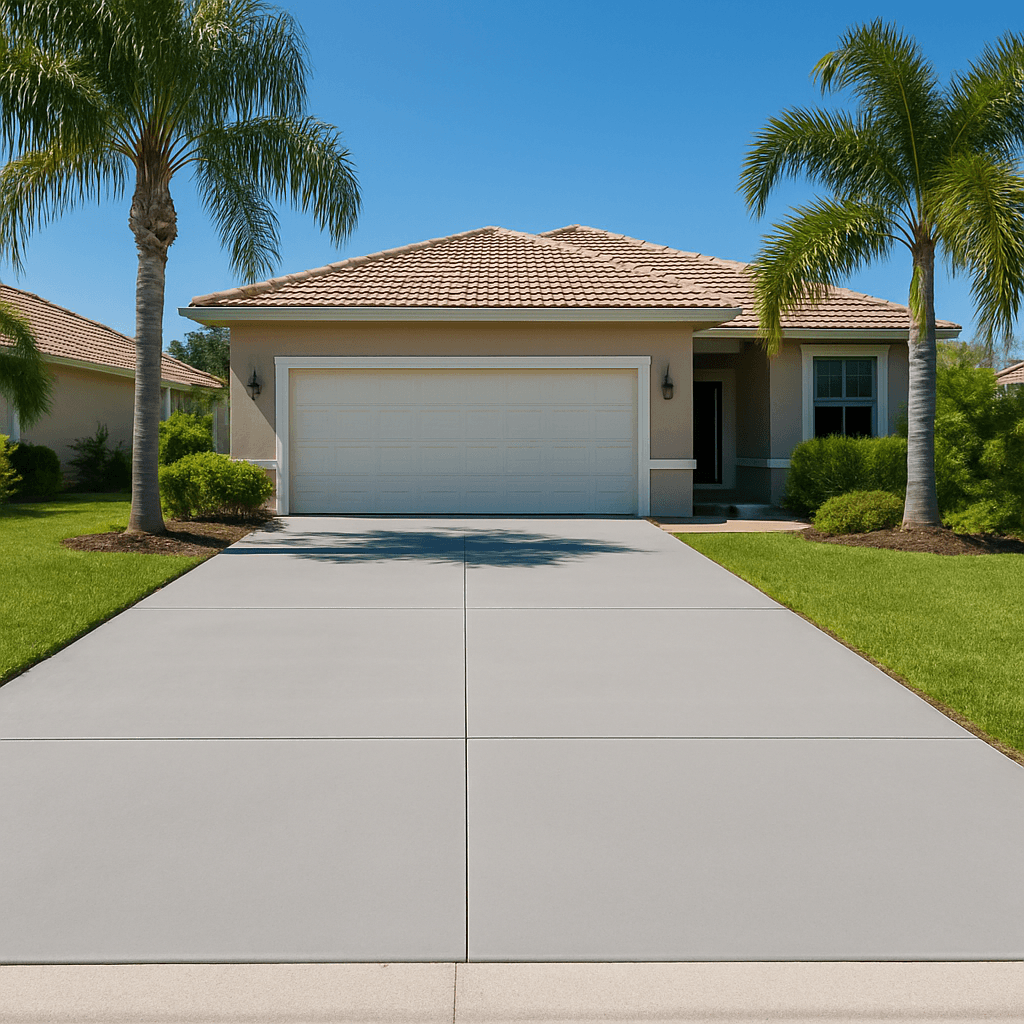
A finished driveway looks ready the day it is broomed. In Polk County heat, that look shows up before the slab can carry a car.
What this guide covers
The usual wait, and the caveats that go with it
For an ordinary broom-finish driveway or patio, foot traffic is often all right after about 24 hours. Some crews would rather you wait 48, especially when the pour sat in full sun. The Concrete Network driveway guide says to wait at least 24 hours before walking a standard finish, and to keep wheels off after that, including bicycles. A stamped surface waits longer than a broom finish.
A passenger car is a different load. That guide puts ordinary cars at about 7 to 10 days, still off the edges, and describes the slab then as about 70 percent of its potential strength. Treat the percentage as their rule of thumb for ordinary curing, not a test from your street. A week is the starting point this site already uses. If the crew wants longer, they saw the mix.
Heavier traffic waits longer. An RV, a loaded trailer, a moving truck, or the garbage truck that swings onto the apron is closer to 28 days, the age when specified compressive strength is commonly checked. That day is not a switch that finishes the slab, and it is not a reason to leave the family car in the street for a month. Garbage trucks and moving vans stay harder on the concrete than a family car even after that.
The NRMCA curing sheet (CIP 11) separates another clock. Curing, which means holding moisture and a favorable temperature so the cement can keep reacting, typically runs 3 to 7 days. Ending that cure is not the same sentence as "you may drive."
Hard enough to drive is not fully cured
Concrete does not dry the way paint dries. Cement reacts with water. Early, the paste stiffens and a careful walk is reasonable. Later, strength keeps climbing only if moisture is still there. Without that water, the cement cannot become the slab the mix was designed to be. A nail that does not dent on day two only proves the skin is firm. A sealer the afternoon of the pour is not a cure.
Why Florida heat makes the surface lie to you
Lakeland summers are hot, and the air is humid. Heat speeds the chemical set, so a July slab can feel walkable the same evening a cooler pour would still mark under a shoe. Humidity does not replace a cure. People skip the cover because the air feels wet. The slab can still lose water.
NRMCA's hot-weather sheet (CIP 12) follows ACI 305R. Hot weather there is a combination that speeds moisture loss and hydration: high air and concrete temperature, wind, sun, and, in drier climates, low humidity. A Polk County afternoon often has the heat and the sun without desert air. Water can still leave a driveway that sits open from late morning, and that shows up as plastic shrinkage cracks and a weaker surface. Concrete cured hot early also gains strength fast and is not as strong later as the same concrete cured at a moderate temperature.
The skin looks ready while the interior is still catching up. When to place the concrete, how to cover it, and what a storm does in the first hours are in pouring concrete in Florida heat and rain. A shaded patiois a different clock from a driveway in the afternoon sun. Do not copy a neighbor's Sunday parking story.
What moves the date on your lot
Mix, thickness, and the hour you pour
A retarder keeps the mix workable longer in the heat. An accelerator, sometimes used to finish before a storm, does the opposite. Water added at the chute is easier to place and weaker afterward. Ask what was ordered.
A driveway and a patio here are often the same nominal thickness. Our slab thickness guide treats about 4 inches as the usual residential figure, and more where an RV or a boat will sit. The load is not the same. A patio takes feet and chairs. A driveway takes a tire, which is a small patch of pressure. A concrete slab under a shed is a third case. If a vehicle will cross it, say so before anyone calls it a light pad.
Sun sets the skin first. Shade slows that. A midday pour in August is racing the heat. An early pour leaves time to finish and cover. An evening pour misses the worst sun and then sits warm overnight, which still speeds the set. None of that means you drive the next morning.
Rain, sand, and the base under the slab
Rain on concrete that has stiffened can help the cure. Rain on paste washes it. Do not shorten the wait to make up that day. Polk County sand can feel firm in the morning and soft after a storm if nobody compacted it, and an early tire makes a loose base worse. What to ask is in the sandy-soil base guide. Missed joints, a skipped cure, and that washout are why driveways crack in Lakeland.
What a tire does if you are early
A tire prints soft paste, and you will not broom that out. The edge by the grass and the apron has nothing beside it, so the same tire breaks a corner. Stay off the edges even after a car is allowed in the middle. An apron poured with the drive is often public right-of-way. Read the apron guide before anyone treats that strip as parking.
If the top dries while the bottom stays damp, the edges curl up and a tire snaps them. Sun and a skipped cure are how that starts. A ladder foot, a trash can, a bike, a dumpster, or a trailer jack can do it too. A print is permanent. A broken corner is driveway repair, not a sealer coat.
What to do on a Lakeland street
Set cones at the apron the day of the pour and leave them until the date you were given. Park on concrete that is already hard. Use the street if overnight parking is allowed. If it is not, ask a neighbor. One night on the new slab is how the print happens. Do not block the sidewalk, and keep the garbage can off the fresh edge.
- Ask for three dates in the quote: walking, a passenger car, and anything heavier.
- Ask which cure they are using. A compound, wet cover, or kept-damp surface is the work. "It is humid" is not.
- Tell them about trash day, a boat, or anyone who must cross the apron.
- Leave the cover on for the days they name. Pulling it the same afternoon because the slab looks dry undoes the cure.
If they will not write the dates down, the schedule is a guess. Their mix beats this article. Permits are separate. The Lakeland and Polk County permit guide lists what each office actually requires. Price comparisons belong in how much a concrete driveway costs in Florida.
Frequently Asked Questions
How long before I can walk on new concrete in Florida heat?
Careful foot traffic is often all right after about 24 hours, and some crews want 48 if the slab sat in full sun. Concrete Network says to wait at least 24 hours on a broom finish, and longer on stamped concrete. If your contractor writes a later date, use that.
How long before I can drive a car on a new Lakeland driveway?
Passenger cars commonly wait about 7 to 10 days. Concrete Network publishes that window and still says to stay off the edges. Heat can make the surface feel ready sooner. It does not move the car up unless the crew who placed your mix says so in writing.
Is a hard surface the same as a full cure?
No. A firm skin means a shoe may not dent it. Specified strength is commonly checked at 28 days, and the concrete only keeps gaining if it held water. Driving at a week is not that 28-day check.
Does Lakeland heat let me drive sooner?
Heat speeds the set, so the surface hardens faster. It can also pull water out and leave a weaker slab later. Humidity does not replace a cover or a curing compound. Do not park on it because it looks finished on day two.
What happens if I drive on it too early?
A tire can print the surface, break a corner that has no slab beside it, or snap an edge that curled because the top dried first. Those marks do not broom out. Bikes, trash cans, ladder feet, and trailer jacks can do the same thing.
When can an RV or garbage truck use the new driveway?
Heavier than a passenger car means a longer wait. Concrete Network puts RVs and large trucks at about 28 days, and it treats garbage trucks and moving vans as harder use than a family car. Say so before the pour if one of those has to cross the slab.
Keep Reading
Need a date you can plan around?
Send the address and whether it is a driveway, patio, or slab. We pass the request to a local crew. Ask them, in writing, when a car can use it and how they cure it in the heat.