Driveways & Right-of-Way
Driveway Aprons and Right-of-Way Rules for Concrete in Lakeland and Polk County
A lot of driveway quotes stop at the sidewalk. The concrete past that line, the apron, sits in the public right-of-way. The city or the county owns the ground under it, and they do not review it the same way they review the slab on your lot. If you are replacing a concrete driveway in Lakeland or Polk County, the apron is the piece to settle before anyone orders the truck.
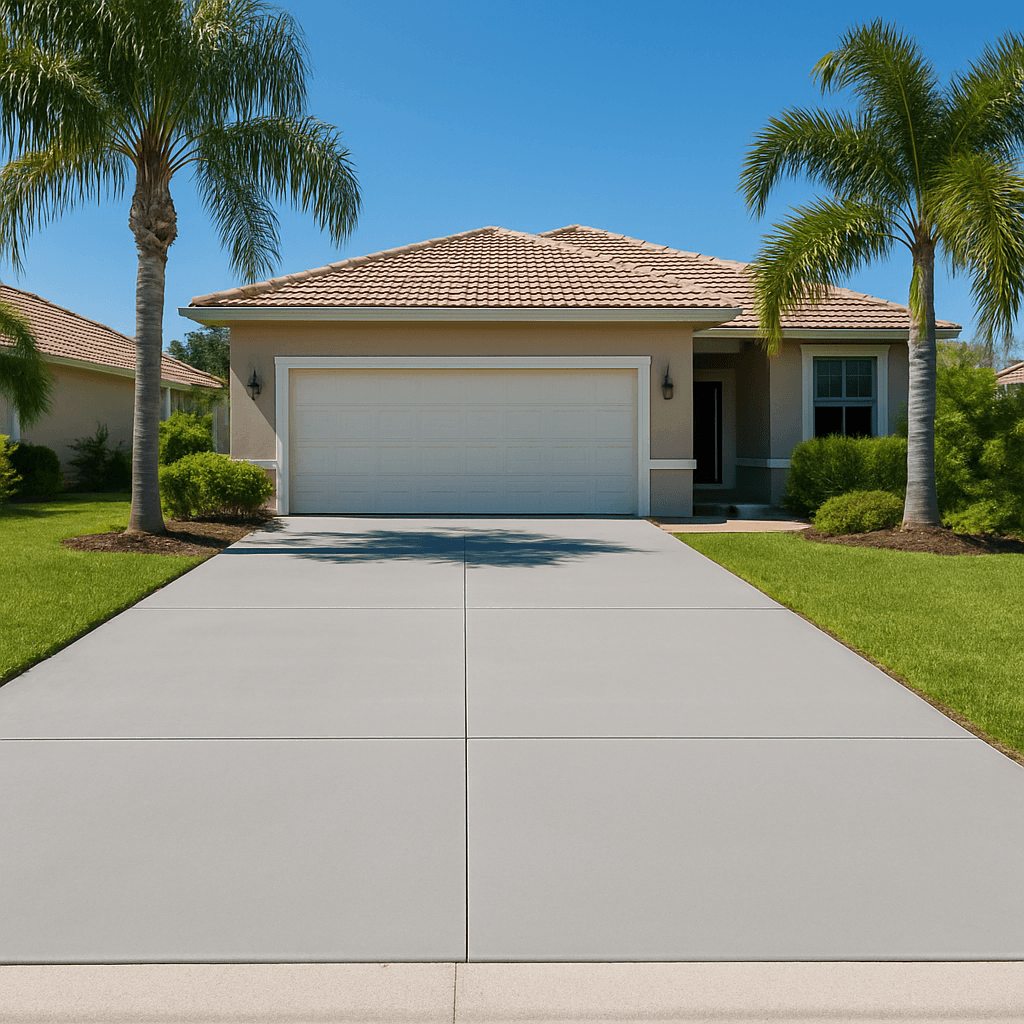
The last few feet, where the slab meets the curb, are the apron. On a typical street that concrete is in the public right-of-way, not on the private lot.
What this guide covers
The apron is not the rest of the driveway
The private driveway is the slab on your lot, from the garage to the sidewalk or property line. The apron is the rest of the way. On a curb-and-gutter road it flares from the sidewalk to the gutter. With no sidewalk it starts at the property line. On a swale street it dips through the ditch to the pavement. That strip is public right-of-way. The joint at the sidewalk is easy to read as a control joint, and a quote that never says "apron" may stop there and leave the cracked panel at the curb.
Lakeland: a driveway permit and a right-of-way permit
The Building Inspection permit page lists driveways as permit work. Public Works says Building Inspection processes them, Public Works Engineering inspects them, and a pre-construction meeting is due at least 48 hours before site work. Work in the city right-of-way also needs a right-of-way use permit and has to follow the Engineering Standards Manual. The building permit covers the driveway. The right-of-way permit covers the public ground. The apron is why the second one shows up. The owner-builder package still sends driveway permits to Public Works. The permit guide quotes those pages.
No invented apron thickness
I did not find a published Lakeland thickness, flare, or strength for an apron. I will not guess one. Ask engineering for the current standard, and check the current fee schedule rather than an old quote. If you are comparing driveway contractors in Lakeland, ask in writing who pulls each permit.
Unincorporated Polk County is a different list
A Lakeland mailing address is not city limits. Outside the city, the Polk County permitting page names portions of driveways in the right-of-way or a setback, plus sidewalks and certain slabs. The apron is that right-of-way portion. A pour that never enters the right-of-way is not spelled out as clearly, and driveways are not on the short exempt list. Fees are in Resolution 17-025, due when the permit is issued. Check the schedule. Paver aprons use the county's notarized release, covered in the permit guide.
Nearby cities publish their own numbers
Winter Haven's driveway connection form is required on top of a building permit for right-of-way work. It calls for 6-inch, 3,000 psi concrete with wire or fiber mesh, to the property line or at least 10 feet from the edge of the street, a 3-foot flare each side, and an inspection before the pour. Those figures are Winter Haven's. Do not copy them onto a Lakeland or county apron. Bartow lists its own driveway connection permit. The fee is whatever the current schedule shows.
Match the curb, the gutter, and the opening you have
The gutter is a channel. An apron that dams it sends water across the sidewalk or into the lane, and a lip at the sidewalk is a toe-catcher. I will not invent the fraction of an inch Lakeland accepts. Form to the curb, gutter, and sidewalk that are already there.
A wider flare is a new opening
Replacing the apron at the same width is not the same job as flaring it for a boat or a third car. A wider throat is a new connection. Winter Haven limits openings by lot width. I did not find a Lakeland width on the permit pages, so ask first. An HOA can also reject a wider apron the city would allow. On a swale street, do not fill the ditch flat. That pushes water onto the road or the next yard.
Why contractors price the apron on its own line
The area is small, and the costs do not shrink with it. Someone pulls a right-of-way permit and waits on an inspection. The crew saws off the curb, hits two existing elevations, and often works next to traffic. If a sidewalk panel breaks, somebody replaces it. Winter Haven's form says damaged sidewalks go back. Ask Lakeland the same question rather than assuming the manual uses that sentence.
One per-square-foot number borrowed from the rest of the drive hides the permit, the saw, and the curb tie-in. Use how much a concrete driveway costs in Florida for the private-slab ranges already on this site, and ask for the apron, the tear-out, and the permit fee as their own lines. The fee is the current schedule.
Four lines worth reading on the bid
- Does the price cross the sidewalk, or stop at the property line?
- Who applies for the building permit, and who applies for the right-of-way permit?
- If a sidewalk panel, curb, or swale is disturbed, is putting it back included?
- Does the opening stay the width it is now?
Sand and water collect at the street edge
Clean, compacted sand can carry a slab. At the street, gutter flow and a summer downpour leave through the joint, take sand with them, and the corner drops. A swale apron sits lower than the garage slab and stays wet longer. Fresh sand on the gutter after a storm means the ground is leaving. That is the same washout as why driveways crack in Lakeland, at the public edge. Ask the sandy-soil base prep questions here too: what gets dug out, what gets compacted, and where the water goes. Shoulder sand in a hole is not a base.
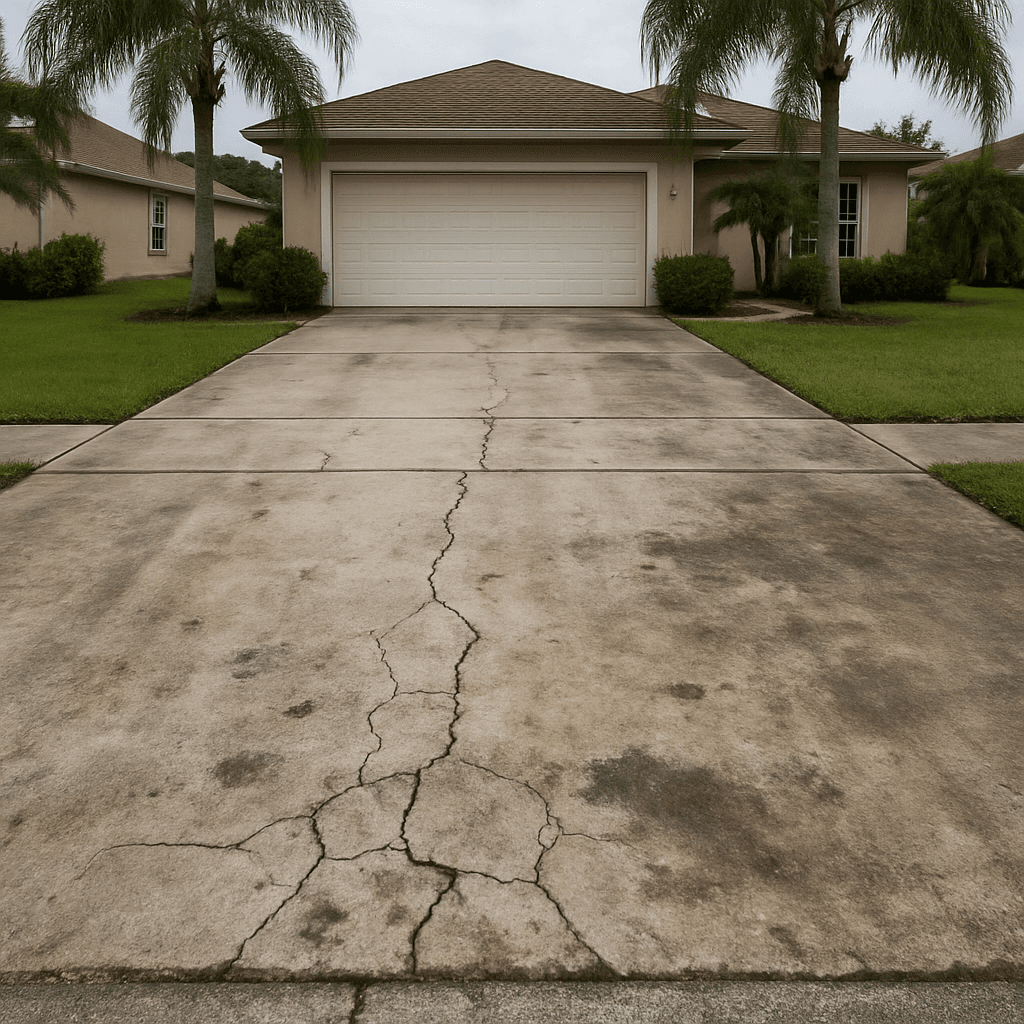
A crack that reaches the gutter, or a panel that has dropped, is an apron problem. A surface stain on a level slab is not the same repair.
When to replace the apron, and when a patch is enough
Replace the apron when the grade is gone: a lip at the gutter or sidewalk, a panel that rocks, sand after rain, or a new driveway that would leave a step at the sidewalk.
A patch has a narrow window
A small spall can be a driveway repair when both sides are still level, the gutter still flows, and the width is not changing. Ask anyway. Neither Lakeland nor Polk publishes a line that says crack filling on an apron is exempt. As the resurfacing versus replacement guide says about the private slab, a topping does not fix concrete that has moved. Do not saw the apron out on a Saturday because the truck comes Monday.
Call 811 before anyone cuts the apron
A permit is not a locate. Section 556.105 wants notice at least two full business days before excavation. The day you call does not count. Weekends and the holidays named in the statute do not count. Sunshine 811 treats grading as digging. Cutting an apron is that work, where water, sewer, gas, and communications often cross. A ticket lasts 30 calendar days, and the tolerance zone is 24 inches out from a marked line. The utilities paint, not 811. Submit at sunshine811.com or call 811 before the saw shows up.
Frequently Asked Questions
What is a concrete driveway apron?
It is the concrete between the private driveway and the street. On a curb-and-gutter road that is the flared strip from the sidewalk, or from the property line if there is no sidewalk, out to the gutter. That ground is public right-of-way. The slab on your lot is a different review.
Does a Lakeland apron need a different permit than the driveway?
Lakeland lists driveways as permit work, and Public Works inspects them. Work in the city right-of-way also needs a right-of-way use permit. The apron is the piece that usually triggers that second permit. The city pages linked here do not publish an apron thickness or flare, so ask engineering instead of copying a neighbor.
What about an apron in unincorporated Polk County?
The county names portions of driveways in the right-of-way, or inside a setback, as permit work. A replacement that never leaves your lot is not spelled out as clearly. If the concrete ties into a county road or a swale, ask the Building Division. A Lakeland mailing address does not put the lot inside the city.
Should I replace a broken apron or patch it?
Patch a small spall only when the panel is still at the right height, the gutter still carries water, and the city or county accepts that scope. Replace it when the panel has dropped, sand washes out after rain, or a new driveway would leave a step at the sidewalk. Neither office publishes a line that says apron crack filling is exempt.
Do I need Sunshine 811 before an apron is cut out?
Yes, if the crew excavates or grades. Florida law wants notice at least two full business days before that work. The day you submit the ticket does not count, and weekends do not count. A driveway permit is not a utility locate. Service lines often cross at the street edge.
Keep Reading
Replacing a driveway that meets the street?
Send the address, a photo of the curb or swale, and whether the quote should include the apron. We pass the request to a local crew. Ask them who pulls the right-of-way permit, and whether the apron is its own line.