Slabs and pads in Polk County
Concrete Slabs for Sheds, Carports, and RV Pads in Lakeland, FL
A shed kit, a metal carport, and a motorhome do not want the same concrete. Around Lakeland the ground is usually sand, rain shows up after lunch, and the building on the pad is what the wind grabs. Size the pad to that load, then match the thickness, the base, the slope, and the anchors.
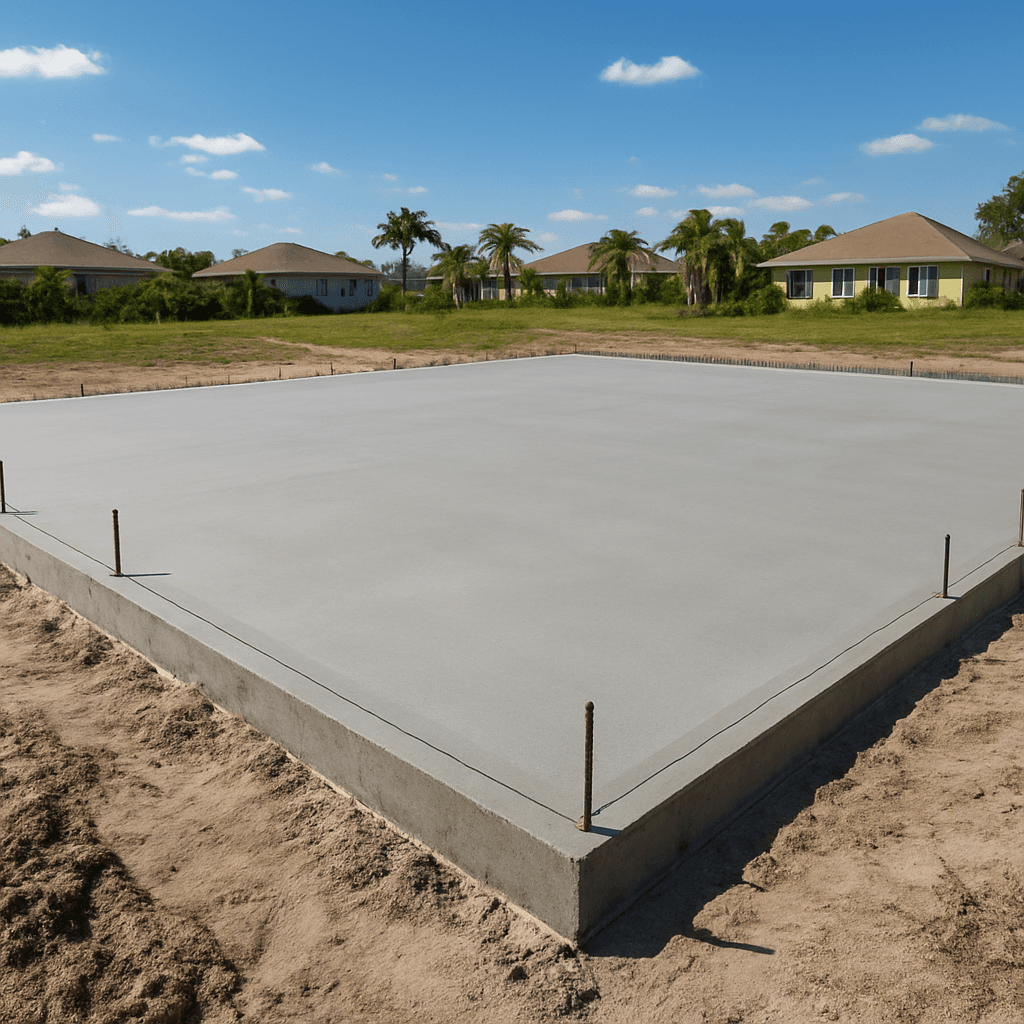
Bolts set in the edge of a new pad. The shed or carport ties to those, or to anchors drilled after the cure. The layout comes from the kit or the plans.
What this guide covers
Size the pad to the shed, carport, or coach
Start with the thing that will sit on the concrete. A neighbor's round number is how pads come up short.
| Use | What to measure | What the pour has to do |
|---|---|---|
| Light shed | Kit floor, ramp, door swing, and roof drip | About 4 in. on this site's thickness guide. Anchors from the kit. |
| Carport | Roof footprint, post spots, and the vehicle length | Thicker concrete or a footing where each post lands. |
| RV, boat, or trailer | Coach with slides, hitch, and a walk on the utility side | About 5 to 6 in. where a vehicle sits, with steel named on the bid. |
A shed pad should follow the kit floor, including a ramp. Many kits want the slab past the wall line so the roof drip hits concrete instead of sand. Leave room for the door to swing. A pad that stops at the walls puts that swing in the grass.
A carport is the roof footprint plus the posts. Mark those spots before the pour so the crew can thicken them or set anchors while the concrete is wet. Keep the bumper on the pad. If each post is its own footer, read the footer thickness guide. A bolt in a thin pad is a different connection.
Measure an RV the way it will be parked: slides out if they stay out, hitch on the concrete if it stays coupled, and room to walk the utility side. Tires on the dirt edge sink that corner. A boat or trailer is the same idea, and the tongue jack needs a solid spot.
Write the size and the use on the request. "A slab out back" gets priced like a light patio. Scope it from concrete slabs and pads.
Thickness and reinforcement follow the load
The slab thickness guide treats about 4 inches as the start for a light shed, and about 5 or 6 inches where an RV, boat, or heavy truck sits. A car on a driveway is the 4-inch case. A motorhome is not. Shop floors are often thicker still, with rebar and a thickened edge.
Mesh or fiber holds cracks tight on a light pad. Rebar is the step up under a vehicle or a post. The quote should name which one and whether the edge is thickened under posts or tire lines. Steel does not fix a thin pad on soft sand. If the drawings call out a footing, follow them.
A small AC or generator pad is a lighter job. The cement pad installation list is the closer match, and it should not be priced like an RV pad.
Sandy soil under a Polk County pad
Clean, compacted sand can carry the pad. Loose sand, buried sod, a stump, or a muck pocket settles, and a thicker pour will not bridge it. The sandy-soil base guide covers stripping organics, compacting in layers, and limerock or crushed concrete on a wet cut. Say if the corner holds water, a tree came out, or fill was dumped there. That is the usual first-summer crack, the same one why concrete cracks in Lakeland describes, on a city lot or a rural one toward Bartow.
Drainage, and what Florida rain does to the edge
Water on the slab, or off a roof onto the joint, carries sand out from under the edge. A dropped corner by the lawn is usually that washout. The thickness guide uses about 1/8 to 1/4 inch of fall per foot, away from the house and off the shed wall, with the door out of the low spot. A dead-level RV pad puddles under the coach. A mild fall to one side works if the unit will not roll. Point downspouts past the slab.
Summers are hot early and often stormy after lunch. Pouring in Florida heat and rain covers that clock. Keep the coach off the pad the next afternoon. The slab page describes foot traffic after a day or two, lighter loads after about a week, and a vehicle or a building closer to full strength, often discussed as 28 days. Get a date from the crew before delivery.
Anchors and tie-downs for wind
Wind lifts the shed or the carport, not the concrete. The anchors hold the building down. Lakeland is outside the high-velocity zone used for Miami-Dade and Broward, and it is still hurricane country. A metal roof is a sail.
Use the kit's anchor layout or the engineered plans. Some bolts go in wet. Others are drilled after the cure. A guessed spacing is how a post fails inspection or pulls out in a storm. Price a thickened edge, pier, or footing if the plans call for one under each carport post, and have that layout on site the morning of the pour.
Permits, setbacks, and the HOA
The permit guide quotes the city and county pages. The answer depends on the address and on what the slab supports.
Inside Lakeland, the building division's examples of permit work include carports, porches, and storage buildings over a size the city publishes. The city says the list is not complete. A carport is named. A small equipment pad is a different question.
In unincorporated Polk County, the published bullet includes slabs next to a building, slabs meant to support a structure, elevated slabs, and concrete in a right-of-way or a setback. A shed slab often falls in the "support a structure" group. An empty pad is not spelled out the same way. Setbacks from property lines and easements still apply.
An HOA is not the building department. Lakeland's page says to check association rules even when no permit is required. A carport the city will review can still be one the architectural committee turns down.
Before the forms go in, call the office for that address: City of Lakeland Building Inspection, or the Polk County Building Division outside the city. Ask if this slab and building need a permit, what the setback is, and whether anchors have to be on the plans. A house in Winter Havenuses that city's office.
What changes the price
Typical planning ranges on the slab page, for budgeting and not a bid: about $6 to $12 per square foot for a basic 4-inch pad, and about $8 to $16 for a reinforced 5- to 6-inch slab. A very small pad often costs more per foot because of the truck minimum. A narrow gate, a slope, or a long hose can move the price more than an extra inch.
Ask the quote to split square footage and thickness, dirt work, mesh or rebar and any thickened edge, a vapor barrier on an enclosed shed, anchors if that crew sets them, and who pulls the permit. One per-foot number that skips the base and the steel is a guess.
- Name the use on the request: shed, carport, or RV, plus the measurements and a photo of the gate.
- Say whether the spot holds water, and whether a truck can reach the back of the lot.
Frequently Asked Questions
Can one slab serve a shed and an RV?
Yes, if the whole pad is built for the heavier load. The coach wants the thicker section and the steel. The shed still needs its anchor layout and room for the door and the roof drip.
Does a metal carport need a full slab?
Some kits are posts on footings, with gravel or the driveway under the roof. Others want a slab with the posts anchored to it. Follow the drawing, and price footings on their own line.
How soon can the shed or the RV go on a new pad?
Not the next morning. The slab page describes foot traffic after a day or two, lighter loads after about a week, and a vehicle or building closer to full strength, often discussed as 28 days. Ask the crew before you schedule delivery.
Who tells me the setback for a shed pad in Lakeland?
City of Lakeland Building Inspection inside the city, or the Polk County Building Division outside it. The distance for your lot comes from that office, and from the HOA if you have one.
Keep Reading
Ready to price the pad?
Submit a job request with the size, whether it is a shed, carport, or RV pad, and photos of the yard and the gate. We pass it to a local crew. Ask them to price the base, the thickness, the steel, and the anchors as their own lines.