Myths & Facts
Debunking The Tales Of Masonry: The Truth That Will Make You Want To Start Your Project
I've lost count of how many Lakeland homeowners have told me they put off a concrete or masonry project for years over something that simply isn't true. Usually it's something a neighbor said, or a bad experience with one crew that got generalized into a rule about the whole material. Let's go through the seven I hear most — and what's actually going on with each.
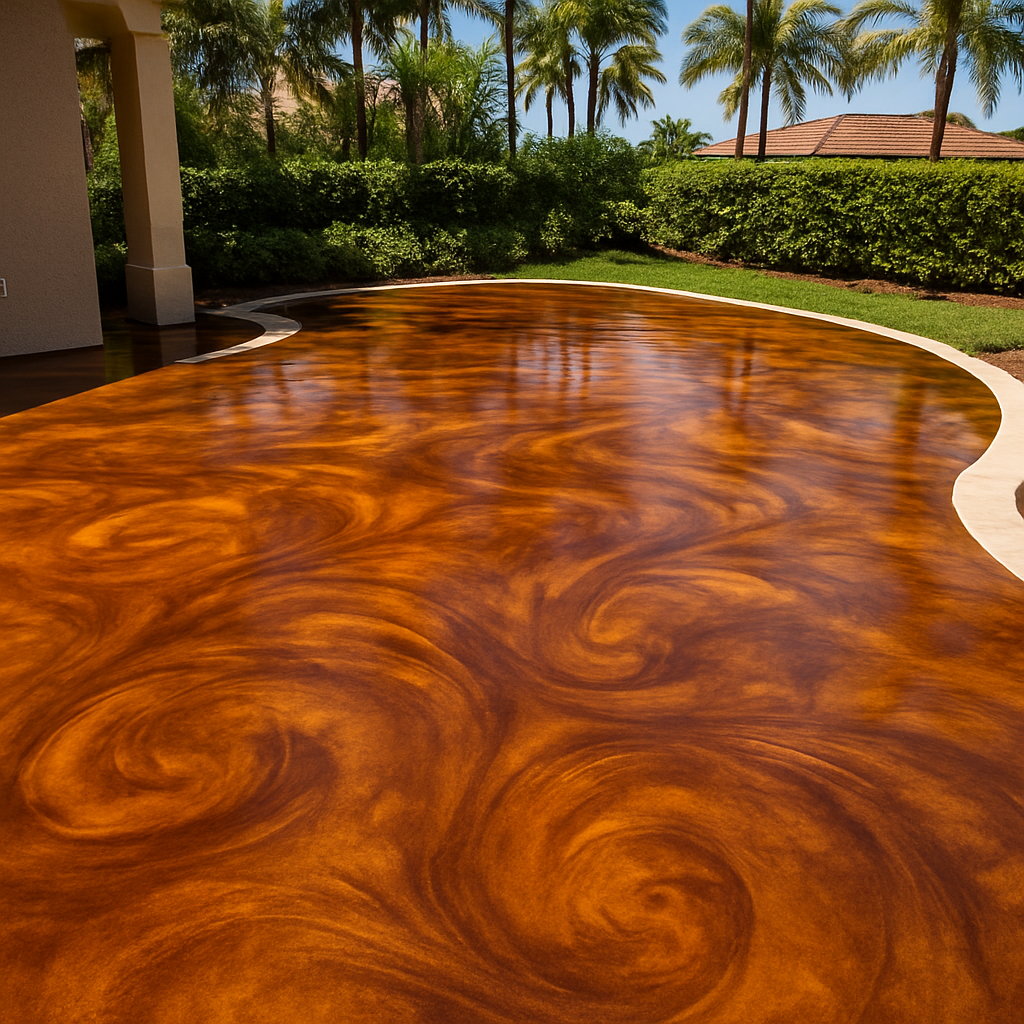
Modern decorative concrete bears very little resemblance to the "plain gray slab" most people picture.
1. The Seven Myths, One by One
Each of these has a grain of truth buried in it — that's why they persist. The problem is that the grain gets generalized into a reason not to build anything at all.
Myth 1: “Concrete and masonry always crack — so why bother?”
Concrete does move. That part isn't a myth. What people get wrong is assuming movement equals failure. Every properly built slab has control joints cut into it — those clean straight lines you see in a driveway aren't decorative, they're deliberately weakened planes that tell the slab exactly where to relieve stress. When a crack shows up inside a control joint, the system worked. What you actually want to avoid is uncontrolled cracking, and that traces back to three things: a poorly compacted base, missing or badly spaced joints, and too much water in the mix. All three are workmanship, not material. I've walked driveways in Polk County that are 30 years old with nothing but hairline joint cracks, right next to five-year-old slabs that are spidered across the middle. Same material, different crew.
Myth 2: “It's the most expensive option, so I'll do pavers or asphalt instead.”
Compare the install invoice alone and concrete often looks mid-pack. Compare what you actually spend over 25 years and the picture inverts. Asphalt is cheap going in but wants resealing every few years and typically gets replaced far sooner. Pavers look great on day one, but in Florida's sand they settle, they shift, and the joints grow weeds — releveling is a recurring cost most homeowners never budget for. A properly poured, sealed concrete slab is the one option where the maintenance line item is genuinely small. If price is your deciding factor, ask for lifecycle numbers, not just the bid.
Myth 3: “Concrete is just ugly gray.”
This one's badly out of date. Integral color puts pigment through the entire slab so it can't wear off. Stamping presses texture and pattern into fresh concrete that convincingly reads as travertine, slate, brick, or wood plank from normal viewing distance. Acid staining creates mottled, variegated tones no two slabs share. Exposed aggregate reveals the stone in the mix for texture and grip. Polished concrete goes the opposite direction — glass-smooth and reflective. “Gray” is a choice you can make, not a constraint you're stuck with.
Myth 4: “Florida's sandy soil makes concrete a bad idea here.”
Central Florida's sandy soil is actually well-draining, which is a genuine advantage — it doesn't swell and shrink the way expansive clay does in Texas or Colorado. What sandy soil demands is compaction. Loose sand under a slab will consolidate under load, and that's what causes settlement. A crew that compacts the subgrade properly, adds a compacted stone base, and grades for drainage gets a slab that performs extremely well here. Concrete is the dominant building material across Florida for a reason: it shrugs off humidity, termites, rot, and hurricane-season wind-borne debris in ways wood framing simply doesn't.
Myth 5: “My yard will be a construction zone for weeks.”
For a standard residential driveway or patio, the on-site work is usually measured in days, not weeks. Demo and haul-away of the old slab typically takes a day. Forming, base prep, and setting reinforcement is another day or so. The pour itself is a single morning — a truck arrives, the crew places and finishes it, and they're gone by afternoon. What takes time after that is curing, and curing doesn't require anyone in your yard. You're generally walking on it in 24 to 48 hours and parking on it in about a week. The disruption is real but far shorter than most people expect.
Myth 6: “Masonry and concrete are the same thing.”
Related, but not interchangeable — and the distinction matters when you're hiring. Concrete is a poured material: cement, aggregate, sand, and water that cures into a single monolithic mass. Masonry is unit construction: individual blocks, bricks, or stones bonded together with mortar. A poured driveway is concrete work. A block retaining wall or a brick mailbox column is masonry. Plenty of contractors do both, but they're distinct skill sets, and a crew that pours beautiful flatwork isn't automatically the right choice for a structural block wall. Ask specifically which one your project needs.
Myth 7: “Any handyman with a mixer can pour concrete.”
This is the myth that costs homeowners the most money. Concrete is unforgiving in a way almost no other trade is — you get one window to place, screed, float, and finish it, and once it sets, mistakes are permanent. There's no sanding it back, no second coat. Timing the finish is genuinely a skill: too early and you seal water into the surface, causing scaling and dusting later; too late and you can't close it at all. Add stamping to the job and the window gets tighter still. This is precisely the work where an experienced crew is worth what they charge.
2. What It Actually Costs Over Time
The "concrete is expensive" myth survives because almost everyone compares install quotes and stops there. Service life is where the comparison actually gets decided — a surface that lasts twice as long at 1.3× the price is the cheaper surface, and that math rarely shows up on a bid sheet.
Typical service life by driveway surface — Central Florida
Realistic service life before full replacement, assuming competent installation and routine maintenance.
*Pavers can last a long time as a material, but typically need periodic releveling and joint maintenance in sandy soil — a recurring cost most homeowners don't budget for. Ranges are general planning figures for Polk County conditions, not quotes. For real numbers on your project, see our Lakeland driveway cost guide.
There's a second cost people miss entirely: the cost of doing it twice. A slab that fails in six years because the base wasn't compacted doesn't just cost you a second slab — it costs you demo and haul-away of the first one. That's the single strongest argument for spending a bit more on an experienced crew rather than taking the lowest bid.
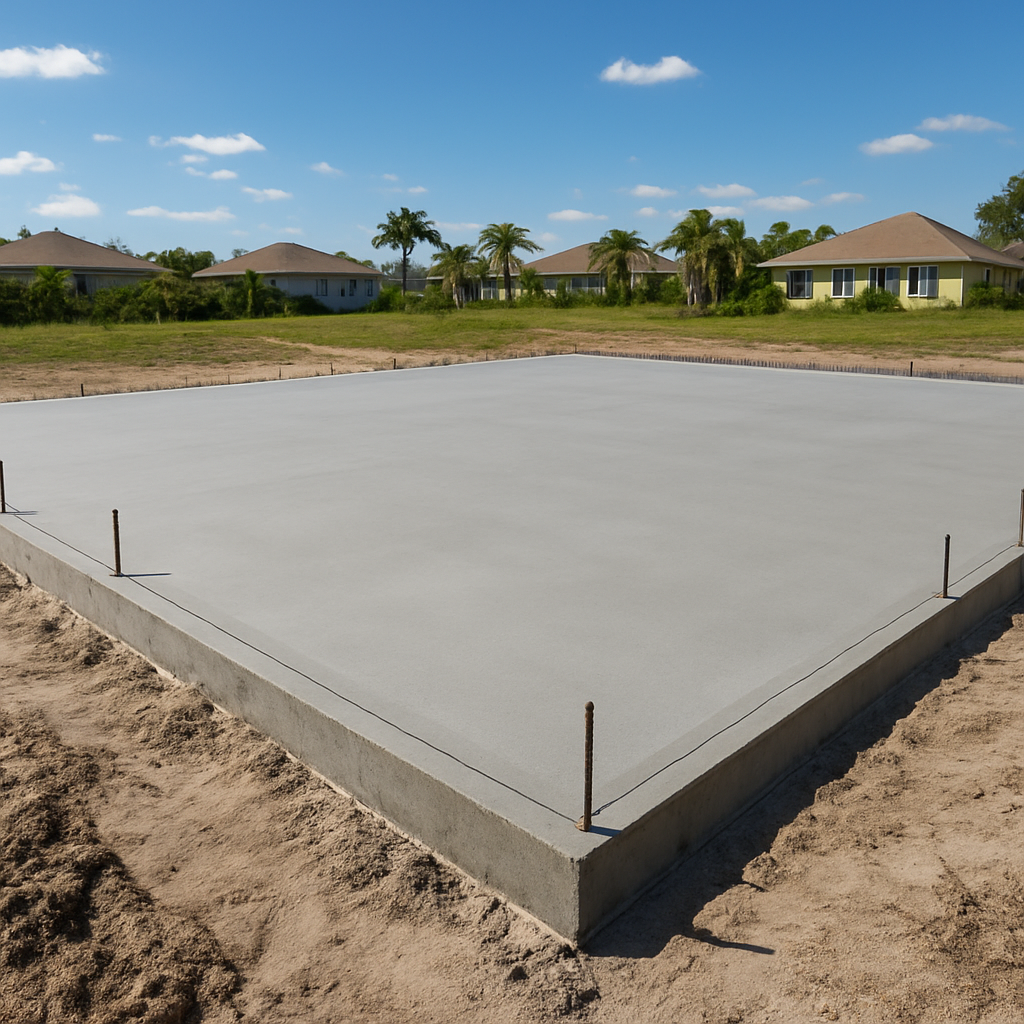
The work that determines whether a slab lasts 10 years or 40 happens before any concrete arrives.
3. What Actually Determines Quality
Here's the thread running through every myth above: almost nothing people blame on the material is actually the material's fault. Concrete and masonry are extraordinarily well-understood building systems. When they fail early, it's nearly always one of a short list of workmanship issues.
Subgrade preparation is first and most important. The slab is only as stable as what's underneath it. In our sandy Polk County soil that means proper compaction and usually a compacted stone base — skipping it is the number one cause of settlement cracking I see. Control joint placement is second: joints need to be cut at the right depth and spacing, and cut on time, or the slab picks its own crack locations.
Water-to-cement ratio is third and the most invisible. Adding water at the truck makes concrete easier to place and permanently weaker — it's a shortcut that trades your slab's strength for the crew's convenience. Finishing and curing round it out: finishing too early traps bleed water at the surface and causes scaling later, and letting a slab dry too fast in Florida sun instead of curing it properly costs real strength.
Every one of those is a decision a crew makes, not a property of concrete. That's why the hiring decision matters more than the material decision — and why it's worth working through our pre-hire question checklist before you sign anything.
Reality Check Before You Commit
- Ask how the subgrade will be prepared and compacted — not just what the slab costs
- Ask about control joint spacing and when they'll be cut
- Confirm the PSI mix being used and that no water will be added on site
- Ask to see finished work 5+ years old, not just fresh pours
- Clarify whether your project is concrete work, masonry work, or both
- Compare lifecycle cost against pavers and asphalt, not just install price
- Get the cure and use timeline in writing so you can plan around it
4. How to Actually Start Your Project
If a myth on this list is what's been holding you back, the practical next step is smaller than you think. Start by getting clear on the scope — a new driveway, a backyard patio, a foundation or addition, or a decorative upgrade like stamped concrete. Then get two or three quotes from crews who do that specific work regularly.
If your existing concrete is tired rather than failed, you may not need a full replacement at all — resurfacing or an overlay can completely change the look for a fraction of tear-out cost. You can compare vetted local pros in our Lakeland contractor directory.
Frequently Asked Questions
Is cracking in a new concrete driveway normal?
Fine hairline cracking along control joints is normal and expected — those joints exist specifically to direct where the slab relieves stress. What isn't normal is wide, random cracking across the middle of a slab, cracks with vertical displacement (one side higher than the other), or cracks appearing within the first few weeks. Those point to base preparation, joint spacing, or mix problems, and they're worth raising with your contractor while the work is still under warranty.
What's the real difference between masonry and concrete work?
Concrete is poured as one continuous mass and cures in place — driveways, patios, slabs, footings. Masonry is built from individual units (block, brick, stone) bonded with mortar — retaining walls, columns, block structures. Many contractors handle both, but they're separate skills. Be specific about which your project needs when you request quotes.
Does concrete really hold up in Florida's climate?
Yes — it's the dominant construction material across the state precisely because it handles humidity, termites, rot, and storm debris far better than wood. The Florida-specific requirements are proper subgrade compaction in sandy soil, good drainage design, and sealing to protect against UV and constant moisture. Get those right and concrete performs excellently here.
How long before I can use a new concrete driveway?
Foot traffic is generally fine after 24 to 48 hours. Wait about seven days before parking a passenger vehicle on it, and longer for anything heavy. Concrete continues gaining strength for roughly 28 days, reaching most of its design strength in that window — your contractor should give you project-specific guidance.
Is decorative concrete worth the upcharge over a plain slab?
It depends what you want from the surface. For a functional driveway where appearance is secondary, a plain broom finish is a perfectly good value. For a patio, pool deck, or front entry where the surface is part of your home's presentation, stamped or stained concrete delivers a dramatically different look for meaningfully less than the natural stone it imitates. The structural performance is the same either way — you're paying for appearance.
Keep Reading
Concrete Maintenance Tips: Add Years To Your Concrete
How routine upkeep changes the lifecycle math in your favor.
Questions to Ask Before Hiring a Concrete Company
The pre-hire checklist that separates good crews from cheap ones.
How Thick Should Your Concrete Footer Be?
The structural side of getting a project right from the ground up.
5 Things To Consider Before Stamping Your Driveway
If the "ugly gray" myth was your holdup, start here.
Ready to Stop Putting It Off?
Give us a call and we'll talk through what your project actually involves — scope, realistic timeline, and what it should cost — then connect you with vetted Lakeland crews.