Concrete Hiring Guide
Questions to Ask Before Hiring a Concrete Company
Before hiring a concrete company, it is critical to confirm their experience, verify their credentials, examine their design options, materials, and process, and get a clear, written contract and guarantee. Hiring the right contractor can make or break the project — the quality of the concrete work directly determines its durability and how it performs for years to come. Use this guide as your complete checklist before you sign anything.
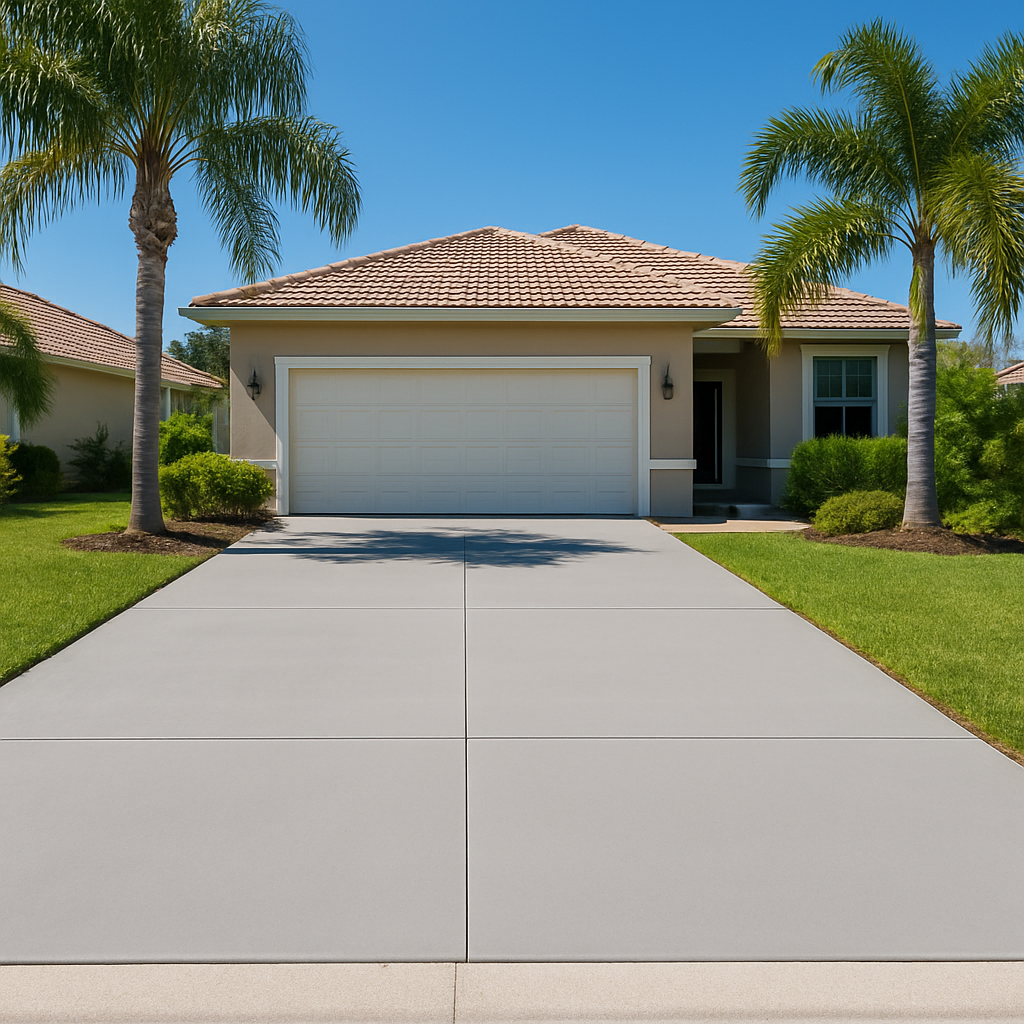
Clean edges, tight control joints, and an even finish are the visible signs of a contractor who asked the right questions before pouring.
What this guide covers
Whether you're planning a new concrete driveway, a backyard patio, a walkway, or a full foundation, the questions below apply. Concrete is permanent once it cures, so the few minutes you spend interviewing a contractor pay off for the entire life of the slab.
Why Asking the Right Questions Matters
Hiring the right contractor can make or break a construction project. Whether you're planning a new driveway, a patio, a sidewalk, or a foundation, the quality of the work directly impacts durability and long-term performance. Concrete requires proper preparation, quality materials, and experienced craftsmanship. By asking the right questions before hiring, Lakeland and Polk County homeowners can avoid costly mistakes and ensure the finished project meets expectations.
1. Experience & Track Record
How a contractor answers questions about their experience tells you almost everything about who they are and how they work. You want a company with a real history, a portfolio they're proud of, and references happy to back them up. Every contractor in our Lakeland contractor directory lists real Google reviews so you can confirm their track record before you ever call.
What experience do you have with projects like mine?
Concrete work is not one-size-fits-all — the grading, drainage, reinforcement, and finishing for a driveway are different from a pool deck, a structural foundation, or a decorative patio. Ask specifically about jobs that match yours. An experienced contractor should be able to walk you through how they approach your type of installation and the challenges they've solved on similar projects. How they answer tells you a lot: vague generalities are a warning sign, while specific, confident detail is the mark of a true specialist.
How many years have you been in the concrete business?
A reputable concrete company should have several years — ideally a decade or more — of hands-on industry experience. Longevity means they've poured through hot summers, heavy rains, and difficult soil, and they're still in business because their work holds up. Cross-check whatever they tell you against their online reviews and business history. If the story they tell doesn't match what past customers say, keep looking.
Do you have a portfolio of completed work?
Always look for a contractor who takes visible pride in their work. A strong portfolio — on their website, social media, or in person — shows the range and quality of what they can deliver. Look closely at edges, control joints, surface consistency, and decorative detail. A portfolio is your fastest way to judge whether their style and craftsmanship match what you have in mind before you ever pick up the phone.
May I see references from previous clients?
If a portfolio leaves you wanting more proof, ask for references you can actually call. Speaking with past clients gives you an unbiased read on the company. Ask them: Was the project finished on schedule? Did the contractor communicate clearly throughout? Were there problems, and how were they handled? Would you hire them again? Honest answers to those four questions reveal more than any sales pitch.
2. Credentials & Reliability
Anyone can rent a mixer and call themselves a concrete contractor. These questions separate the legitimate, accountable companies from the fly-by-night operators. Every contractor in our Lakeland contractor directory is vetted with real Google reviews so you can start from a trusted shortlist.
Are you licensed, bonded, and insured?
Most quality concrete contractors will offer this up front. Request written proof of both general liability and workers' compensation insurance before any work begins. A contractor without a license may lack the proper training; without bonding, you're not protected if the job isn't finished on time or on budget; and liability coverage protects your property from accidental damage. Many pros consider this the single most important question — never accept a verbal assurance. Ask for the certificate and the policy numbers.
Do you use in-house crews or subcontractors?
Knowing exactly who will be physically standing on your property matters. When a company hands the job to subcontractors, accountability gets blurry — if something cracks or settles, you can end up caught between the company that sold the job and the crew that poured it. In-house crews mean one point of responsibility from estimate to final cleanup. If they do use subs, confirm those subcontractors carry their own insurance.
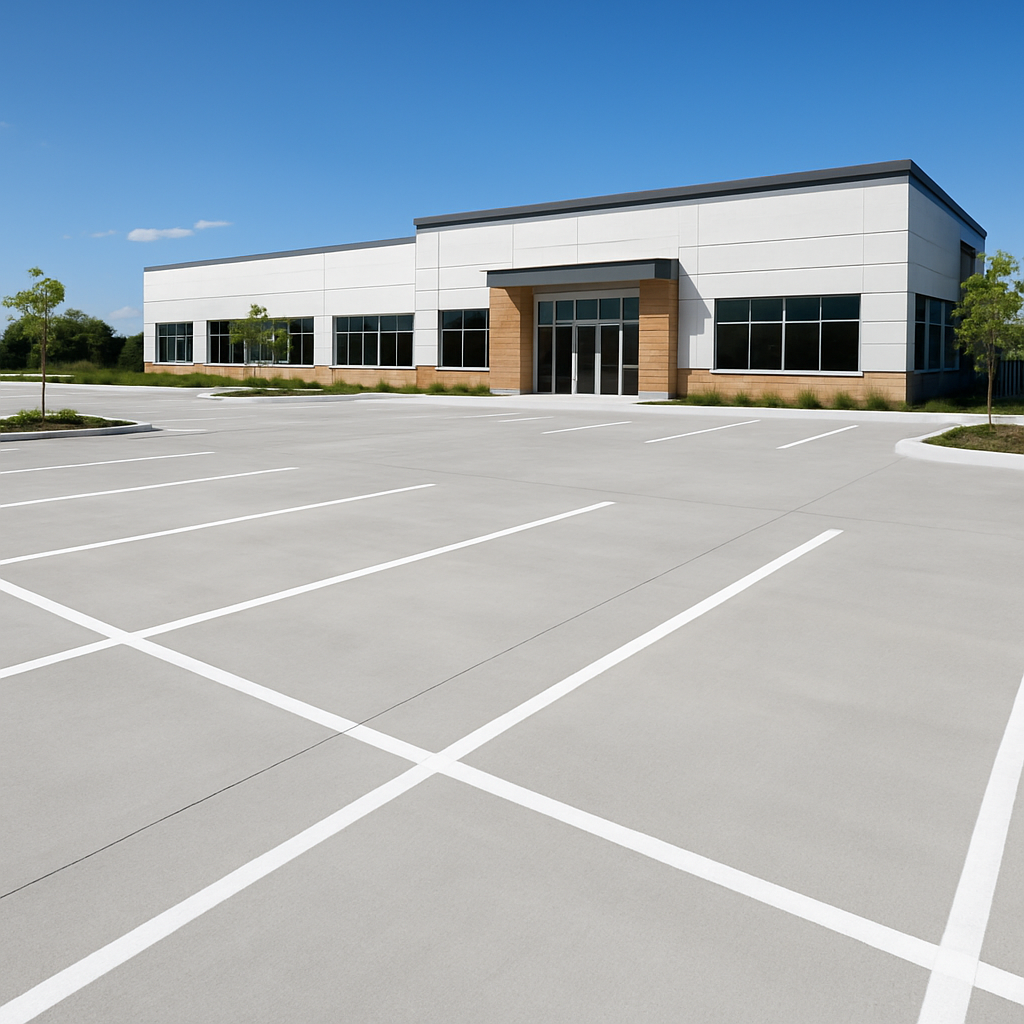
Knowing whether in-house crews or subcontractors will pour your slab keeps accountability clear from start to finish.
3. Design & Style Options
Concrete is far more versatile than most homeowners realize. Before you hire, find out how wide a range of finishes a company actually offers — it's the difference between settling for a plain slab and getting the look you really want.
What design and finish options do you offer?
To understand the full range of what a company can do for you, ask about the design and style options on the table — the materials, colors, textures, and finishes they work with. A versatile contractor can offer everything from a clean broom finish to exposed aggregate, colored and stamped patterns, or polished surfaces. The more options they genuinely command, the more likely they can match your vision rather than steer you toward the one finish they happen to be comfortable with.
Can you match the finish to my project and home?
Great concrete complements the property around it. Ask how they'd recommend tailoring color and pattern to your home's exterior and the surrounding hardscape. A contractor experienced in decorative work should have opinions grounded in what holds up in Florida's climate — UV-stable color hardeners, slip-resistant textures for pool decks, and sealers chosen for the specific finish. This is where specialists separate themselves from generalists.
If you're after a high-end look, ask specifically about stamped concrete, decorative concrete, and paver options. For outdoor living spaces, pool deck resurfacing opens up textures and colors a standard pour can't match.
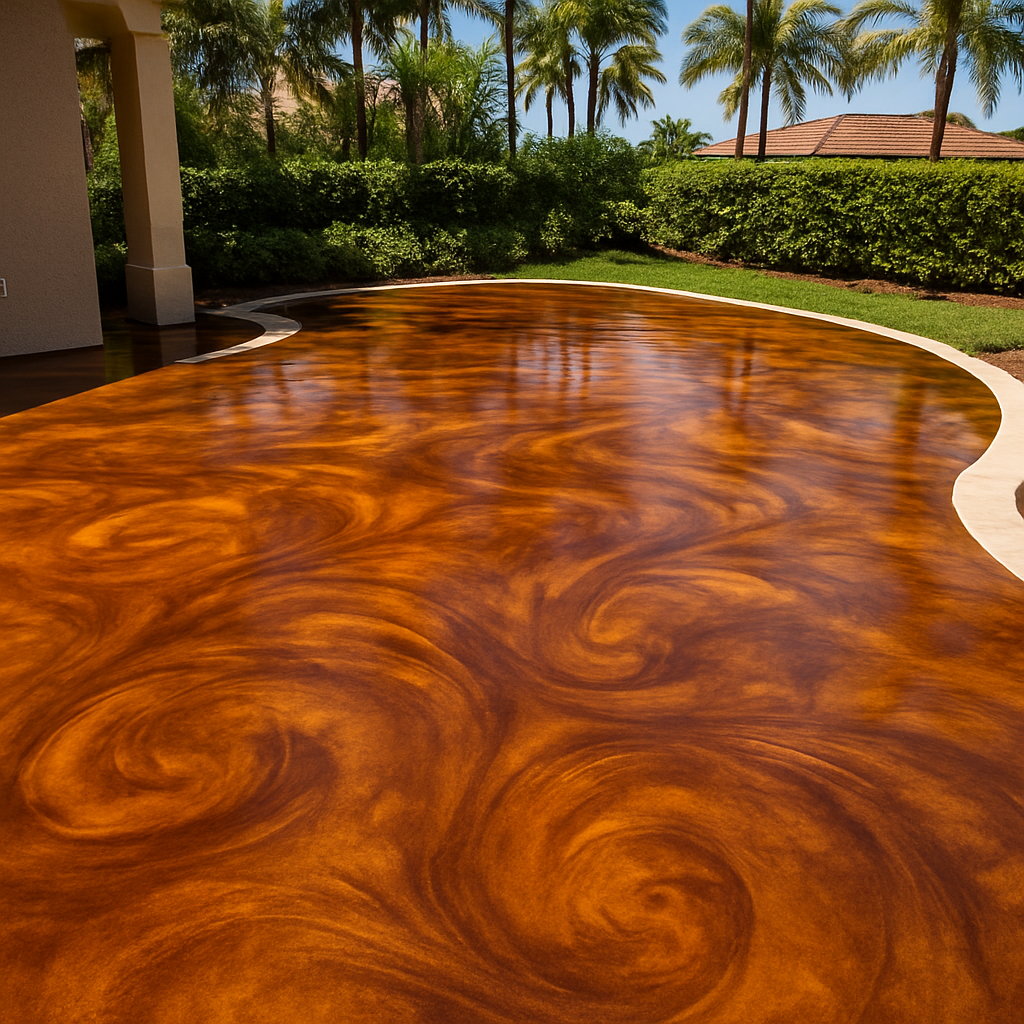
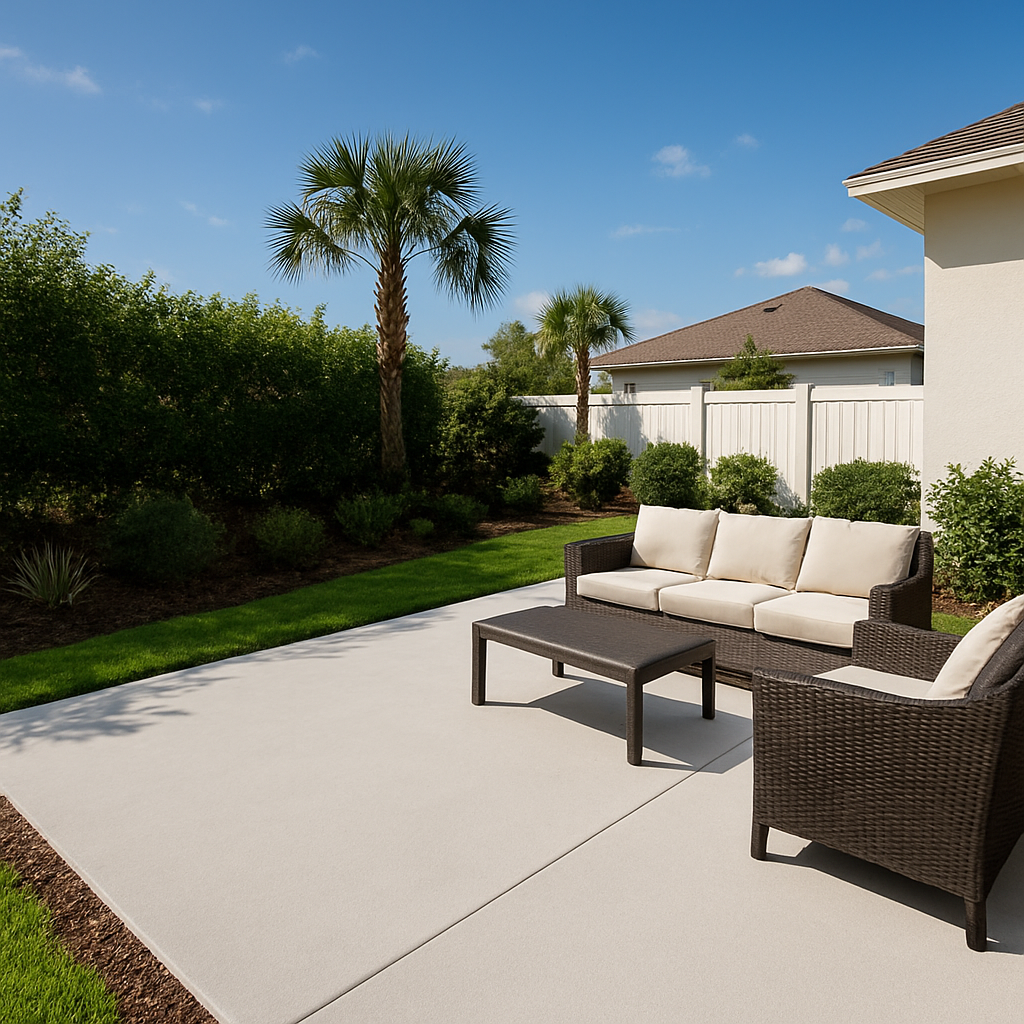
Ask to see the full range of finishes — from decorative color and texture to a clean broom finish — so the result matches your home.
4. Materials & Reinforcement
The quality of a concrete job is decided long before the surface is troweled smooth. What goes underneath and inside the slab determines whether it lasts 30 years or cracks in five. Press for specifics — and if you want to sanity-check material quantities yourself, our ready-mix concrete cost calculator gives you a quick estimate.
What is included in the estimate — and what is excluded?
A vague one-line quote is a red flag. A proper estimate itemizes site preparation (including the depth of the compacted gravel base), forming, the concrete itself, reinforcement, finishing, sealing, and cleanup. Just as important is what is excluded: Is hauling away old concrete included? Is the gravel base 4 inches or 6? Are permits the contractor's responsibility or yours? Get these answers in writing so there are no surprise charges mid-project.
What concrete mix and reinforcement method do you use?
Ask about the PSI strength of the mix and how they reinforce the slab to resist cracking. Quality contractors use rebar or steel wire mesh for structural slabs and often add fiber mesh additives to the mix for extra tensile strength. For a standard residential driveway in Florida, you want a slab poured no thinner than 4 inches over a properly compacted base. Industry bodies like the American Concrete Institute stress that proper mix design, placement, and curing are what produce durable concrete — so if a contractor can't clearly explain their reinforcement and curing plan, keep looking.
What type of sealer do you apply?
Florida sun and rain are brutal on unsealed concrete. Confirm the contractor uses a high-quality, deep-penetrating sealer rather than a cheap acrylic topcoat that flakes off within a year and leaves the surface vulnerable to staining and moisture. Ask how often the sealer should be reapplied and whether the first application is included in the quote. This single detail is the difference between concrete that looks good for decades and concrete that looks tired in a couple of seasons.
Material choices vary by project. A stamped concrete patio needs color hardeners and release agents a plain slab doesn't, while resurfacing and slab leveling use entirely different products. Make sure the contractor's answers match the work you actually need.
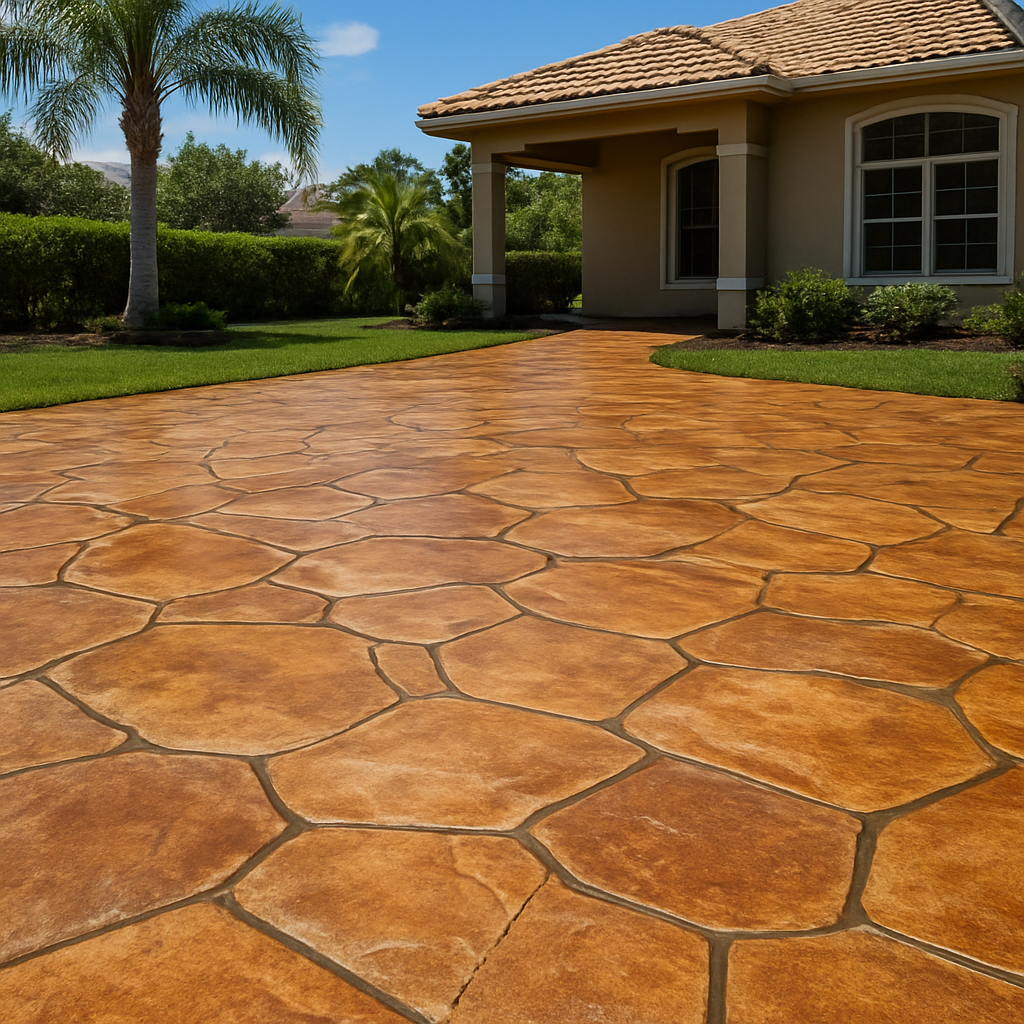
A high-quality, deep-penetrating sealer protects decorative finishes from Florida sun and rain for years — not months.
5. Process & Problem-Solving
A flawless estimate means little if the crew can't execute or adapt when reality intervenes. How a contractor preps, places, cures, and responds to surprises separates the professionals from the rest. This matters most on demanding jobs like foundation work and slab leveling, where soil conditions can change the plan.
What does your site preparation and curing process look like?
The quality of a pour is decided before and after the concrete is placed. Ask how they prepare and compact the base, how they form and place the slab, and — critically — how they cure it. The National Ready Mixed Concrete Association and the Portland Cement Association both point to planning, placement, and proper curing as the backbone of a long-lasting result. A contractor who can walk you through each stage clearly is one who does it right.
How do you handle unexpected issues?
Even a well-planned job can hit surprises — shifting soil, sudden weather, buried utilities, or hidden obstacles under old concrete. The smartest thing you can ask is how the contractor handles the unexpected. A reliable company has a clear process for pausing, communicating, and presenting options before charging ahead. Transparent communication when the plan changes is one of the strongest signs you've hired the right team.
6. Contracts, Timeline & Warranties
The strongest concrete companies are happy to put everything in writing. Before you sign, make sure the paperwork protects your investment as much as it protects the contractor.
What is the expected timeline for the project?
Ask when the work will begin and how long it will take. If you need the job done within a month but the contractor can't start for three, you may need to keep looking. At the same time, be wary of anyone promising an unrealistically fast finish — and remember that a genuinely busy contractor with a short waitlist is usually a good sign, not a bad one. Project length varies with size, weather, and site prep, so ask for a realistic estimate, not just the soonest possible date.
What are your payment terms?
Never pay the full amount upfront. Reputable contractors structure payments in stages: an initial deposit (typically 10–20%), progress payments during construction, and a final payment only after the work passes your inspection. Be wary of anyone demanding cash only or a large deposit before materials are even ordered. Also ask how additional costs would be handled if the scope changes mid-project, so a surprise doesn't turn into a dispute.
Will there be a detailed written contract and warranty?
The strongest companies put everything in writing. A professional contract should spell out the project scope and specifications, the materials used, the timeline, the payment schedule, and the workmanship warranty. Get a written guarantee that states exactly what is covered — structural settling, cracking beyond a stated width, spalling — and for how long. The Portland Cement Association notes that proper planning and documentation are central to successful concrete results. A signed agreement protects both you and the contractor.
Your Pre-Hire Checklist
Bring this short list to every estimate. If a contractor hesitates on any of these, treat it as a warning sign.
- Proof of license, bonding, liability, and workers' comp insurance
- Local references from jobs completed 2–3 years ago
- Confirmation of in-house crews vs. subcontractors
- Itemized estimate listing inclusions and exclusions
- Slab thickness, PSI mix strength, and reinforcement method
- Type and quality of sealer, plus reapplication schedule
- Written warranty covering settling and cracking
- Milestone payment schedule — no large upfront deposit
- Who pulls permits and who handles cleanup
Tailor Your Questions to the Project
The right follow-up questions depend on what you're building. Use these service guides to get project-specific details before you talk to a contractor:
Want to know what a fair price looks like before you ask about cost? Compare current Lakeland numbers in our concrete driveway cost guide and concrete patio cost guide, or browse all concrete services we cover.
Frequently Asked Questions
Why is it important to ask questions before hiring a concrete contractor?
Asking questions helps you evaluate a contractor's experience, reliability, and ability to complete the project successfully. Concrete is permanent once it cures, so a few minutes of vetting up front prevents costly mistakes that you'd otherwise live with for decades.
How many quotes should I get before hiring a concrete company?
Get at least three written, itemized estimates. Comparing multiple bids is the fastest way to spot an outlier — either suspiciously cheap (often a sign of a thin slab or skipped prep) or padded. You can compare local pros side by side in our Lakeland contractor directory.
Is the cheapest concrete quote usually the best deal?
Rarely. A low bid often means a thinner pour, less reinforcement, a skimpy gravel base, or a cheap sealer — all of which lead to early cracking and settling. Focus on the value of what's included, not just the bottom-line number. Our cost guides show what fair Lakeland pricing actually looks like.
What type of projects do concrete contractors typically handle?
Concrete contractors commonly install driveways, patios, walkways, foundations, pool decks, and other structural and decorative surfaces. Browse our full list of concrete services to see everything the contractors in our directory cover.
How long does a typical concrete project take?
Timelines vary with project size, weather, and how much site preparation is required, but most residential slabs are poured in a day or two with several more days of curing before full use. Always confirm the contractor's realistic estimate in writing before work begins.
What should be included in a concrete contract?
A detailed contract should outline the project scope, materials, timeline, payment terms, warranty, and the responsibilities of both parties — leaving nothing to a handshake.
Keep Reading
How to Pick a Concrete Contractor
A practical vetting checklist — licensing, references, prep work, and red flags.
How Much Does a Concrete Driveway Cost in Florida?
Per-square-foot pricing and what drives Florida driveway costs up or down.
Expert Lakeland Concrete Contractors
What separates the best Lakeland concrete contractors from the rest.
Lakeland Concrete Contractors Near Me
Find and compare concrete contractors near Lakeland, FL.
Ready to Ask These Questions to a Vetted Pro?
Skip the guesswork. Our directory lists local concrete contractors with ratings, reviews, and service details so you can vet, compare, and request quotes in one place. Tell us about your project and we'll connect you with the right pros.