Maintenance Guide
Concrete Maintenance Tips: Add Years To Your Concrete
Concrete has a reputation as a "pour it and forget it" material, and for the first several years, that's mostly true. But the slabs I see still looking sharp at 25 and 30 years all have one thing in common: somebody paid a little bit of attention to them along the way. Here's what that attention actually looks like — for driveways, patios, sidewalks, pool decks, and every other kind of concrete around a Central Florida home.
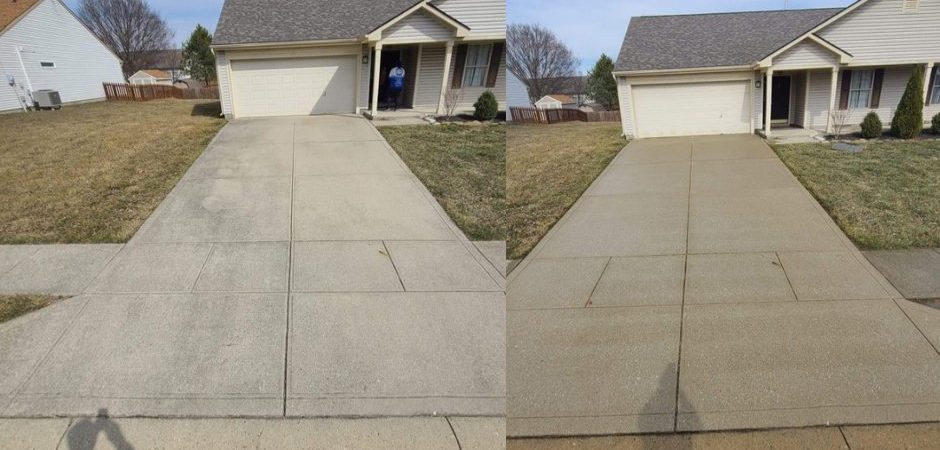
Routine maintenance is the difference between concrete that looks tired at ten years and concrete that still looks great at thirty.
Seal It, and Reseal It On Schedule
A quality penetrating or acrylic sealer is the single most cost-effective thing you can do for any concrete surface — driveway, patio, sidewalk, pool deck, or garage floor. Sealer blocks water intrusion, resists UV degradation, and protects against oil, chemical, and rust staining. In Central Florida's combination of intense UV and heavy seasonal rain, plan on resealing every 2 to 3 years for decorative or high-traffic surfaces, and every 3 to 5 years for a plain, low-traffic slab. Skipping this is the single biggest reason otherwise well-built concrete looks and performs worse than it should at year ten.
Keep Roots, Vines, and Vegetation Off the Edges
Tree roots don't crack concrete by pushing straight up through it — they crack it by growing underneath and lifting the slab unevenly, or by disrupting the compacted base that's holding it stable. In Florida's fast-growing climate, keep an eye on any tree or large shrub within 10-15 feet of a slab and consider root barriers during new installs near mature trees. Vines and ground cover that creep onto the surface trap moisture underneath and can stain or even etch the finish over time — clear them off regularly rather than letting them establish.
Watch Drainage — Standing Water Is the Enemy
Concrete itself is durable, but water that's allowed to pool on or beside a slab accelerates almost every failure mode: it works into hairline cracks and freezes/expands them (rare here, but not impossible), it erodes the base material underneath through repeated saturation cycles, and it feeds the mold, mildew, and algae that stain and roughen a surface. Make sure gutters and downspouts don't dump directly onto a slab edge, regrade any low spots that collect water after rain, and keep drains and weep holes clear of debris — especially heading into Florida's summer rainy season.
Clean Regularly, But With the Right Products
Routine sweeping and an occasional hose-down handles most everyday dirt and pollen. For real cleaning, use a pH-neutral concrete cleaner rather than harsh acids, bleach, or ammonia-based products, which can etch the surface and degrade sealer over successive uses. Address organic growth (mold, mildew, algae — common in Florida's humidity) promptly with a concrete-safe cleaner rather than letting it establish, since it both looks bad and can make a surface slicker when wet. Pressure washing is fine in moderation — wide fan tip, moderate distance, no aggressive turbo nozzles that can etch or gouge the surface.
Monitor Cracks — and Know Which Ones Matter
Hairline cracks along control joints are normal and expected; that's what the joints are there for. What you actually want to monitor for is a short list: cracks that are widening over time, cracks with vertical displacement (one side higher than the other), cracks that run diagonally across a slab rather than along a joint, and any crack that appears suddenly rather than developing gradually. Take a photo with a coin or ruler next to any crack you're watching so you can objectively track whether it's changing. Catching a settlement or drainage problem early, while it's still a cosmetic crack, is dramatically cheaper than waiting until it becomes a structural one.
2. Maintenance vs. Lifespan
The gap between maintained and neglected concrete isn't marginal — it's often the difference between one installation lasting a homeowner's entire time in a house, and needing a costly replacement partway through.
Concrete lifespan by maintenance level — Central Florida
Realistic service life before full replacement is needed, across driveways, patios, and sidewalks.
Ranges are general planning figures for Polk County conditions. Original installation quality, traffic load, and drainage design all factor in alongside ongoing maintenance.
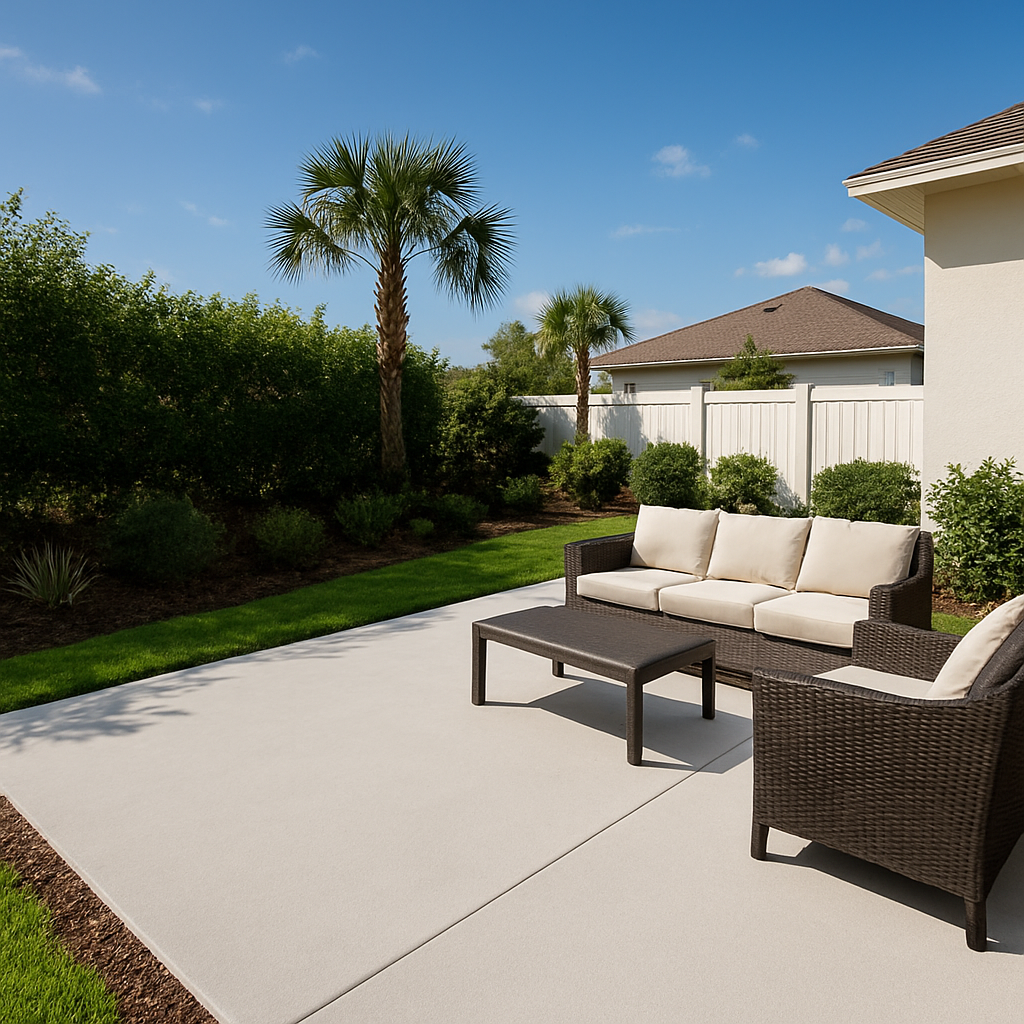
A few minutes of seasonal attention keeps every type of concrete surface — patios included — performing for decades.
3. A Seasonal Maintenance Rhythm
You don't need a complicated schedule — just a habit of checking in on your concrete a few times a year, timed to what Central Florida's seasons actually throw at it.
Seasonal maintenance focus
Each season carries roughly equal weight — the tasks change, not the importance.
The biggest seasonal risk locally is the summer rainy season — that's when drainage problems and organic growth show up fastest, so it's worth an extra look-over in June through September.
4. Quick-Reference Checklist
- Reseal every 2–3 years for decorative/high-traffic surfaces, 3–5 for plain low-traffic slabs
- Keep tree roots, vines, and ground cover clear of slab edges
- Check that gutters and downspouts don't drain directly onto concrete
- Regrade any low spots where water pools after rain
- Clean regularly with pH-neutral products — skip bleach, ammonia, and wire brushes
- Treat mold, mildew, and algae promptly, especially during the summer rainy season
- Photograph and track any crack that's widening, displaced, or diagonal
- Never use rock salt or chemical de-icers on decorative or sealed concrete
Frequently Asked Questions
How often should concrete be sealed in Florida?
Every 2 to 3 years for decorative or high-traffic surfaces (driveways, pool decks, stamped patios), and every 3 to 5 years for plain, low-traffic slabs. Central Florida's UV intensity and rainfall wear sealer faster than in drier, less sunny climates, so don't stretch the interval based on guides written for other regions.
What causes concrete to crack over time?
The most common causes are base settlement (especially in Florida's sandy soil if it wasn't compacted properly during install), tree root intrusion, standing water eroding the subgrade, and normal thermal expansion and contraction — which is exactly what control joints are designed to manage. A well-built, well-maintained slab should only show hairline cracking along its joints.
Is pressure washing bad for concrete?
Not inherently — it's an effective cleaning method when used correctly. Use a wide fan tip, keep a reasonable distance from the surface, and avoid narrow turbo nozzles, which concentrate enough force to etch plain concrete and strip color and sealer from decorative finishes.
How do I know if a crack is a serious problem?
Watch for cracks that are widening, cracks with one side visibly higher than the other, diagonal cracks that don't follow a control joint, or any crack that appeared suddenly. Simple hairline cracking along an existing joint line is normal. If you're unsure, a quick assessment from a concrete pro is far cheaper than waiting to find out the hard way.
Does regular maintenance really extend concrete's lifespan?
Yes, substantially. The core maintenance tasks — sealing on schedule, managing drainage, keeping vegetation clear, and catching problems early — protect the slab from the specific things that cause premature failure. Well-maintained concrete routinely outlasts neglected concrete of the same original quality by a decade or more.
Keep Reading
5 Rules For Maintaining Your Stamped Concrete Driveway
The decorative-specific version of these same principles.
Debunking The Tales Of Masonry
Seven concrete and masonry myths, debunked with the facts.
Concrete Sealing Guide for Lakeland Homeowners
A deeper dive into choosing and applying the right sealer.
How To Clean Your Lakeland Concrete Driveway
Step-by-step cleaning for oil, mold, algae, and everyday dirt.
Need a Sealing or Repair Quote?
Give us a call and we'll connect you with vetted Lakeland concrete pros who handle sealing, cleaning, and maintenance repairs — not just new installs.