Planning Guide
5 Things To Consider Before Stamping Your Driveway
Stamped concrete is one of the highest-impact upgrades you can make to a driveway's curb appeal, and in my experience it's also one of the projects homeowners research the least before committing — they pick a pattern off a photo and move straight to a quote. Before you do that, here are the five things worth thinking through, based on the questions I wish more people asked before their pour day.
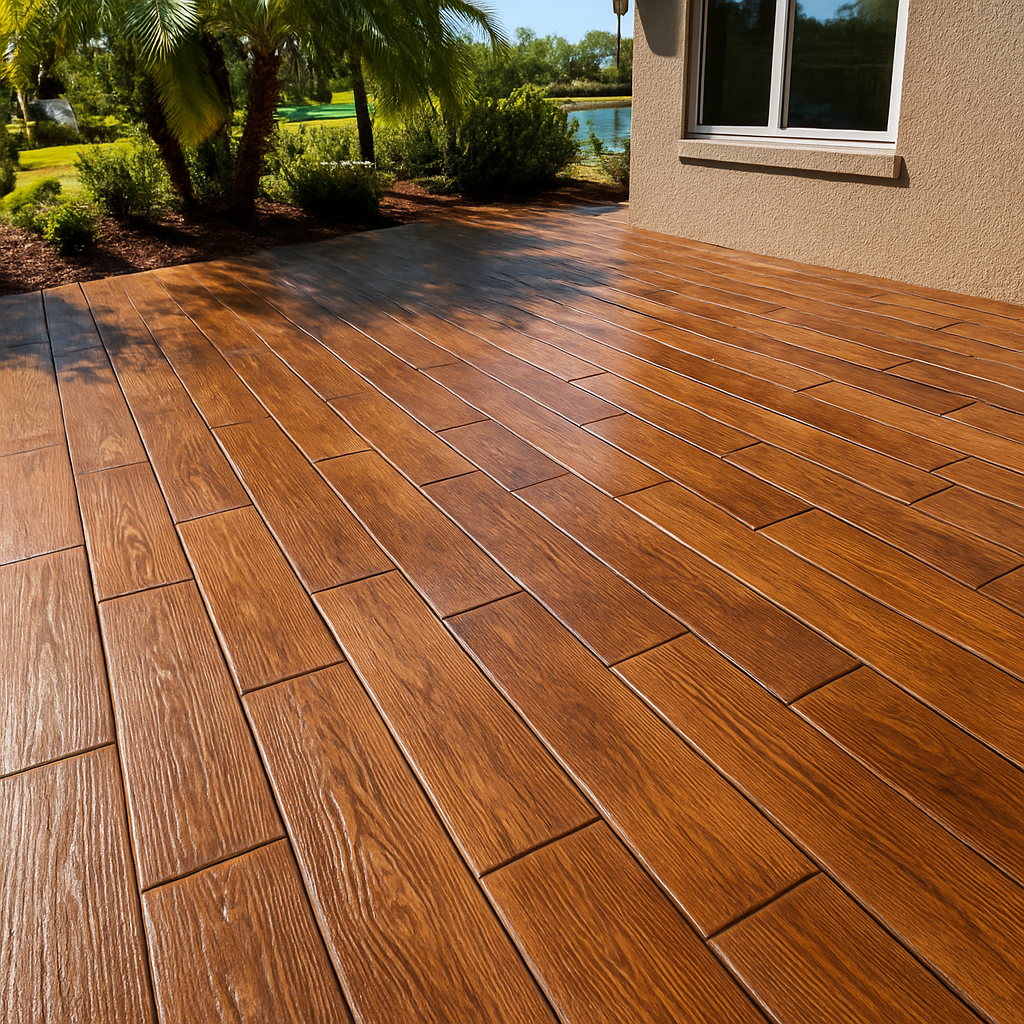
Pattern and color decisions made before the pour are much cheaper than changes made after.
1. Pattern and Color Aren't Just Aesthetic Choices — They Affect Performance Too
It's easy to fall in love with a pattern from a photo online, but the right choice depends on your specific driveway. Ashlar slate and running-bond brick patterns hide minor imperfections and control-joint lines well, which matters on a long driveway where joints are frequent. Herringbone and basketweave patterns show more visual complexity but can make future partial repairs harder to blend in seamlessly. On color, lighter integral colors reflect heat and show less dust and pollen — a real consideration under Florida oak trees — while darker colors hide tire marks and oil residue better but run hotter underfoot. I usually walk homeowners through 3–4 real installed samples in person rather than a swatch, because stamped texture reads very differently in full sun than it does on a color card.
2. Darker Colors Get Genuinely Hot in Florida Sun
This is the consideration first-time stamped concrete owners underestimate the most. A dark charcoal or brick-red stamped driveway can run noticeably hotter to bare feet than a lighter tan or buff color on a July afternoon — sometimes uncomfortably so if you or your kids walk it barefoot regularly. It's not a dealbreaker, but it's worth factoring in alongside how the driveway will actually be used. If bare feet on the surface is a regular occurrence — say it connects to a pool deck — lean toward a lighter or medium color family. If it's strictly a car driveway, heat underfoot matters a lot less and you have more freedom with darker, higher-contrast color choices.
3. Budget for the Upcharge — and for the Maintenance That Comes With It
Stamped concrete typically runs somewhat more than a plain broom-finished slab of the same size, because of the extra labor for texturing, coloring, and sealing. That's the visible cost. The less-visible one is that stamped concrete needs periodic resealing — roughly every 2 to 3 years in Central Florida's UV and rainfall — to keep its color and protect the surface, which plain concrete doesn't require in the same way. Neither of these should scare you off; stamped concrete remains far cheaper over its lifetime than natural stone or pavers with a comparable look. But go in knowing the true cost is the install price plus a modest recurring maintenance line, not the install price alone.
4. Slope and Drainage Change How the Finished Surface Behaves
Stamped texture adds real grip compared to a smooth-troweled surface, but the depth and sharpness of the pattern still interacts with slope. On a driveway with meaningful grade, standing water tends to collect in the low points of a deep stamp pattern if drainage wasn't planned correctly, which can accelerate wear and create slick spots. A contractor who's done stamped work on sloped Central Florida lots will grade the subgrade and set control joints to shed water properly before the pattern ever goes down — this is a conversation to have at the estimate stage, not after the pour. If your driveway has a steep pitch, ask specifically how they'll handle drainage and whether a lighter texture depth makes more sense than a dramatic one.
5. Future Repairs Will Never Match Perfectly — Plan the Layout With That in Mind
Plain concrete is relatively easy to patch invisibly. Stamped concrete is not — color and pattern both drift slightly over years of UV exposure and sealer cycles, so a repair done even a year or two later will rarely disappear completely, no matter how skilled the crew. The way to manage this isn't to avoid stamped concrete, it's to plan the joint and section layout with future repairs in mind: segmenting the driveway into logical sections along existing control joints means that if a section ever needs work, the repair boundary lines up with a joint that was already going to be visible anyway, rather than cutting a new line through the middle of a pattern. Ask your contractor to walk you through the joint layout plan before the pour, not after.
2. Cost vs. Plain Concrete & Stone
Stamped concrete sits in a sweet spot — a meaningful step up from plain flatwork, but a fraction of natural stone or high-end pavers for a comparable look.
Driveway surface cost comparison
Planning-level ranges for Central Florida installs; get an exact quote for your project's size and site conditions.
For a full breakdown of what drives pricing in Lakeland specifically, see our Lakeland driveway cost guide.
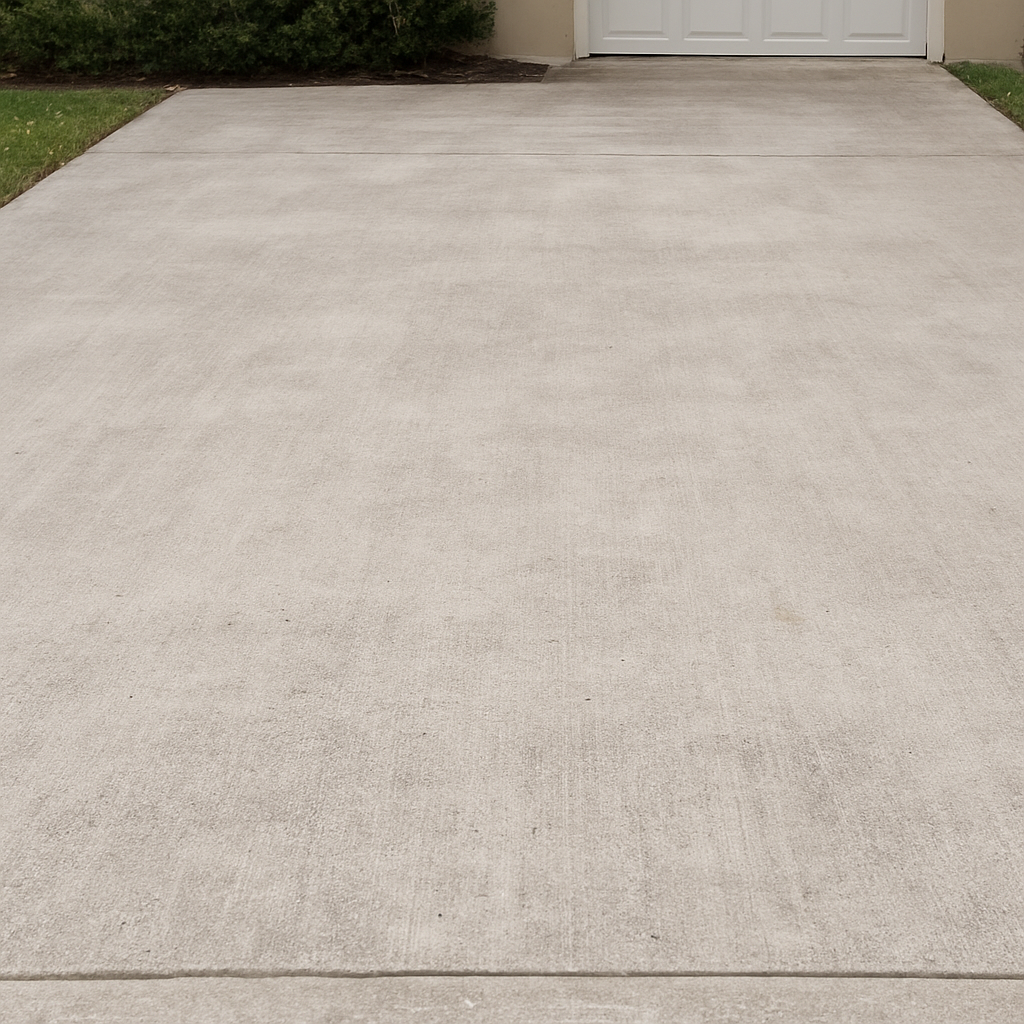
Plan the pattern layout and joint placement before the forms go in — it's far cheaper than changing course mid-project.
3. Comparing Pattern Options
Every pattern looks great fresh out of the forms. The real difference shows up years later, when joints have moved slightly and any repair has to blend into the existing pattern.
Pattern complexity vs. long-term repairability
Higher bars indicate patterns that hide control joints and future repairs more effectively.
Herringbone and other high-contrast, small-unit patterns look striking but are the hardest to patch invisibly later — factor that into your choice if a driveway is a long-term investment.
4. Before-You-Pour Checklist
- View real installed samples in full sun, not just a color card or catalog photo
- Decide how the driveway is actually used — bare feet nearby means lean lighter in color
- Get the true cost: install price plus a 2–3 year resealing cadence
- Ask specifically how drainage and slope will be handled under the stamp pattern
- Review the planned control joint layout before the pour, with future repairs in mind
- Confirm a non-slip additive will be used in the sealer, especially near pools or entries
- Get 2–3 quotes from crews who show you their own completed stamped work, not stock photos
Frequently Asked Questions
How much more does stamped concrete cost than plain concrete?
Expect to pay roughly 60–100% more than a plain broom-finished slab of the same size, driven by the extra labor for stamping, integral or applied color, and sealing. It's still typically far less than natural stone or paver installations with a comparable look, and lasts as long as the underlying concrete does with proper maintenance.
Does stamped concrete get slippery when wet?
The textured surface actually provides more grip than smooth-troweled concrete, especially with a properly applied non-slip additive in the sealer — something worth requesting for driveways and pool-adjacent areas specifically.
How long does stamped concrete last?
The concrete slab itself lasts as long as any quality poured slab — typically 25 to 40 years. The color and texture finish needs periodic resealing (every 2 to 3 years in Florida) to keep looking sharp; skip that and the finish will fade and dull well before the slab itself fails.
Can you repair a section of stamped concrete without redoing the whole driveway?
Yes, but expect some visible color or pattern variation at the repair boundary — stamped concrete rarely patches invisibly the way plain concrete can. Planning your control joint layout around logical repair sections at the outset minimizes how noticeable any future repair will be.
What's the best stamped concrete color for a Florida driveway?
There's no single best answer — it depends on how the space is used. Lighter tans and buffs stay cooler underfoot and hide dust and pollen better; darker charcoals and reds hide tire marks and oil residue but run hotter in direct sun. If bare feet are common (like near a pool), lean lighter; for a strictly vehicular driveway, darker tones are fine.
Keep Reading
5 Rules For Maintaining Your Stamped Concrete Driveway
Already have one? Here's how to keep it looking new.
Debunking The Tales Of Masonry
Seven concrete and masonry myths, debunked with the facts.
How Much Does a Concrete Driveway Cost in Florida?
A full pricing breakdown for plain and decorative driveways alike.
Concrete Maintenance Tips: Add Years To Your Concrete
Sitewide maintenance principles for every type of concrete surface.
Ready to Talk Through Your Pattern and Color Options?
Give us a call and we'll connect you with vetted Lakeland concrete pros who can show you real stamped work in person before you commit to anything.