Maintenance Guide
5 Rules For Maintaining Your Stamped Concrete Driveway
I get some version of the same call every summer: a homeowner with a five-year-old stamped driveway that looked incredible on install day and now looks tired, chalky, or stained. Almost every time, the driveway itself is fine — it's the maintenance that got skipped. Here are the five rules that actually keep stamped concrete looking like day one, based on what separates the driveways that still look great at fifteen years from the ones that don't.
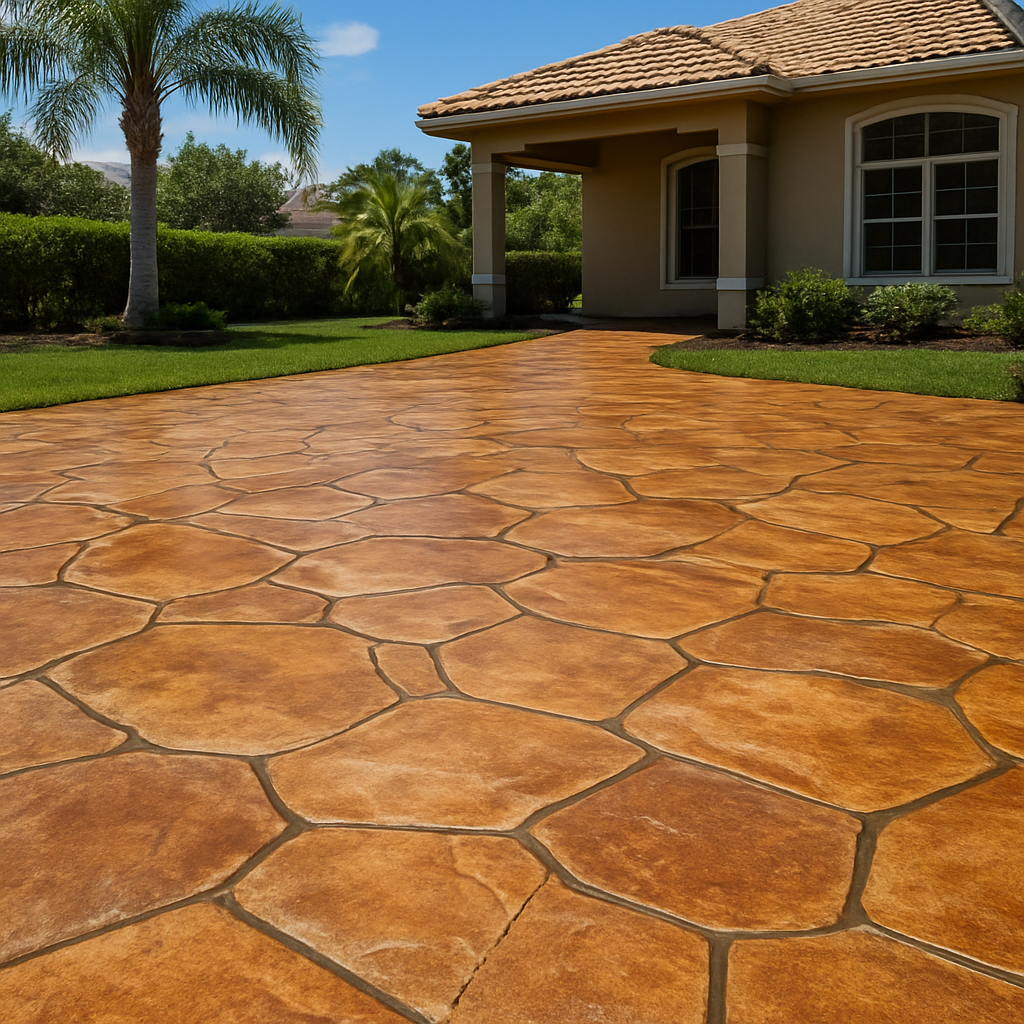
A properly maintained stamped driveway holds its color and texture for decades — the surface itself rarely fails first.
Rule 1: Reseal on a Schedule, Not When It Looks Bad
The sealer on your stamped driveway is the single hardest-working part of the whole system. It's what blocks UV fading, keeps water from soaking into the surface, and gives the color coat something to bond to. In Central Florida's sun and rain, a film-forming sealer typically holds up for 2 to 3 years before it starts to thin — and the mistake I see constantly is waiting until the surface looks dull, chalky, or is visibly absorbing water in dark patches before resealing. By then you've already lost some color and let moisture into the slab. Put it on a calendar instead: reseal every 2 to 3 years regardless of how it looks, and inspect annually by splashing a little water on the surface — if it beads up, the seal's still doing its job; if it soaks in flat, it's time.
Rule 2: Clean With the Right Products, Not Whatever's Under the Sink
Stamped concrete is more sensitive to what you clean it with than plain gray flatwork, because you're cleaning a colored, sealed surface, not raw concrete. Regular sweeping and an occasional rinse with a garden hose handles most day-to-day dirt. For real cleaning, use a pH-neutral concrete cleaner and a soft-bristle brush — never a wire brush, and never straight bleach or ammonia-based cleaners, both of which can strip color and etch the sealer over time. Pressure washing is fine for stamped concrete, but keep the nozzle at a wide fan setting, stay at least 12 inches off the surface, and never use a narrow "turbo" tip — those are strong enough to blast sealer and color right out of the texture grooves.
Rule 3: Handle Oil, Rust, and Chemical Spills Immediately
Sealed stamped concrete resists staining far better than bare concrete, but "resists" isn't "immune." A drop of motor oil, brake fluid, or fertilizer left sitting overnight can still work past the sealer and into the color coat, especially in Florida heat, which softens sealers slightly and makes them more porous to spills. Blot — don't wipe — fresh spills with a paper towel immediately, then clean the spot with a mild degreaser and rinse. Fertilizer and rust stains (from patio furniture or planters) are common culprits homeowners don't think to watch for. If a stain does set, it's usually treatable without repainting the whole slab — but it's much easier to prevent than to fix.
Rule 4: Keep Ice Melt and De-Icers Off It Entirely
This one matters less here than it would in Ohio, but Central Florida does get the occasional hard freeze, and it's worth saying plainly: never use rock salt or chemical de-icers on stamped concrete. These products accelerate the freeze-thaw cycle at the surface and chemically attack both the sealer and the color coat, leaving permanent white staining and pitting. If you ever get a rare icy morning, use sand for traction instead, or just wait for it to melt — Florida ice doesn't stick around long. This rule also covers a less obvious offender: some fertilizers and weed killers contain the same ammonium and calcium chloride compounds and can cause the identical damage if they drift onto the driveway edge.
Rule 5: Re-Sand or Re-Caulk the Joints Before They Fail
Every stamped driveway has control joints and an edge joint against the garage slab or foundation, and those joints are typically filled with a flexible sealant or joint sand. Over years of sun exposure that filler cracks, shrinks, and eventually pulls away — and once it does, water gets a direct path underneath the slab, which is how you end up with base erosion and eventually settlement cracking, the exact structural problem good maintenance is supposed to prevent. Walk your joints once a year. If the sealant is cracked, brittle, or missing sections, it needs to be cut out and replaced — a small, inexpensive job that protects a much larger investment underneath it.
2. Maintenance vs. Lifespan
The gap between a well-maintained stamped driveway and a neglected one isn't cosmetic — it's a real difference in how long the surface lasts before it needs full replacement. Resealing is the single biggest lever homeowners control.
Stamped concrete driveway lifespan by maintenance level
Realistic service life before the color coat and texture require full restoration, based on Central Florida sun and rain exposure.
Ranges are general planning figures for Polk County conditions, not guarantees. Traffic load, drainage, and original installation quality all factor in too.
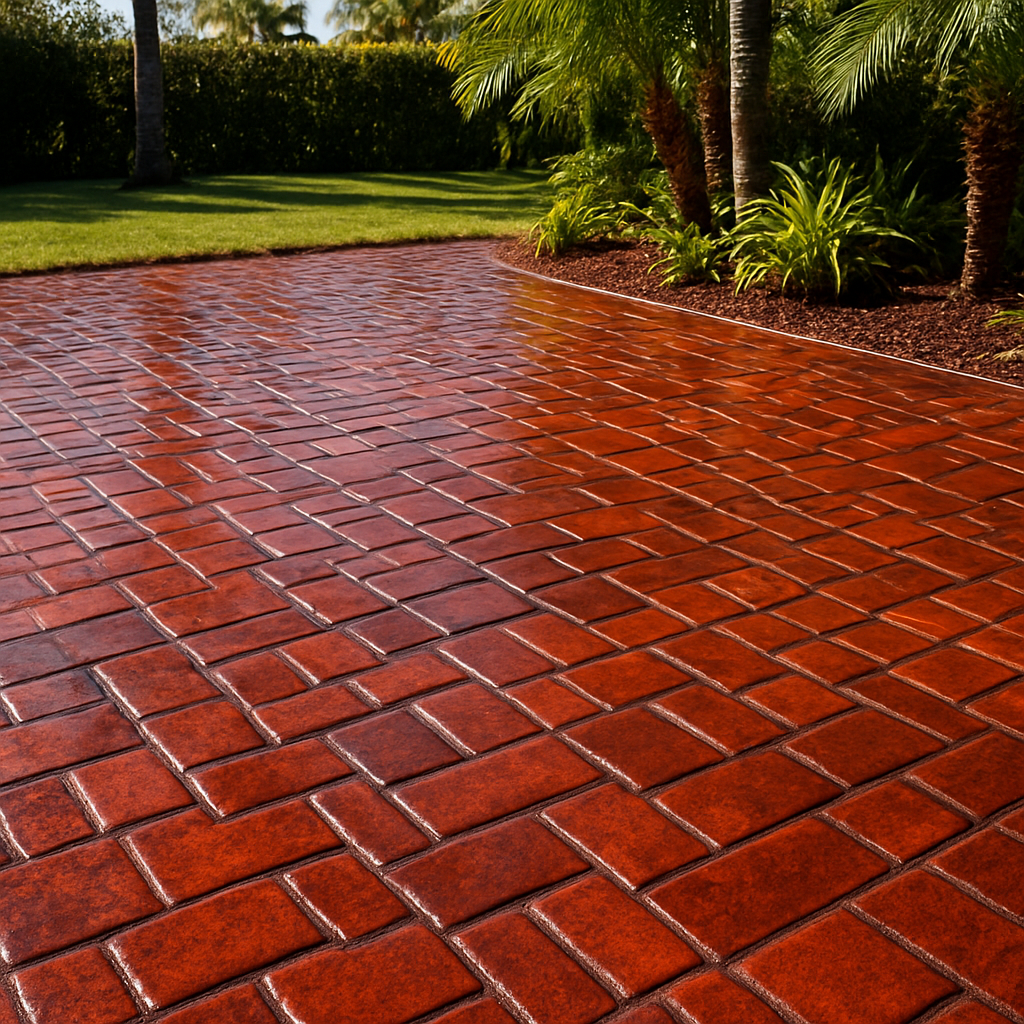
Joint lines and texture grooves are where sealer wears thinnest first — check them during your annual inspection.
3. What Maintenance Actually Costs
Put next to the cost of a full re-stamp or replacement, routine maintenance is inexpensive — which is exactly why skipping it is such a costly shortcut.
Typical stamped concrete maintenance costs
Planning-level ranges for Polk County; get an exact quote for your driveway's size and condition.
A reseal every few years costs a fraction of what a full color-and-texture restoration runs once the sealer has failed and staining has set in. Staying ahead of the schedule is the cheapest maintenance decision you'll make on the whole driveway.
4. Annual Maintenance Checklist
- Splash-test the surface — if water soaks in instead of beading, plan a reseal
- Walk every joint line and note any cracked or missing sealant
- Check for chalky, faded, or dulled patches, especially in full-sun areas
- Clean with a pH-neutral cleaner, not bleach, ammonia, or wire brushes
- Blot (don't wipe) any oil, rust, or chemical spills immediately
- Keep de-icers and heavy fertilizers off the surface entirely
- Book a professional reseal every 2–3 years regardless of appearance
Frequently Asked Questions
How often should I reseal a stamped concrete driveway in Florida?
Every 2 to 3 years is the standard interval for Central Florida's UV exposure and rainfall. Driveways that see heavy sun or a lot of vehicle traffic may need it closer to the 2-year mark; a shaded, low-traffic surface can sometimes stretch toward 3. Don't wait for visible fading — reseal proactively.
Can I pressure wash a stamped concrete driveway?
Yes, with care. Use a wide fan tip, keep the wand at least 12 inches from the surface, and avoid narrow turbo nozzles, which can strip sealer and color right out of the stamped texture. A pH-neutral cleaner beforehand makes the rinse more effective.
Why is my stamped concrete fading or turning white/chalky?
Chalky, dulled color almost always means the sealer has worn through and UV is degrading the color coat directly. It's fixable with a professional strip-and-reseal, but the longer it goes unaddressed the more the color pigment itself degrades, which makes the eventual restoration more involved and expensive.
Is it normal for the joints in my driveway to crack?
The joint filler (sealant or sand) is expected to need periodic replacement — that's routine maintenance, not a defect. The concrete slab itself shouldn't be cracking at the joints; if you see displacement or wide structural cracking rather than just failed filler, that's worth a professional look.
Can I do stamped concrete maintenance myself, or do I need a pro?
Routine cleaning and spot-treating spills is a homeowner job. Resealing is doable as a DIY project if you're comfortable with prep work (the surface has to be fully clean and dry, and even coverage matters), but many homeowners hire it out for a flawless finish. Joint re-caulking and any color/stain repair are best left to a concrete pro with matching pigments and proper surface prep.
Keep Reading
5 Things To Consider Before Stamping Your Driveway
Planning a new stamped driveway? Start here before you pick a pattern.
Concrete Maintenance Tips: Add Years To Your Concrete
The same principles, applied to plain and decorative concrete sitewide.
Debunking The Tales Of Masonry
Seven concrete and masonry myths, debunked with the facts.
Questions to Ask Before Hiring a Concrete Company
The pre-hire checklist that separates good crews from cheap ones.
Need a Reseal or Restoration Quote?
Give us a call and we'll connect you with vetted Lakeland concrete pros who reseal, re-caulk, and restore stamped driveways — or handle the annual inspection for you.