Maintenance Guide
How To Clean Your Lakeland Concrete Driveway
I've fielded this question from more Lakeland homeowners than almost any other maintenance topic. Between pollen season, afternoon thunderstorms, and the mold and algae that thrive in our humidity, a Florida driveway needs a cleaning approach that's a little different from what works up north. Here's exactly how I'd tackle it.
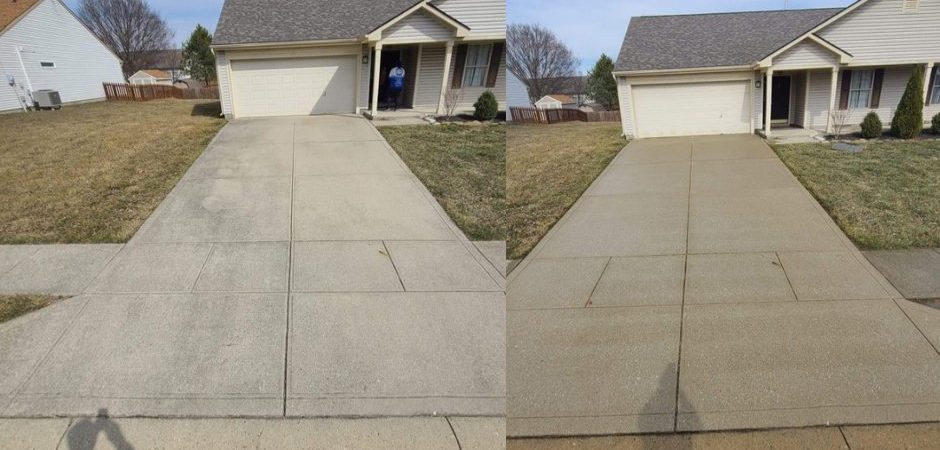
A proper deep clean is often the single biggest visual upgrade you can give a tired-looking driveway — before you even think about resealing.
1. The Basic Cleaning Routine
For most driveways with general dirt, pollen film, and light staining, this four-step process handles it without any specialty products.
Sweep first, always
Before any water touches the driveway, sweep off loose debris, leaves, and grit. Skipping this step just turns dry dirt into mud that's harder to rinse away, and grit acts like sandpaper under a pressure washer wand if you don't clear it first.
Pre-treat with a degreaser on any visible stains
For oil drips, tire marks, or general grime, apply a concrete-safe degreaser and let it sit for the time listed on the product — usually 10 to 15 minutes — before rinsing. Working the product in with a stiff push broom helps it penetrate rather than just sitting on the surface.
Pressure wash in overlapping passes
Use a fan tip (25° or wider) held a consistent distance from the surface, and work in slow, overlapping passes rather than concentrating the stream in one spot. A narrow tip or holding the wand too close can actually etch and damage the concrete surface, which is a mistake I see far too often on DIY jobs.
Rinse from the high point down
Work from the highest point of the driveway toward the street or drainage point so dirty runoff flows away naturally instead of pooling and redepositing grime on sections you already cleaned.
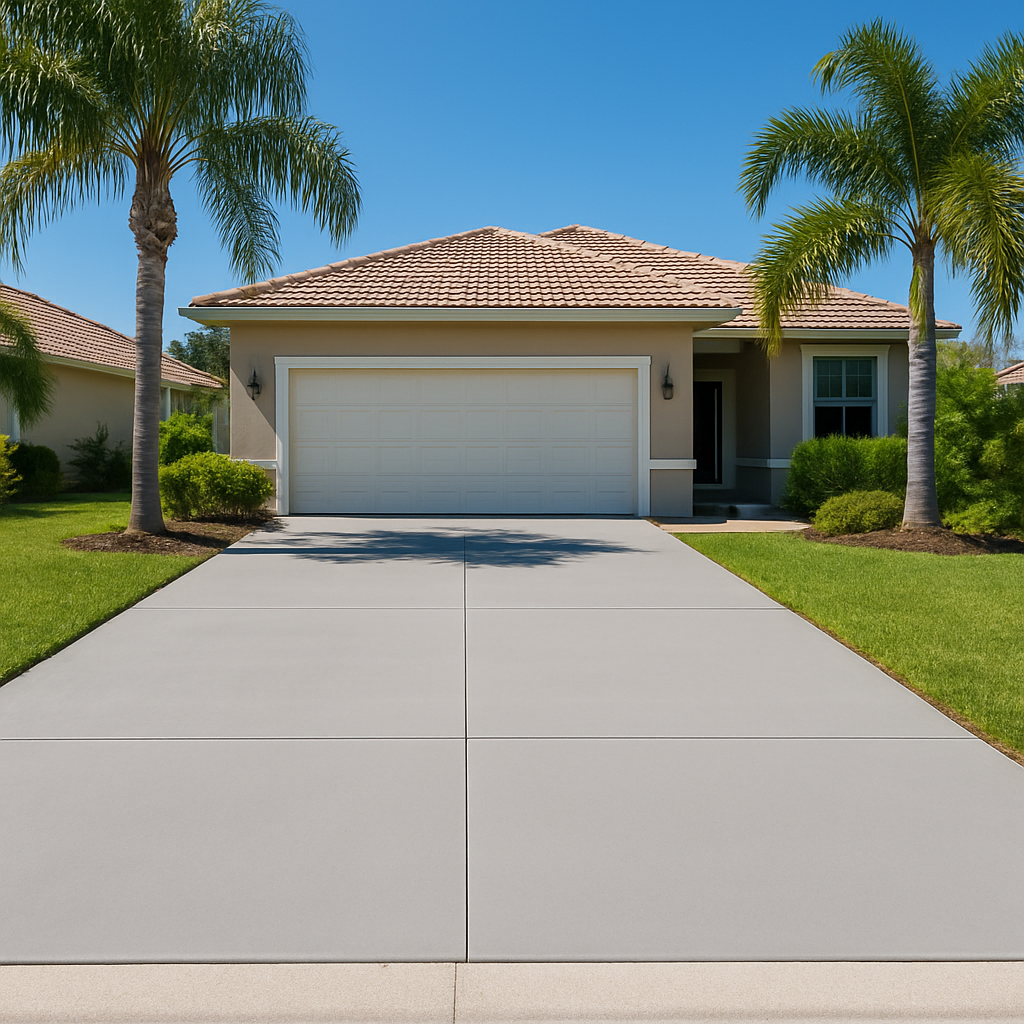
Overlapping, consistent pressure-washer passes avoid the striping and etching that come from rushing the job.
2. Stain-by-Stain Guide
Not every mark on your driveway responds to the same treatment. Here's what I reach for depending on what I'm looking at.
| Stain type | Best method |
|---|---|
| Oil & grease | Concrete-safe degreaser, dwell time, scrub with stiff brush, rinse thoroughly. |
| Mold & algae (shaded areas) | Diluted bleach solution (1 part bleach to 4 parts water) or a dedicated mold/mildew cleaner, then rinse well. |
| Rust (from patio furniture, tools) | Oxalic acid-based rust remover — regular household cleaners won't touch true rust stains. |
| Tire marks | Degreaser plus a stiff-bristle scrub brush; fresh marks come up easier than set-in ones. |
| Efflorescence (white powdery haze) | White vinegar solution or a dedicated efflorescence cleaner, rinsed well afterward. |
| General dirt & pollen film | Plain pressure washing is usually enough — save the chemicals for actual stains. |
Quick Cleaning Checklist
- Sweep debris before applying any water or cleaner
- Identify the stain type before picking a product — oil, mold, and rust all need different treatments
- Use a 25° or wider fan tip on the pressure washer, never a pinpoint tip
- Dilute bleach 1:4 with water; never apply full-strength to concrete
- Rinse from the high point toward drainage so grime doesn't redeposit
- Pick a dry weather window rather than cleaning right before a storm
- Reseal after a deep clean if it's been more than a year or two since the last application
3. Common Mistakes
These are the DIY cleaning mistakes I see most often on Lakeland driveways — all avoidable with a little planning.
Using a pressure washer tip that's too narrow
A 0° or 15° tip concentrates enormous force into a tiny point and can carve visible grooves into the surface of the concrete, especially on older or softer slabs. Stick to a 25° or 40° fan tip for driveway cleaning.
Skipping the degreaser and just blasting oil stains
Water pressure alone rarely lifts oil that's had time to soak into the pores of the concrete. You'll spend twice as long chasing a stain that a five-minute degreaser application would have handled.
Using straight bleach without dilution
Full-strength bleach can discolor concrete and is harsher than needed for most mold and algae. A diluted solution does the job without the risk, and it's safer for any nearby grass or landscaping the runoff touches.
Cleaning right before a big rainstorm
Florida's afternoon thunderstorm pattern can wash cleaning products away before they've had time to work, or reintroduce dirt right after you've finished. Check the forecast and pick a dry window.
Forgetting to reseal after a deep clean
Cleaning removes the surface grime but doesn't restore protection. If your driveway hasn't been sealed in a few years, a thorough cleaning is the perfect moment to reseal — you're already starting from a clean, dry surface, which is exactly what a sealer needs.
4. What to Do After Cleaning
A freshly cleaned driveway is the ideal starting point for sealing — the surface is already stripped of dirt and, once fully dry, ready to accept a sealer that will keep it looking this good for years instead of months. If you've never sealed your driveway or it's been more than a couple of years, this is the moment to do it. Our concrete sealing guide walks through choosing the right product and applying it correctly in Florida's climate.
If cleaning reveals cracks, spalling, or significant wear rather than just surface dirt, that's a sign to look at concrete repair or resurfacing rather than cleaning alone — no amount of pressure washing fixes structural damage.
Frequently Asked Questions
How often should I clean my concrete driveway in Lakeland?
A general rinse every few months keeps dirt, pollen, and organic buildup from taking hold, with a more thorough pressure wash once or twice a year. Shaded, humid areas prone to mold and algae may need more frequent attention.
Can I use a pressure washer on any concrete driveway?
Most standard concrete handles pressure washing fine with the right tip and technique. Older, already-cracked, or previously sealed decorative concrete needs a gentler approach — lower pressure, wider fan tip, and more distance — to avoid damaging the surface or existing sealer.
What's the best homemade cleaner for concrete driveways?
A mix of dish soap and warm water handles light dirt. For oil, a dedicated concrete degreaser outperforms homemade options. For mold and mildew, a diluted bleach solution (1:4 with water) works well. Always rinse thoroughly after any chemical treatment.
Why does my driveway keep growing mold or algae?
Shaded areas that stay damp — under trees, along a north-facing wall, or near sprinklers — are prime conditions for mold and algae in Florida's humidity. If it keeps returning, sealing the surface after a thorough cleaning helps prevent regrowth by closing the pores organic growth needs to take hold.
Should I clean my driveway before selling my house?
Yes — a clean, stain-free driveway is one of the cheapest curb-appeal improvements available and it's often one of the first things buyers notice pulling up. If the surface is also cracked or badly worn, consider resurfacing rather than just cleaning for a bigger impact.
Keep Reading
Concrete Sealing Guide for Lakeland Homeowners
What to do right after your driveway is clean and dry.
How Much Does a Concrete Driveway Cost in Florida?
If cleaning reveals it's time to resurface or replace.
4 Reasons Your Pool Deck Should Be Concrete
The same cleaning principles apply around the pool.
How Thick Should Your Concrete Footer Be?
Planning a new driveway or addition from the ground up.
Driveway Beyond a Deep Clean?
If cleaning uncovered cracks, staining that won't lift, or a slab that's just tired, tell us about your driveway and we'll connect you with local Lakeland pros for repair, resurfacing, or a full replacement quote.