Pool Deck Guide
4 Reasons Your Pool Deck Should Be Concrete
Every pool project I've been involved with in Lakeland eventually comes down to the same question: pavers, concrete, or something else around the pool? After years of watching both hold up — and fail — under Florida sun and chlorine, here's why concrete keeps winning out for most homeowners.
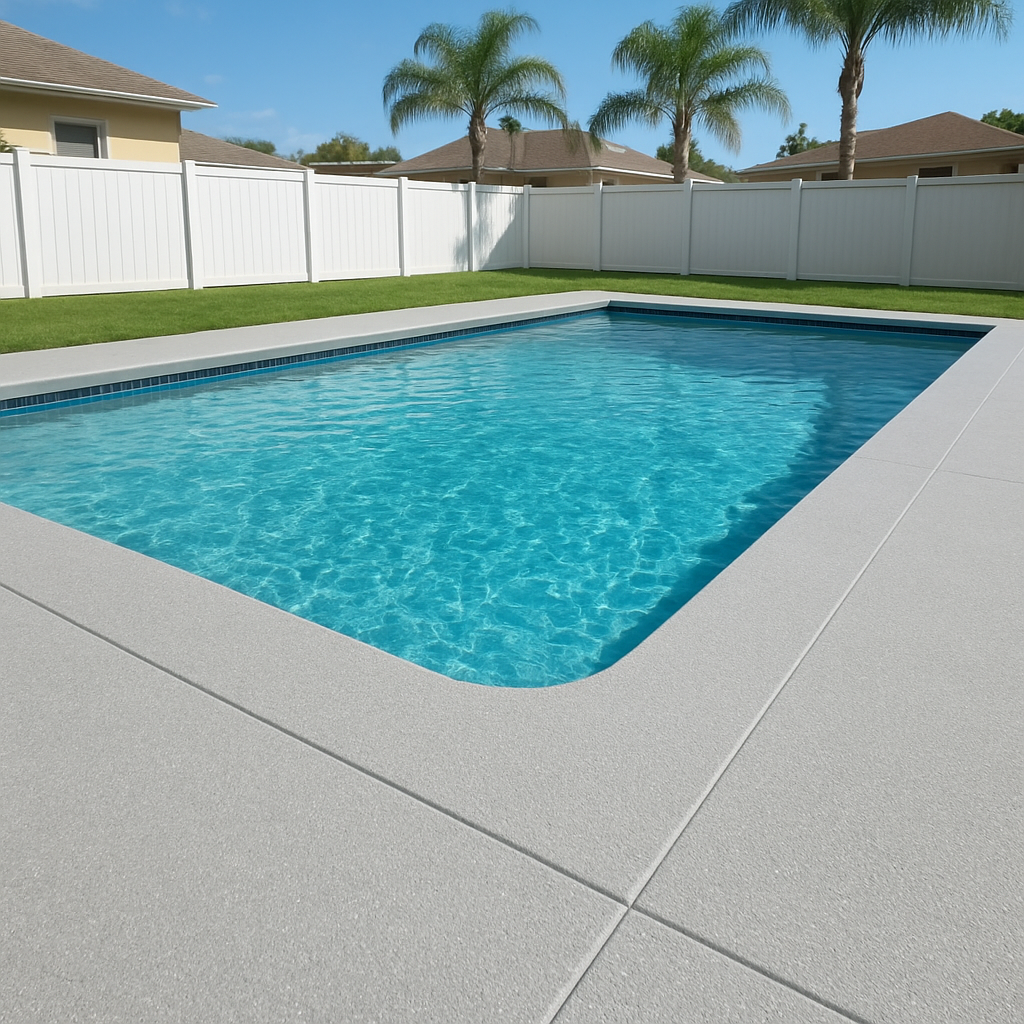
A light-colored, textured concrete pool deck stays cooler and grips better than dark pavers in Florida sun.
What this guide covers
It Stays Cooler Underfoot in Florida Sun
This is the single biggest complaint I hear about pool decks that weren't built with Florida in mind. Dark pavers and plain broom-finished concrete can get uncomfortably hot by early afternoon. The fix most Lakeland homeowners land on is a textured or stamped concrete finish with a lighter, reflective color — it stays noticeably cooler to bare feet than dark pavers or a flat dark slab, and a cool-deck coating can push that even further if heat is your top concern.
It's Fully Customizable Around Curves and Odd Shapes
Pools are rarely a perfect rectangle, and pavers or tile struggle with tight curves without a lot of cutting and waste. Poured concrete flows around any pool shape — kidney, freeform, lap pool, whatever you have — and it can be stamped, stained, or textured to match your home's style, whether that's a natural stone look, a smooth modern finish, or a colored broom finish that ties into your landscaping.
It Handles Chlorine, Sun, and Constant Moisture Without Breaking Down
A pool deck lives in one of the harshest micro-climates on your property — constant splash-out, chlorine exposure, direct sun, and Florida's daily humidity swings. Properly poured and sealed concrete shrugs this off far better than wood (which rots and needs constant refinishing) and holds up better over time than lower-grade pavers, which can shift, stain, or grow mold in the joints where water collects.
It Costs Less Than Pavers or Natural Stone for the Same Footprint
Square foot for square foot, poured concrete — including stamped and decorative finishes — typically costs less than pavers or natural stone decking, without giving up much on appearance. For larger pool decks especially, that difference adds up fast, and it means more of your budget can go toward slip-resistant texture and a quality sealer rather than material cost alone.
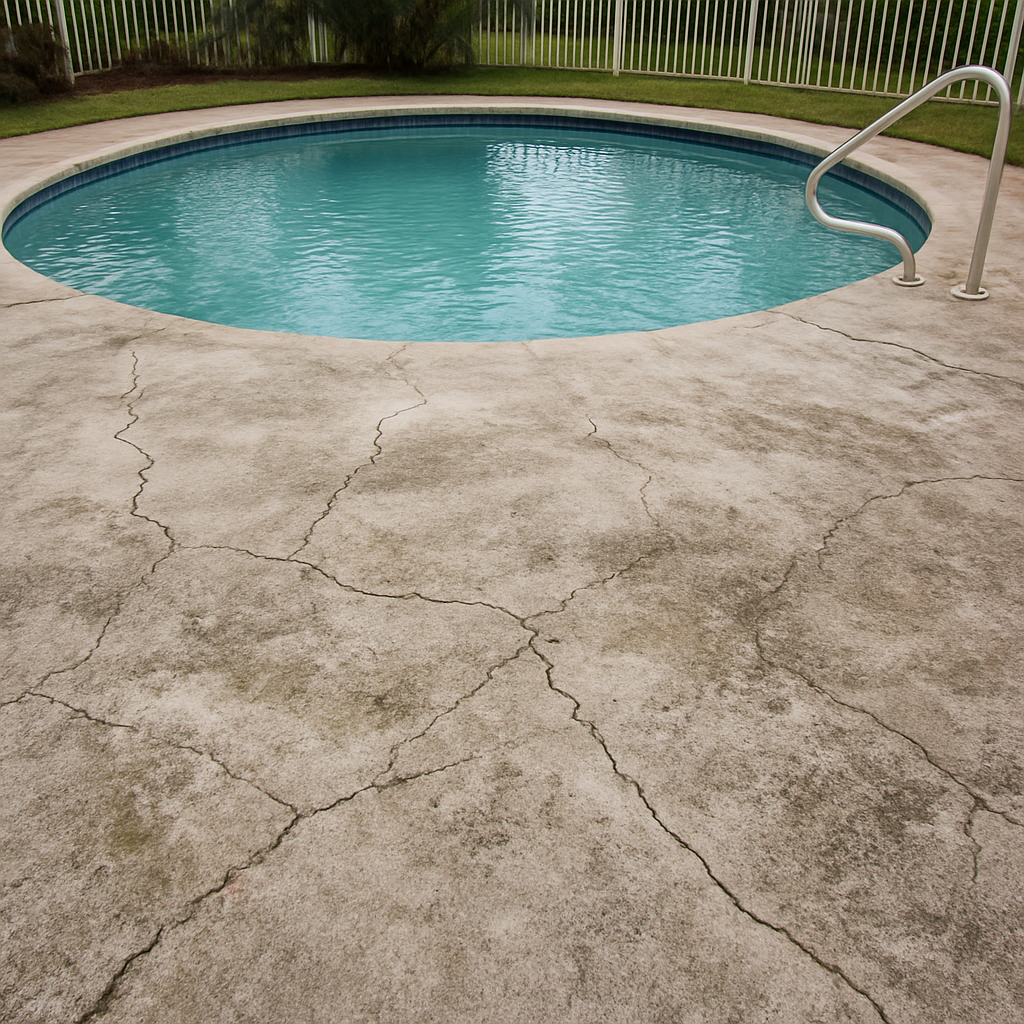
A cracked, faded, or slippery pool deck is one of the most common resurfacing calls we see across Lakeland.
Choosing a Finish for Your Pool Deck
The finish matters as much as the material — this is where heat, slip resistance, and style all get decided. Here's how the common options compare.
| Finish | Best for |
|---|---|
| Broom finish (light color) | Budget-friendly, slip-resistant, keeps heat down with a light tint |
| Stamped concrete | Upscale stone or travertine look at a fraction of the material cost |
| Knockdown texture / cool-deck coating | Maximum heat reduction, common on screened lanais and open decks |
| Exposed aggregate | Excellent slip resistance, natural stone-like texture |
| Stained or colored concrete | Custom color to match landscaping or home exterior |
Whatever finish you choose, don't skip the sealer conversation — our concrete sealing guide covers exactly why a slip-resistant sealer matters more around a pool than almost anywhere else on your property.
Pool Deck Planning Checklist
- Choose a lighter color if heat underfoot is a top concern
- Confirm the finish includes slip resistance — never rely on gloss sealer alone near water
- Check whether your existing slab is a candidate for resurfacing before assuming full replacement
- Ask about control joint spacing to reduce future cracking
- Budget for resealing every 1–3 years given constant sun and chlorine exposure
- Get quotes on both plain and decorative finishes to compare real cost differences
New Pour vs. Resurfacing an Existing Deck
If you're building a new pool, the concrete deck goes in as part of that project and this decision is mostly about finish and color. If you already have a pool with a tired, cracked, or slippery deck, the more common — and usually more affordable — path is pool deck resurfacing, which applies a fresh decorative overlay on top of the existing structurally sound slab rather than tearing it out.
Compare local pool deck contractors or browse stamped concrete specialists if you want a decorative pattern rather than a plain resurfaced finish.
Frequently Asked Questions
What's the best concrete finish for a Lakeland pool deck?
For most homeowners, a light-colored stamped or textured finish with a slip-resistant sealer additive is the sweet spot — it stays cooler than dark pavers, resists slipping when wet, and gives you a decorative look. If heat is your top priority, ask your contractor about a cool-deck coating on top of the base concrete.
How do I keep a concrete pool deck from being slippery?
Slip resistance comes from the finish and the sealer, not the material itself. Textured finishes like exposed aggregate, knockdown texture, or a stamped pattern all add grip, and any sealer used near a pool should include a slip-resistant additive — never a high-gloss film alone.
Can concrete pool decks crack?
Any poured concrete can develop cracks over time, usually from ground movement, poor base preparation, or missing control joints. Proper control joint spacing and a well-compacted base — which any experienced Lakeland pool deck contractor should already be doing — substantially reduces this risk.
How much does a concrete pool deck cost in Lakeland?
Pricing depends on square footage, finish (plain broom vs. stamped vs. stained), and whether you're pouring new or resurfacing an existing deck. For current local pricing, see our pool deck resurfacing cost guide, or request a free quote for an exact number on your pool's footprint.
Is it better to resurface an old pool deck or replace it?
If the existing slab is structurally sound — no major heaving, extensive cracking, or drainage failure — resurfacing with a decorative overlay is usually the more cost-effective route and can completely transform the look. If the base concrete has serious structural issues, full replacement is the more honest long-term answer.
Keep Reading
5 Reasons Stamped Concrete Is Worth It for Your Business
The same finishes that work on pool decks work great commercially too.
How to Clean Your Lakeland Concrete Driveway
Cleaning tips that apply to pool decks too.
Concrete Sealing Guide for Lakeland Homeowners
Why the right sealer matters most around a pool.
Who Does Stamped Concrete Pool Decks in Lakeland FL?
Local specialists, patterns, and pricing.
Ready to Upgrade Your Pool Deck?
Tell us about your pool and whether you're pouring new or resurfacing, and we'll connect you with local pool deck contractors for a free quote.