Decorative Concrete Guide
Are Concrete Countertops Worth It?
I hear this question in almost the same breath every time: "isn't concrete the cheap option?" It isn't — and that surprises people. Concrete countertops are a genuinely premium, fully custom material with real trade-offs against granite and quartz. Here's the honest answer, not the marketing version.
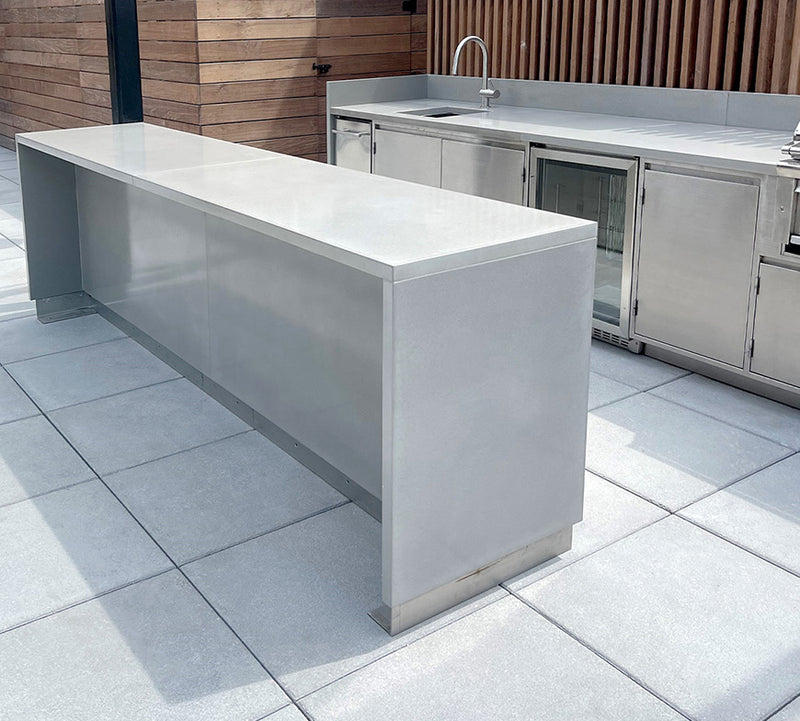
Custom concrete countertops hold up well both indoors and outdoors — a real advantage over most stone and solid-surface options in Florida's climate.
1. What Makes Concrete Worth It
People who end up genuinely happy with concrete counters usually wanted one specific thing a factory slab couldn't give them: total customization. Here's what that actually means in practice.
Fully custom — shape, color, and edge
This is the reason most of my clients seriously consider concrete over a factory slab in the first place. You're not picking from a showroom of pre-cut granite remnants — you're specifying exact dimensions, integral color, edge profile, and even inlays like embedded shells, glass, or a drainboard cast right into the surface. If you want a single seamless waterfall island or an oddly shaped outdoor kitchen counter that a stone slab simply can't span, concrete is often the only realistic option.
Genuinely one-of-a-kind
Every hand-poured slab has slight variation — that's a feature, not a defect. Two concrete counters poured by the same fabricator on the same day will never look identical. If you want your kitchen to look like everyone else's on the block, this isn't the material for you. If you want something nobody else has, it's hard to beat.
Extremely durable when sealed properly
A properly sealed concrete countertop resists heat, scratching, and everyday wear better than people expect. I've seen 10-year-old concrete counters in Lakeland kitchens that still look sharp because the owners kept up with resealing. It's not indestructible — nothing is — but it holds up to daily kitchen use just fine.
Works indoors and outdoors
Sealed concrete tolerates Florida's humidity and UV exposure well, which makes it a natural fit for outdoor kitchens and bar tops in addition to interior counters — something most natural stone and virtually no laminate or solid-surface product can match without a much bigger budget.
If you're weighing this against a more standard finish, it's also worth comparing to a standard poured concrete countertop or exploring related decorative concrete finishes if what you actually want is the polished-concrete look on floors rather than counters.
2. The Real Trade-Offs
I'd rather talk you out of a bad fit than sell you on something you'll regret. These are the honest downsides I make sure every homeowner understands before they commit.
It costs more than people expect
This is the number one thing I have to correct in almost every conversation. Homeowners walk in assuming concrete is the 'cheap DIY option' because they've seen a garage-poured stepping stone. Fabricated concrete countertops run $70–$150 per square foot installed — squarely in line with mid-to-high-end granite and quartz, not below it. The labor, forming, curing, and finishing time is what drives the price, not the raw material.
It needs maintenance
Concrete is porous. Unsealed or under-sealed, it will stain from wine, oil, and acidic foods. A quality sealer needs to be reapplied roughly once a year for most kitchen counters — this isn't a set-it-and-forget-it surface the way quartz is.
Hairline cracks can happen
Because it's poured and cured on-site or in a form, concrete can develop small hairline cracks as it cures and settles, especially over long spans. A skilled fabricator controls this with proper reinforcement and mix design, and most hairline cracks are cosmetic rather than structural — but it's a real characteristic of the material you should know going in, not a defect anyone is hiding from you.
Repairs are more involved than stone
If quartz chips, you can often live with it or get a small spot repair. If a concrete counter chips or cracks in a visible spot, the repair usually needs to be color-matched and reblended by an experienced fabricator to disappear the way it should — not every handyman can do this well.
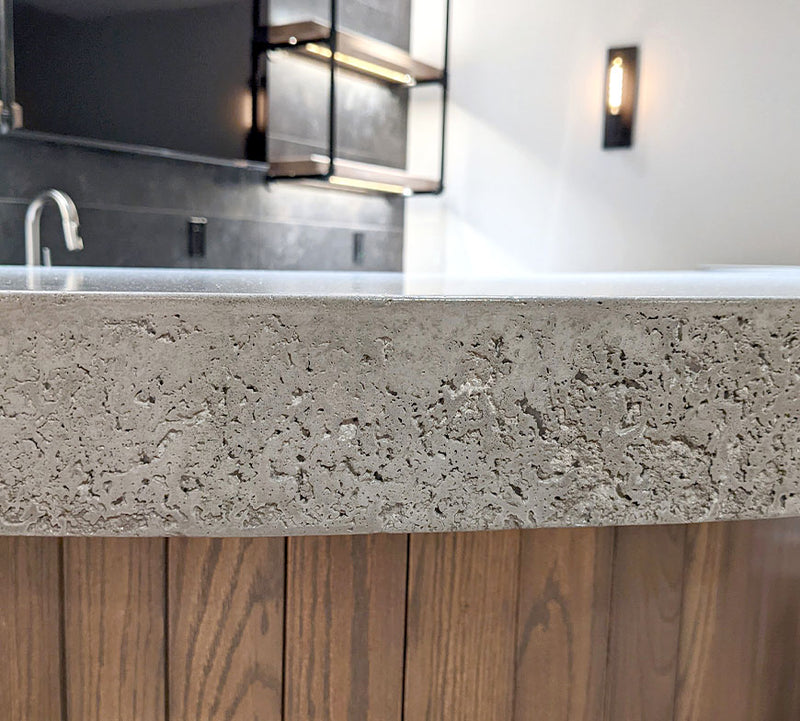
Custom edge profiles are one of the details you simply can't get from a pre-cut factory slab.
3. Cost & How It Compares
Here's the side-by-side I wish more homeowners saw before they started shopping. Concrete sits in the same price tier as good granite and quartz — it's a lateral choice, not a downgrade or a premium upcharge.
| Material | Typical cost | Durability | Look |
|---|---|---|---|
| Concrete (custom) | $70–$150 / sq ft | Very good, needs resealing | Fully custom, unique |
| Granite | $50–$100 / sq ft | Excellent, minimal maintenance | Natural stone patterns |
| Quartz (engineered) | $60–$120 / sq ft | Excellent, no sealing needed | Consistent, wide color range |
| Laminate | $20–$50 / sq ft | Fair, prone to chipping | Wide range, less premium feel |
For a full local pricing breakdown by size and finish, see the custom concrete countertops cost guide.
4. Maintenance Reality Check
I'll be direct about this because it's the part homeowners underestimate most: concrete counters are not maintenance-free. Plan on resealing roughly once a year, wiping up wine, coffee, and citrus promptly rather than letting them sit, and using cutting boards and trivets as a matter of habit rather than an afterthought. If that sounds like more upkeep than you want, quartz — which needs essentially none of this — is worth serious consideration instead.
Quick Decision Checklist
- Want a fully custom shape, color, or integral sink? Concrete is a strong fit.
- Want zero-maintenance and no resealing? Look at quartz instead.
- Building an outdoor kitchen or bar top? Sealed concrete handles Florida's climate well.
- Budget under $50/sq ft? Concrete likely isn't your cheapest option — compare laminate.
- Want a surface no one else has? Hand-poured concrete is genuinely one of a kind.
- Not willing to reseal annually? Be honest with yourself before you commit.
5. Who Should — and Shouldn't — Choose Concrete
In my experience, the homeowners who end up thrilled with concrete counters are the ones who wanted a specific custom feature a factory slab couldn't deliver — an oversized island, an integral sink and drainboard, a color no stone naturally comes in, or an outdoor bar top that needs to survive Florida weather. They also tend to be people who don't mind a little annual upkeep in exchange for a surface that's genuinely theirs.
If what you actually want is the lowest-maintenance option at the best price, or you're renovating to sell rather than to keep, quartz or granite is usually the smarter call — buyers know what they're looking at and it needs no explanation. Compare local custom concrete countertop fabricators in our directory to get a real quote for your specific kitchen before deciding either way.
Frequently Asked Questions
How much do concrete countertops cost in Lakeland?
Expect roughly $70 to $150 per square foot installed, depending on size, edge detail, color, and whether you're adding features like an integral sink or drainboard. See our full breakdown on the custom concrete countertops cost guide for current local pricing.
Do concrete countertops crack?
Hairline cracking is a known characteristic of the material, especially on long spans, and it's usually cosmetic rather than structural when the fabricator uses proper reinforcement. A reputable local fabricator will walk you through how they control for this before you commit.
How often do you have to reseal concrete countertops?
Most kitchen counters need resealing about once a year to maintain stain and heat resistance. Lighter-use surfaces, like a bar top, can sometimes go longer. Skipping resealing is the single biggest reason concrete counters look worn before their time.
Are concrete countertops heat resistant?
Sealed concrete tolerates hot pans reasonably well, but I still recommend trivets — extreme, sudden heat can stress the sealer over time even if it doesn't damage the concrete itself. It's a durable surface, not an indestructible one.
Can concrete countertops go outside in Florida?
Yes, and it's one of the better applications for the material. Properly sealed concrete handles Florida humidity and sun exposure well, which is why it's popular for outdoor kitchens and pool bar tops around Lakeland.
Keep Reading
5 Reasons Stamped Concrete Is Worth It for Your Business
Why commercial properties are switching to decorative stamped concrete.
How Thick Should Your Concrete Footer Be?
A local guide to footer thickness by project type.
Concrete Sealing Guide for Lakeland Homeowners
Sealing principles that apply to counters, patios, and driveways alike.
Questions to Ask Before Hiring a Concrete Company
The full pre-hire checklist for any concrete project.
Thinking About Concrete Counters?
Tell us about your kitchen or outdoor space and we'll connect you with local fabricators who can give you a real, no-obligation quote based on your exact layout.