Driveway Maintenance Guide
How To Prepare Your Driveway For Winter Weather In Florida
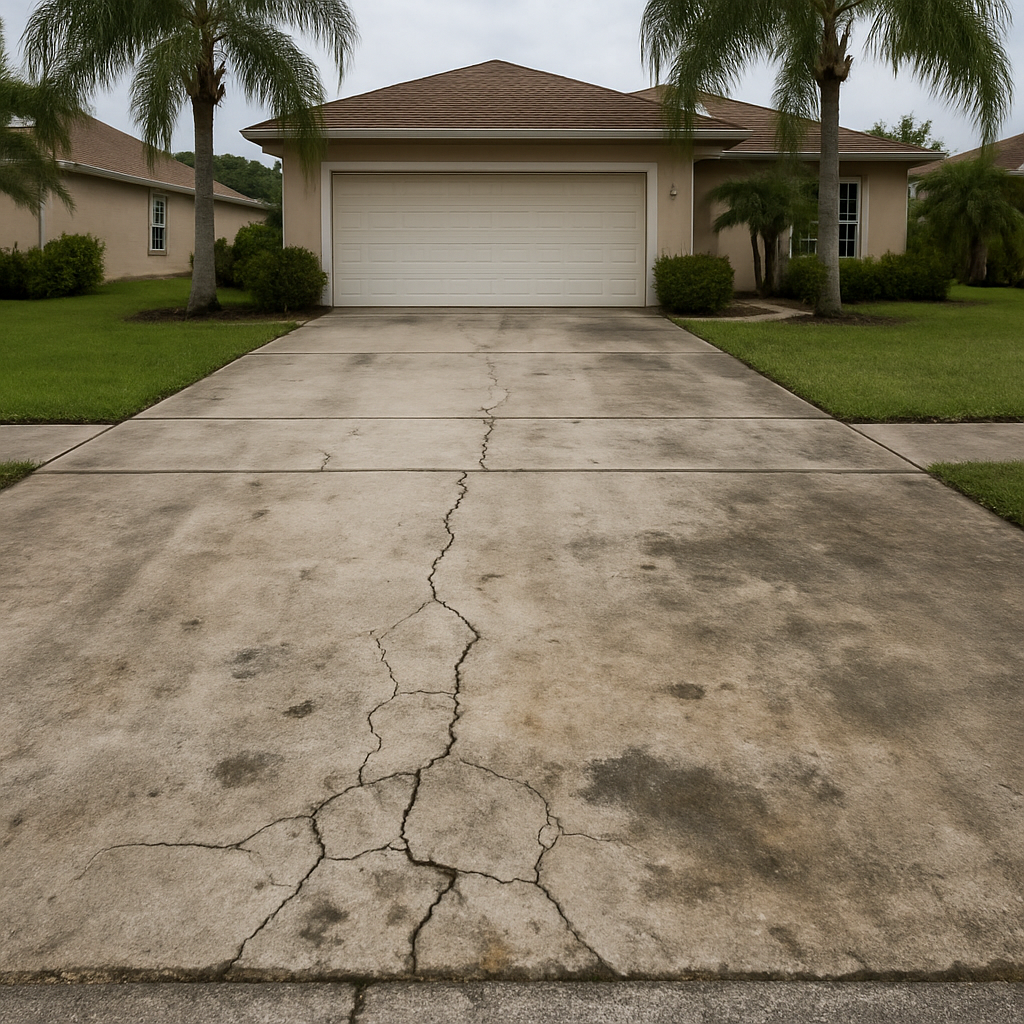
A few rainy seasons can do this. Winter is the time to get ahead of it.
What Winter Actually Means For A Florida Driveway
Up north, driveway prep for winter is about surviving ice, snow plows, and months of freeze and thaw. Here in Lakeland, January lows usually hover around 50°F. We might get a couple of frosty mornings in a cold year, and that's about it.
So why bother? Because of what happens on either side of winter. From June through September your driveway sits through near-daily thunderstorms, standing water, and pavement temperatures that can top 140°F in the afternoon sun. Hurricane season runs until the end of November. By the time the first real cold front rolls through, most driveways have taken a beating and nobody's looked at them closely in months.
Winter flips all of that. Humidity drops, it rains far less, and the temperatures are mild. Those are exactly the conditions crack fillers, patching compounds, and sealers need to cure the way they're supposed to. Get the work done between November and February and your driveway goes into next summer in much better shape.
| Northern winter | Central Florida winter |
|---|---|
| Months of freeze and thaw cycles | A few cold nights, gone by mid-morning |
| Snow plows and shovels scraping the surface | Holiday guests, moving trucks, and RVs on the edges |
| Rock salt eating into the concrete | Leftover damage from summer storms and hurricane season |
| Too cold to seal until spring | The best sealing weather of the whole year |
Step 1: Walk The Driveway After Hurricane Season
Start with a slow walk from the garage door to the street. Bring your phone and take pictures as you go. You're looking for four things:
- Cracks. Note how wide they are and whether one side sits higher than the other.
- Low spots. Anywhere water still sits a day after rain, or a slab that has dropped below its neighbor.
- Edges. Look along both sides for chipped corners or soil washed out from underneath.
- Surface wear. Flaking, pitting, or a rough sandy texture where the top layer is breaking down.
The best time to do this is the morning after a good rain. Puddles show you exactly where the slab has settled, and wet concrete makes cracks much easier to see.
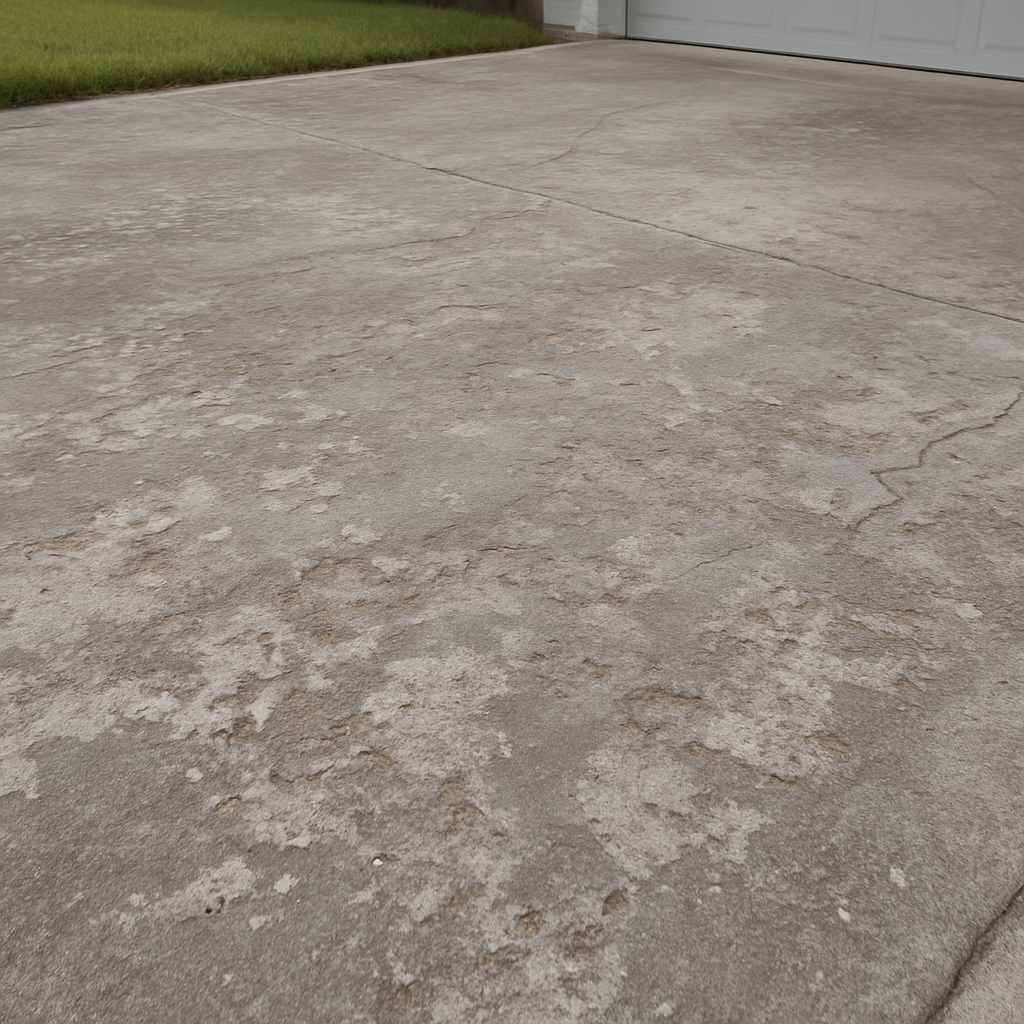
Example: the crack that wasn't there last spring
Say you walk your driveway in November and spot a new crack running across the slab about six feet from the garage. It's thin, maybe 1/16 of an inch, and both sides are level. That's normal shrinkage or settling, and it's an easy DIY fix.
Now say the same crack is closer to 1/4 of an inch wide and the side nearest the street has dropped enough to catch your toe. That's a different story. Something is moving underneath, usually soil that washed out during the summer, and filling the crack won't stop it. That one needs a leveling or repair job.
Step 2: Fix Cracks While It's Dry
Open cracks let water get under the slab. Once it's there, it carries away the sandy soil Polk County driveways sit on, and the slab starts to sink and crack further. Sealing them up in the dry season stops that cycle before the rain comes back.
For hairline cracks up to about 1/4 inch:
- Dig out loose debris and weeds with a screwdriver or a stiff wire brush.
- Blow or vacuum out the dust. Filler won't stick to dirt.
- For anything deeper than 1/2 inch, push in foam backer rod first so you're not filling a canyon.
- Fill with a flexible polyurethane or self-leveling concrete crack sealant. Avoid rigid patching mortar on cracks that move, since it'll just crack again.
- Let it cure fully before you seal the rest of the driveway.
Wider cracks, cracks with a height difference, or cracks that keep coming back are worth having looked at. They usually point to a base problem, and our driveway repair crews deal with those every week.
Step 3: Sort Out Drainage And Washed-Out Edges
Most of the driveway damage we see in Lakeland comes back to water. A downspout that dumps right at the edge of the slab, a yard graded toward the driveway, or sprinklers that soak the same corner every morning will all wash soil out from underneath over time.
Example: the cracked corner by the downspout
A pretty common one: the front corner of the driveway, right next to the garage, cracks off in a triangle. Look up and there's a downspout emptying straight onto that corner. Every summer storm pushes a little more sand out from under the slab, and eventually the corner has nothing holding it up when a car rolls over it.
The fix is cheap if you catch it early. Add a downspout extension so water lands at least four feet away, pack and compact soil back along the edge, and fill the crack. If the corner has already dropped, it can usually be raised with foam injection instead of being torn out.
Winter is also when sinkhole activity tends to pick up in our area, partly because the dry season and heavy groundwater pumping for crop freeze protection lower the water table. A new low spot that appears suddenly, especially with cracks spreading out from it, deserves a closer look. Our guide to sinkhole warning signs covers what to watch for.
Step 4: Clean It Properly
You can't seal a dirty driveway. Sealer locks in whatever is on the surface, so oil spots, rust stains, and black mildew will be stuck there for the next few years if you don't deal with them first.
- Mildew and algae: very common in shady spots under oak trees. A diluted bleach or oxygen-based cleaner followed by a pressure wash takes care of it.
- Oil and transmission fluid: soak it up with cat litter first, then scrub with a concrete degreaser.
- Rust stains:often from well-water sprinklers or patio furniture. These need a rust remover made for concrete. Bleach won't touch them.
Use a surface cleaner attachment on the pressure washer if you have one. Holding a narrow tip too close can etch lines into the concrete. For a full walkthrough, see how to clean your Lakeland concrete driveway.
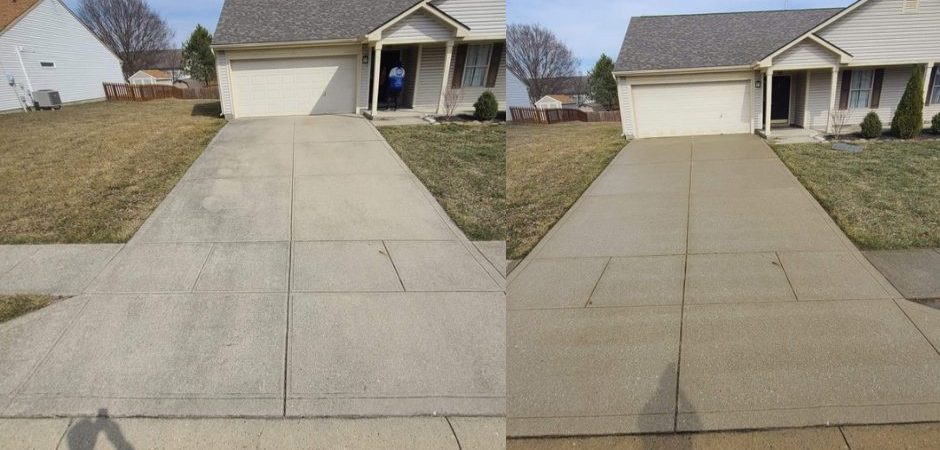
Step 5: Seal It In The Cool, Dry Window
This is the step that makes winter prep worth it. A good sealer keeps water out of the concrete, slows down UV fading, and makes stains a lot easier to clean. In Florida's sun, most driveways need to be resealed every two to three years.
Temperature
Most sealers want 50°F and rising, both in the air and on the slab.
Dry slab
Wait at least 24 hours after washing or rain. Morning dew counts.
Dry forecast
No rain for at least 24 hours after you finish.
Example: picking the right day
Say it's mid-December and the forecast looks like this: Monday is dry and sunny with a high of 72. A front moves through Tuesday night with rain Wednesday. Thursday morning it's 44°F, warming to 65 by the afternoon.
Monday is your day. Wash Saturday, let it dry Sunday, and seal late Monday morning once the dew has burned off. You've got a full day and a half before the rain. Thursday looks tempting, but the slab will still be damp from Wednesday and it starts out too cold.
Two thin coats beat one heavy coat every time. Thick sealer can stay tacky, turn cloudy, or peel. For a plain broom-finish driveway, a penetrating silane or siloxane sealer works well and won't make the surface slick. Stamped or colored concrete usually gets an acrylic sealer to bring out the color. Our concrete sealing guide goes deeper on choosing one.
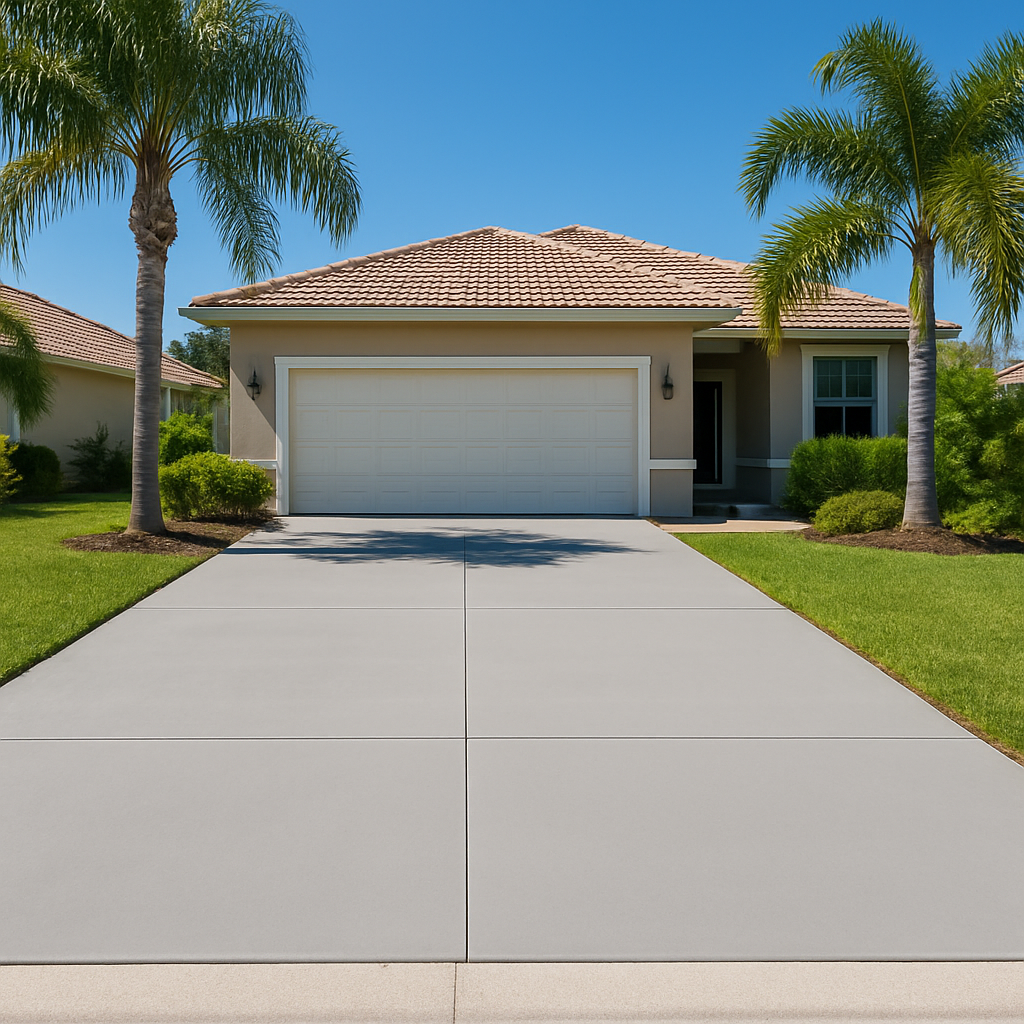
Step 6: Handle The Rare Cold Night The Right Way
Every few years we get a night that dips into the low 30s. Your driveway will be fine. Sound concrete doesn't mind a few hours of cold. The only real risk is water sitting in open cracks, which can freeze and expand, and you already took care of that in Step 2.
What you shouldn't do is reach for rock salt. Salt and most de-icers draw moisture into the concrete and can cause the surface to flake, especially on newer driveways. A Florida frost is usually gone by 9 a.m. anyway. If a shady spot is slick, throw down a little sand and wait it out.
Step 7: Plan For Heavier Winter Traffic
Winter is busy in Central Florida. Snowbirds come back, family visits for the holidays, and it's a popular time for remodels and moves. That means more cars, delivery trucks, RVs, and dumpsters on driveways that were built for two sedans.
Example: the dumpster that cost more than the remodel cleanup
A roll-off dumpster dropped right on a driveway can weigh several tons once it's full, and the truck that hauls it away is heavier still. Set it on bare concrete near the edge and you can crack a slab in an afternoon. Ask the hauler to put plywood down under the rails and to keep it toward the middle of the driveway, away from the edges.
The same goes for guests with trucks or campers. The middle of the slab handles weight far better than the edges, so point people there and keep heavy tires off the last foot or so along each side.
What Winter Prep Costs
Here's roughly what to expect for a typical two-car driveway of about 600 square feet. Prices vary with condition and access, so treat these as ballpark numbers.
| Task | DIY | Professional |
|---|---|---|
| Cleaning and stain treatment | $30–$80 | $150–$300 |
| Crack filling (hairline to 1/4") | $25–$60 | $150–$400 |
| Sealing (two coats) | $120–$450 | $600–$1,200 |
| Downspout extensions and edge backfill | $20–$75 | $150–$400 |
| Raising a sunken section | Not a DIY job | Quoted per section |
Compare that to replacing a driveway, which commonly runs well into five figures, and a couple hundred dollars of upkeep every winter looks pretty good. If you're weighing repair against replacement, our Florida driveway cost guide breaks down the numbers.
Services That Get Your Driveway Ready For Winter
If you'd rather not spend a weekend on your knees with a caulk gun, we handle all of it. Here's what fits each problem:
Just need it cleaned and sealed? Submit a job request below, pick “Concrete Sealing,” and we'll quote it. A lot of homeowners bundle sealing with crack repair since the crew is already there.
Your Winter Driveway Checklist
- Walk the driveway and note every crack, sunken spot, and stain
- Clean out and fill cracks wider than a credit card
- Point downspouts away from the slab and fix any washed-out edges
- Pressure wash, then treat oil, rust, and mildew stains
- Let the slab dry for at least a full day
- Seal on a dry day above 50°F with no rain in the forecast
- Keep heavy trucks, trailers, and dumpsters off the edges
- Skip the rock salt if a frost ever shows up
None of this is complicated. The trick is just doing it while the weather's on your side. Knock it out over a couple of cool weekends this winter and your driveway will be in a lot better shape when the first June storm rolls in. For more year-round habits, read our concrete maintenance tips.
Frequently Asked Questions
Do I need to winterize my driveway in Florida?+
Not the way people up north do. Lakeland rarely sees a hard freeze, so you aren't fighting ice and plows. What you should do is use the dry, cool months from November through February to repair cracks, fix drainage, clean, and seal. That's the easiest time of year to get the work done and have it cure properly before the summer rains return.
What is the best month to seal a concrete driveway in Central Florida?+
Late October through early March is usually the sweet spot. Humidity drops, rain is less frequent, and afternoon temperatures sit comfortably above the 50°F most sealers need. Avoid the coldest mornings and any day with a cold front and rain in the forecast within 24 hours. Always follow the temperature range printed on the product you're using.
Can a freeze crack my concrete driveway in Lakeland?+
It's possible but uncommon. Freeze damage happens when water sitting in cracks or pores freezes and expands. In Polk County a freeze usually lasts a few hours before sunrise, which isn't long enough to do much to sound, sealed concrete. Driveways with open cracks and standing water are the ones at risk, which is another reason to fill cracks before winter.
Should I put salt on my driveway if it frosts?+
No. Rock salt and most de-icers are hard on concrete and can cause surface flaking, especially on newer slabs. A Florida frost melts off by mid-morning on its own. If a shaded spot is slick, a little sand for traction is the safer choice.
How long after sealing can I drive on my driveway?+
Most sealers are dry to foot traffic in a few hours, but plan on keeping cars off for at least 24 to 48 hours. Cooler winter temperatures slow curing a bit, so give it the full time listed on the label, and longer if it's damp or overcast.
How much does it cost to get a driveway ready for winter?+
For a typical 600 square foot two-car driveway, doing it yourself usually runs about $150 to $500 for cleaner, crack filler, and sealer. Having it done professionally, including cleaning, crack repair, and sealing, typically lands in the $700 to $1,800 range depending on the condition of the slab. Leveling sunken sections or fixing drainage is priced separately.
Want Your Driveway Ready Before The Next Cold Front?
Tell us what's going on with your driveway, whether that's cracks, a sunken section, stains, or it just needs sealing, and we'll get back to you with a free quote.