Coating Systems Guide
Epoxy Pool Deck Resurfacing
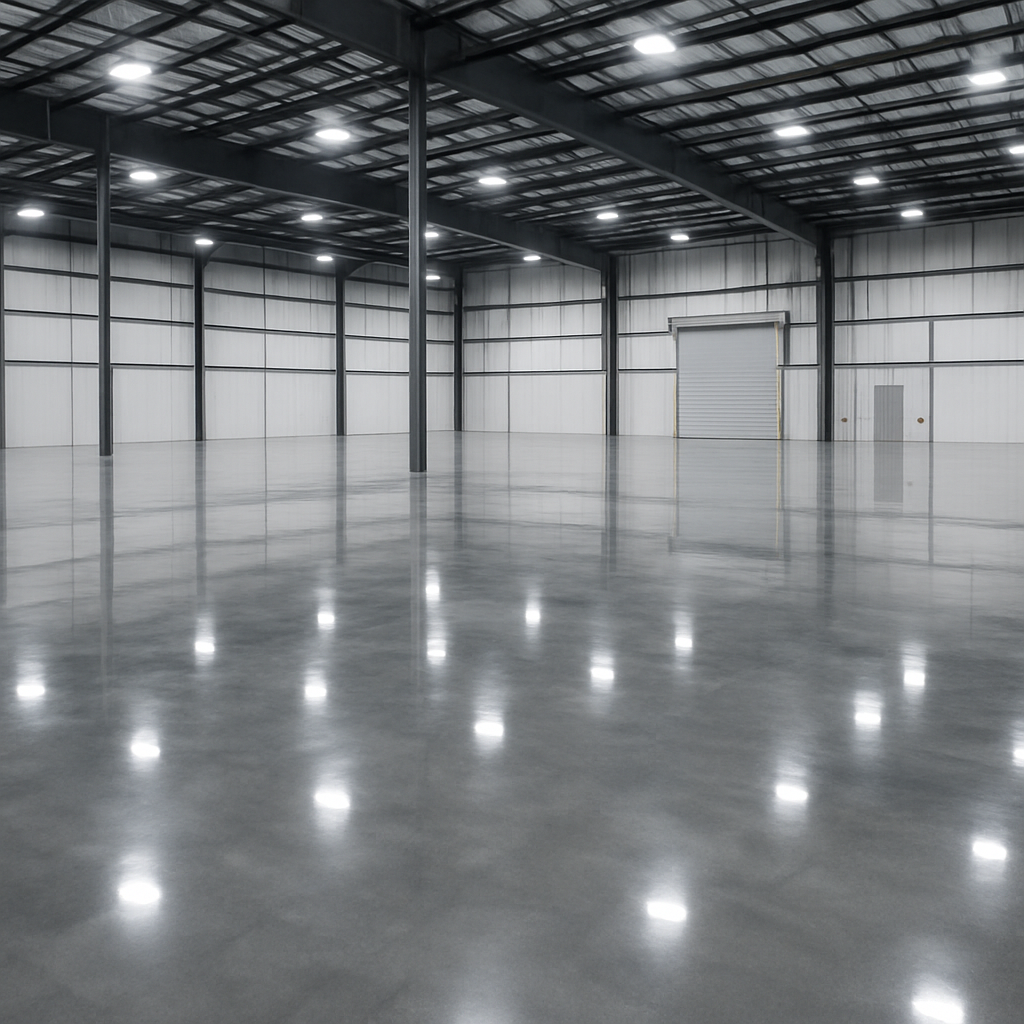
Flake-broadcast resin systems are popular — but outdoors they need a UV-stable topcoat, not standard epoxy.
The Short Answer First
Standard epoxy is not UV stable. In direct Florida sun it ambers, yellows, and chalks — that's the documented behavior of the resin chemistry, not a sign of a bad installer or a budget product. It also cures smooth (slippery when wet) and forms a non-breathable film (prone to blistering if moisture moves up through the slab).
If you want a resin coating on an outdoor pool deck, the correct product is a polyaspartic or polyurea system, which is UV stable — often with epoxy as the base coat underneath it. For a covered or indoor pool area, epoxy on its own is perfectly appropriate.
Where Epoxy Genuinely Works
None of this makes epoxy a bad product. It's an excellent one in the right environment — hard, chemical-resistant, and inexpensive relative to other resin systems. The constraint is sunlight.
- Indoor and covered pool rooms, where there's no direct UV exposure
- As a primer or base coat underneath a UV-stable polyaspartic topcoat
- Garage floors, workshops, and interior commercial slabs — epoxy's core market
- Screened lanais with solid roofing that blocks direct sun
Why Standard Epoxy Struggles On An Outdoor Pool Deck
It isn't UV stable
This is the central issue. Standard epoxy resins amber, yellow, and chalk under sustained ultraviolet exposure. On a Florida pool deck in full sun year-round, that discoloration is not a maybe — it's the expected behavior of the material. A white or light gray epoxy deck will shift color, and it does so unevenly depending on which areas get the most sun.
It's slippery when wet
Cured epoxy leaves a hard, smooth film. Around a pool — where the surface is wet constantly and people walk on it barefoot — that's a genuine safety problem unless anti-slip aggregate is deliberately broadcast into the coating. Even then, the aggregate is doing the work, not the epoxy.
It doesn't breathe
Epoxy forms a non-permeable film. Pool decks frequently have moisture moving up through the slab from the surrounding water table and irrigation. When that vapor hits the underside of a non-breathable coating, it lifts it — producing blisters and delamination. This is why moisture testing matters before any film-forming coating goes on a pool deck.
It holds heat
Epoxy has no inherent cooling property, and darker colors absorb heat readily. Compared to a light textured acrylic cool deck coating — which exists specifically to stay cooler underfoot — an epoxy deck in direct Florida sun is noticeably hotter on bare feet.
What To Use Instead
Three systems handle what people usually want epoxy for — a durable, attractive, easy-to-clean pool deck surface — without the UV problem.
Polyaspartic / polyurea
The resin system actually engineered for exterior use. UV stable, so it doesn't amber in sun. Cures fast, resists pool chemicals well, and takes a broadcast of quartz or decorative flake that provides real slip resistance. If you want the flake-floor look of an epoxy garage but outdoors, this is the correct product — and epoxy is often used as its base coat.
Textured acrylic cool deck coating
The traditional Florida pool deck surface. A cement-and-acrylic coating sprayed in a light texture, formulated to stay cooler underfoot than bare concrete. Least expensive option and strong on both heat and slip performance, though it renews the surface rather than adding strength.
Knockdown texture overlay
A polymer-modified cement overlay sprayed on and lightly troweled flat, leaving a mottled texture. The most common decorative pool deck finish in Central Florida — good grip, accepts color, and thicker than a coating so it hides minor surface flaws.
All of these, plus stamped overlays, micro-toppings, and paver overlays, are compared side by side in What Are The Different Types Of Pool Deck Resurfacing?
Lakeland Coating & Resin Floor Contractors
These directory businesses specialize in epoxy, polished concrete, and floor coating systems. They're the right people to ask which resin system suits your specific deck — and whether it should be a coating at all.
Listings are ranked by Google rating and review volume — nobody pays for placement. Price bands reflect what the services a company offers typically cost in Lakeland, not a quote from the business. Always confirm licensing and insurance directly before signing a contract.
What To Ask Before You Sign
- Is the topcoat UV stable? If the answer is vague, ask for the product data sheet.
- What provides the slip resistance — broadcast aggregate, or just the coating?
- Has a moisture test been run on the slab before a film-forming coating goes down?
- How does the color hold up after two summers in full sun, and what's the warranty on that?
- What's the recoat interval, and what does recoating cost later?
Pool Deck Costs, Contractors & Guides
See local pricing, compare contractors on the map, or read the full service overview.
More On Pool Deck Resurfacing
The rest of our pool deck guides — costs, surface types, and local providers.
Pool Deck Resurfacing In Lakeland Florida
Local providers, what the work involves, and what it costs around Lakeland.
What Is Concrete Pool Deck Resurfacing?
How resurfacing differs from replacement, and when a deck is a candidate.
What Are The Different Types Of Pool Deck Resurfacing?
Acrylic cool deck, knockdown, stamped overlay, pavers, and resin coatings compared.
How Much Should It Cost To Resurface A Pool Deck In Lakeland Florida?
Per-square-foot pricing, deck-size estimates, and what moves the number.
5 Pool Deck Renovation Ideas For Your Home
Practical ways to update a tired deck without tearing out the slab.
Frequently Asked Questions
Can you epoxy a pool deck?+
You physically can, but standard epoxy is a poor choice for an outdoor pool deck. Epoxy is not UV stable — it ambers, yellows, and chalks in direct sunlight, which in Florida means visible discoloration. It also cures to a smooth film that's slippery when wet, and it doesn't breathe, so moisture moving up through the slab can blister it. For a covered or indoor pool area, epoxy is genuinely appropriate.
What is the best epoxy alternative for an outdoor pool deck?+
Polyaspartic and polyurea coating systems. They're UV stable, so they don't amber in sun; they cure quickly; they hold up to pool chemicals; and a broadcast of quartz or decorative flake gives real slip resistance. Epoxy is frequently used as the base coat underneath a polyaspartic topcoat, which is the correct way to get epoxy into an exterior system.
Why does epoxy turn yellow outside?+
Ultraviolet light breaks down the resin chemistry in standard epoxy formulations, producing ambering and a chalky surface haze. It's an inherent property of the material, not a sign of a bad installation or a cheap product. Any coating intended for full sun needs UV-stable chemistry, which is what separates polyaspartic and polyurea from epoxy.
Is epoxy slippery around a pool?+
Yes, unless anti-slip aggregate is broadcast into it. Cured epoxy leaves a hard, smooth surface that becomes slick when wet. Around a pool this is a genuine safety consideration. Textured systems — knockdown overlays, sprayed acrylic, or resin with broadcast quartz — provide grip through their texture rather than relying on the coating alone.
How long does epoxy last on a pool deck?+
Outdoors in Florida, far less time before it looks poor than indoors, because UV degradation begins immediately and is cumulative. The film may remain intact while the appearance deteriorates through ambering and chalking. Indoors or under cover, epoxy is durable and long-lasting — the environment is the deciding variable, not the product quality.
Can epoxy be used over an existing pool deck coating?+
Only if the existing coating is sound and properly prepared. Any coating that's peeling or delaminating must be mechanically removed first — bonding a new layer to a failing one just means both fail together. A moisture test is also worth running before applying any non-breathable film to a pool deck.
Get a Free Pool Deck Quote
Submit a free quote request and we'll connect you with a Lakeland contractor who resurfaces pool decks — no waiting on a callback.